Seattle Water Quality: Flush, Test, Filter; Check TapWaterIndex
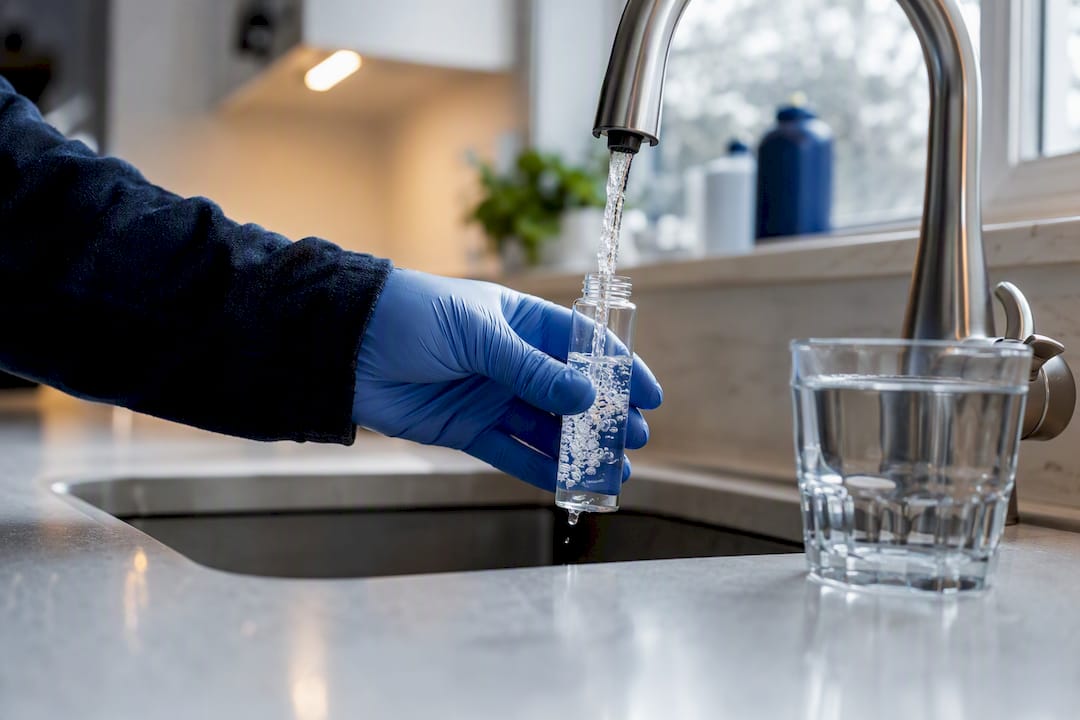
Seattle’s municipal tap water meets federal and state drinking water standards, and recent testing found no detectable lead in the source supply and no detections of newly regulated PFAS compounds. The real exposure risk sits inside individual homes, where old pipes, solder, or fixtures can leach lead into water that left the treatment plant clean. If you’re worried, the fix is straightforward: flush your tap, check your building’s plumbing age, and pull up your address on a resource like TapWaterIndex or Seattle Public Utilities’ own reports.
TL;DR:
- Most lead exposure in Seattle’s tap water results from old home plumbing, not the source water, especially in homes built before 1986.
- Seattle’s source water consistently tests free of lead and PFAS chemicals, meeting all federal and state safety standards.
- Flushing your pipes before use and using certified lead-reduction filters can significantly lower household lead risk.
- Regular testing at the tap provides more accurate risk assessment than relying solely on citywide water quality reports.
- Checking your specific address on TapWaterIndex reveals localized lead and PFAS levels, helping you take targeted safety measures.
Table of Contents
- Seattle Water Quality: What Official Monitoring Shows
- Why Household Plumbing, Not the Source, Drives Most Lead Risk
- Testing, Flushing, and Filtering: What to Do This Week
- How to Read a Seattle Water Quality Report
- Checking Your Own Address With TapWaterIndex
- Living With Good Source Water and Old Pipes
- Look Up Your Own Address on TapWaterIndex
- Where to Verify These Numbers Yourself
- Sources
- FAQ
Seattle Water Quality: What Official Monitoring Shows
The numbers from Seattle Public Utilities tell a consistent story: the system is clean at the source and closely watched at the tap. In the 2025 lead and copper monitoring round, zero of 52 sampled homes exceeded the EPA’s 15 ppb action level, and the average result across those samples was low. That’s not a source-water number. It reflects water that sat in household plumbing before the sample was drawn, which is exactly why it matters for judging your own risk.
PFAS tells a similarly reassuring story. Across four testing rounds in 2023, SPU found no detections of the six newly regulated PFAS compounds in either the Cedar or Tolt supply, and none of the other PFAS chemicals on the EPA’s broader watch list turned up either. That testing falls under UCMR5, the EPA’s fifth Unregulated Contaminant Monitoring Rule, which tracks 29 PFAS compounds plus lithium nationwide. The EPA finalized enforceable limits on six of those PFAS chemicals in April 2024, so Seattle’s clean results aren’t just good news, they’re good news against a stricter yardstick than utilities faced a few years ago.
Beyond lead and PFAS, SPU’s broader compliance record holds up too:
- Turbidity, arsenic, and total trihalomethane (TTHM) levels have stayed within EPA and Washington State limits through the 2023 to 2025 reporting cycles.
- The utility’s state-accredited laboratory processes more than 20,000 samples every year, covering microbial, chemical, and physical parameters across the distribution system.
- No violations of the Safe Drinking Water Act have been reported in recent annual water quality reports.
That volume of testing, more than 50 samples a day on average, is what lets SPU catch problems early rather than after the fact.
Why Household Plumbing, Not the Source, Drives Most Lead Risk
Seattle draws its drinking water from the Cedar River and South Fork Tolt River watersheds, both protected mountain sources with no detectable lead at the point of collection. So where does the lead in some tap samples come from? Almost always from what the water touches after it reaches your property line.
- Older lead service lines connecting the street main to a house
- Brass fixtures and fittings that contain trace lead even in “lead-free” products
- Lead solder used in copper pipe joints before it was banned in residential plumbing in 1986
SPU treats the water to control corrosion, which reduces how aggressively it dissolves metals from pipes and fixtures. That treatment cannot reach inside a private home’s walls, though, which is why targeted testing at the tap remains the most direct way to know your own exposure.
Pro Tip: If your home was built before 1986 and still has its original plumbing, treat that as your single biggest risk factor, bigger than anything happening at the reservoir.
Testing, Flushing, and Filtering: What to Do This Week
You don’t need to wait for a problem to show up before acting. A few habits cut your exposure risk immediately, and testing removes the guesswork entirely.
- Flush stagnant water before drinking or cooking. Run the cold tap for 30 seconds to two minutes if water has sat in the pipes for six hours or more, especially first thing in the morning or after a trip. SPU gives the same flushing advice to buildings reopening after extended vacancy, since stagnant water picks up more metal from pipe surfaces the longer it sits.
- Use cold water for drinking and cooking. Hot water dissolves lead more readily and pulls more of it from old solder joints.
- Get your water tested. If you’re enrolled in the Utility Discount Program, SPU’s Water Quality Lab will test your tap water for free. Everyone else can order a certified lab test or contact the EPA’s Safe Drinking Water Hotline at 800-426-4791 for guidance on next steps.
- Choose a filter certified for what you’re worried about. Look for NSF/ANSI Standard 53 certification if lead is your concern, and check for a PFAS reduction claim if that’s a priority. Replace cartridges on the manufacturer’s schedule. A filter with an expired cartridge can perform worse than no filter at all.
- Call a plumber if testing confirms elevated lead. Replacing a lead service line or swapping out old fixtures solves the problem permanently, rather than managing it indefinitely.
Pro Tip: A $20 filter pitcher with a fresh, NSF 53-certified cartridge often does more for your actual lead exposure than an expensive whole-house system nobody remembers to maintain.
How to Read a Seattle Water Quality Report
SPU’s reports use a specific vocabulary, and knowing it turns a confusing spreadsheet into a two-minute read. The Maximum Contaminant Level (MCL) is the legal ceiling for a regulated substance. The Maximum Contaminant Level Goal (MCLG) is the health-based target, which is sometimes lower than the MCL for practical treatment reasons. Lead works differently: instead of an MCL, it has an action level of 15 parts per billion (ppb), the threshold that triggers additional utility action if too many homes exceed it.
A few more terms worth knowing:
- Non-detect means the lab found nothing at all, down to its detection limit.
- Detected below reporting limit means trace amounts showed up, but too small to quantify precisely.
- UCMR5 results show up separately from regulated contaminants because those compounds weren’t legally enforceable at the time of testing, which is exactly the category PFAS fell into before April 2024.
When you’re checking whether a number matters, look past the average. A below-limit average doesn’t guarantee every home tested clean: the “homes exceeding action level” count and the sample range matter more than the mean. TapWaterIndex pulls these figures out of dense PDF tables and displays them by ZIP code or supplier, so you’re not hunting through a 40-page report to find one row.
Checking Your Own Address With TapWaterIndex
Reading an SPU report tells you how the system performed overall. It doesn’t tell you what your specific water supplier’s numbers look like next to others across Washington, or how Seattle stacks up against cities with worse lead problems, like Flint-era Michigan systems. That’s the gap TapWaterIndex fills.
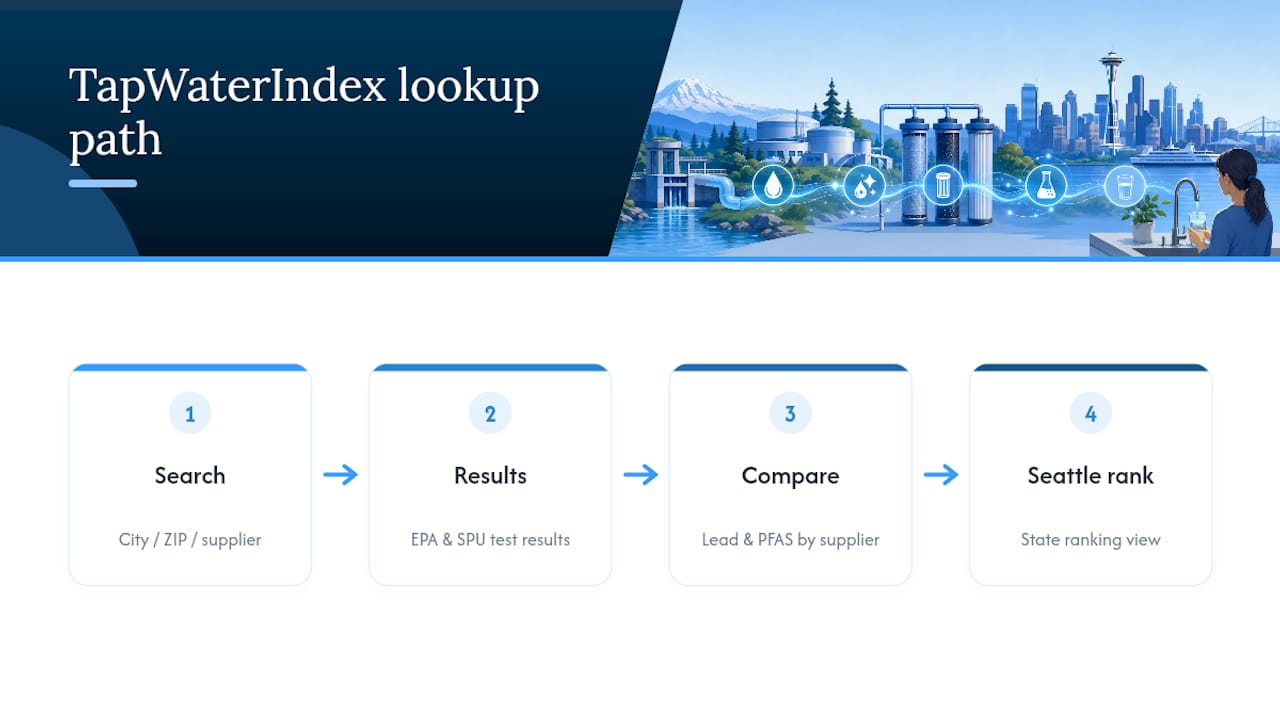
Search by city, ZIP code, or water supplier name, and you’ll see official EPA and SPU test results laid out for lead levels across Washington suppliers and PFAS detections by supplier, pulled straight from federal monitoring data rather than a utility’s own summary language. The site’s state rankings let you see where Seattle’s system falls relative to other Washington suppliers, which matters if you’re comparing neighborhoods or deciding whether a move changes your exposure. Instead of parsing a technical PDF, you get the same numbers translated into a format built for a five-minute check.
Living With Good Source Water and Old Pipes
Seattle got lucky with geography. Two protected mountain watersheds feeding a system tested more than 20,000 times a year is about as strong a starting point as a city can have, and the 2025 and 2023 results back that up with real numbers, not just reputation. The gap between that clean source water and what comes out of your tap is almost entirely a private plumbing problem, which is honestly the more solvable kind.
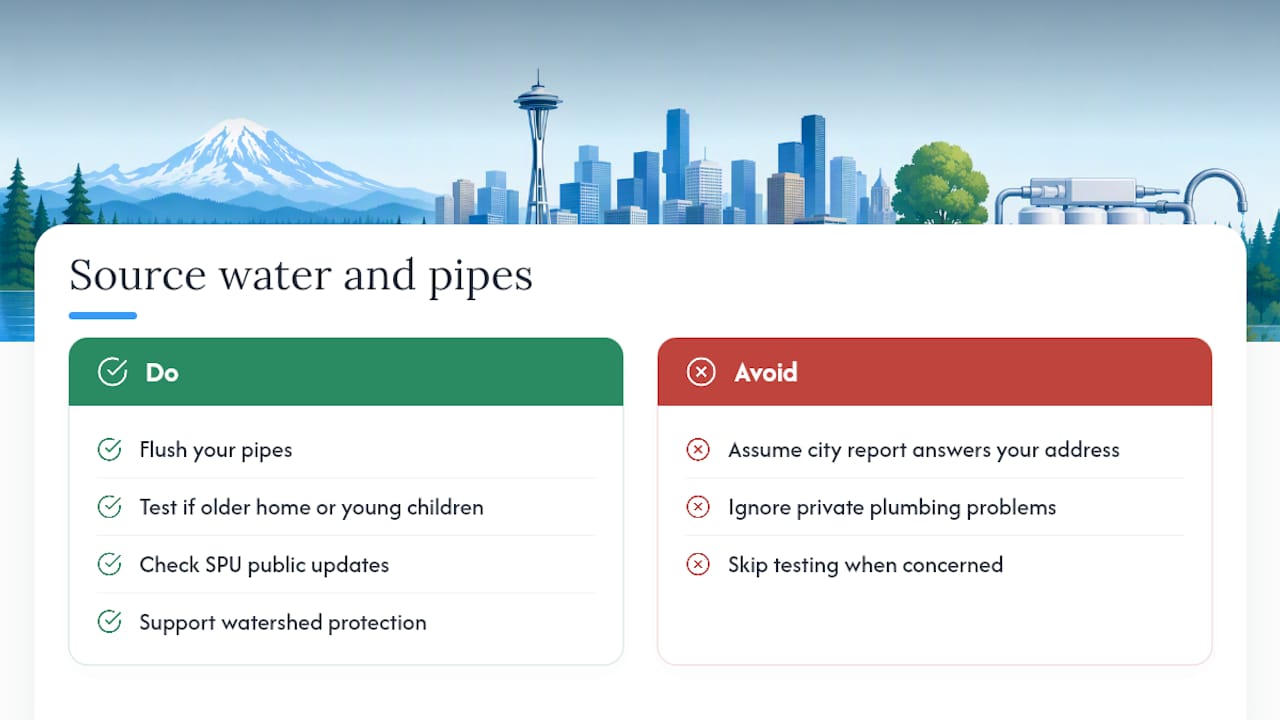
Flush your pipes, test if your home is older or you’re pregnant or have young kids, and don’t assume a citywide report answers a question that’s really about your specific address. Keep an eye on SPU’s public updates, and support the ongoing watershed protection work that keeps the source clean in the first place. That’s the leverage point that actually matters.
— Sergey
Look Up Your Own Address on TapWaterIndex
Reading city-wide averages only gets you so far. Your specific address, on your specific supplier’s system, is what actually determines your exposure, and that’s the exact gap TapWaterIndex was built to close.
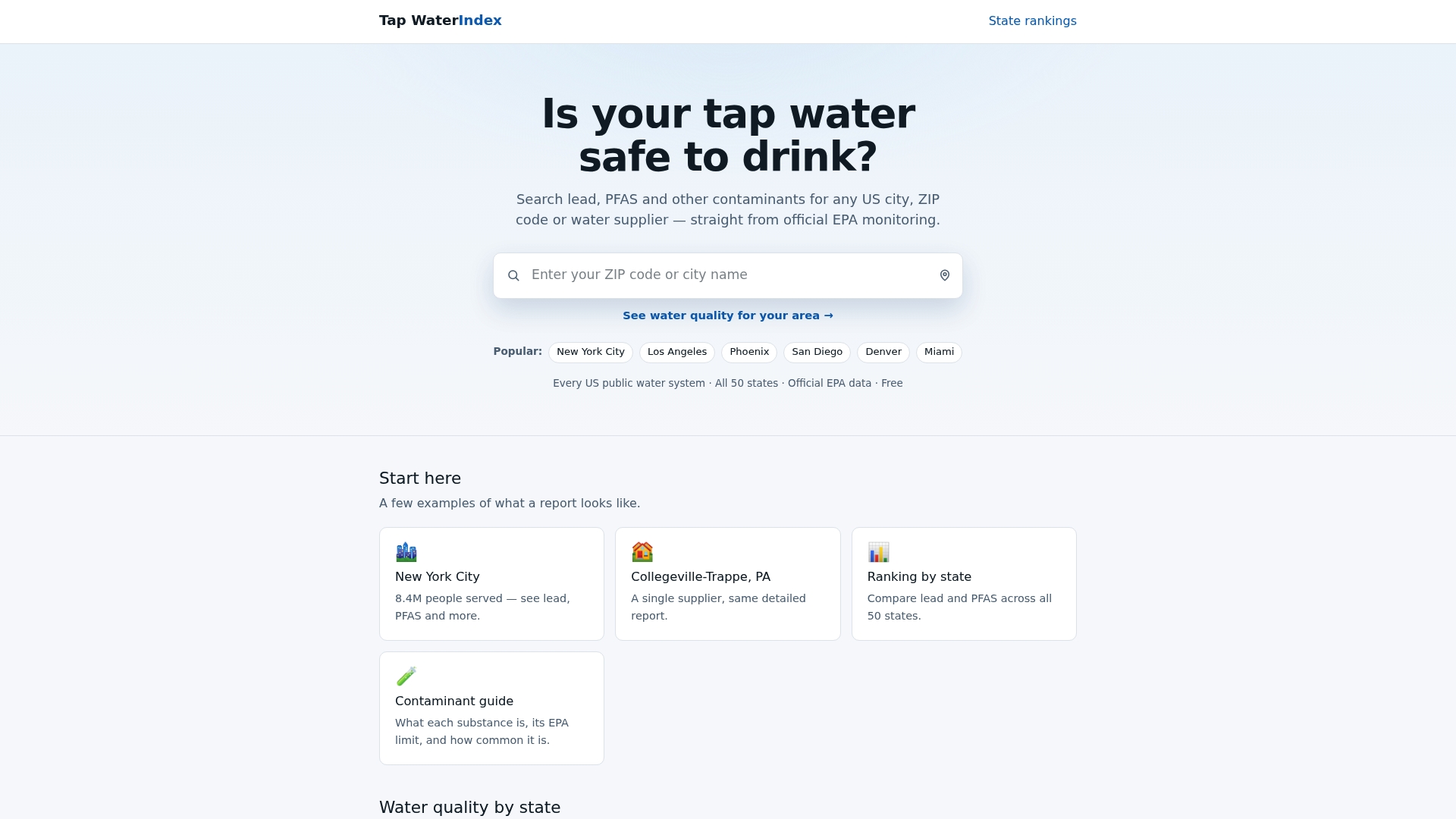
Type in your Seattle ZIP code or utility name and you’ll see the same EPA monitoring data referenced throughout this piece, broken down to the supplier level instead of buried in a citywide PDF. You can also pull up Washington’s full state ranking to see how Seattle Public Utilities compares against every other supplier in the state on lead and PFAS. If you’re weighing a move, checking a rental before signing a lease, or just tired of guessing, run your address through TapWaterIndex and see the actual numbers behind your tap.
Where to Verify These Numbers Yourself
Every figure in this article traces back to a public source you can check directly. SPU’s monitoring results page has the lead and copper sampling tables. The 2023 Drinking Water Quality Report covers PFAS testing methods and source-water protection details. For a broader household-plumbing lens, a resource like Pure Wave Water covers filtration basics worth knowing before you buy. And TapWaterIndex’s contaminant guide explains what EPA limits mean and how common each contaminant actually is nationwide.
This article is general information, not a substitute for advice from a qualified doctor. Consult a qualified healthcare professional about your own circumstances before acting on anything here.
FAQ
Is Seattle tap water safe to drink?
Yes. Seattle’s municipal water meets federal and state standards, with 2025 testing showing no homes over the federal lead action level and no PFAS detections in the source supply.
How much lead is in Seattle’s tap water?
The 2025 average across sampled homes was 1.6 ppb, well under the EPA’s 15 ppb action level, though individual results vary based on each home’s plumbing.
Does Seattle water contain PFAS?
SPU’s 2023 testing rounds found no detections of the six PFAS compounds the EPA regulated starting in April 2024, in either the Cedar or Tolt water supply.
How can I check my specific address for lead or PFAS risk?
Search your city, ZIP code, or water supplier on TapWaterIndex to see official EPA and SPU results, or contact SPU directly to request testing, which is free for Utility Discount Program members.