4 Steps to Verify Philadelphia Tap Water With PWD and TapWaterIndex
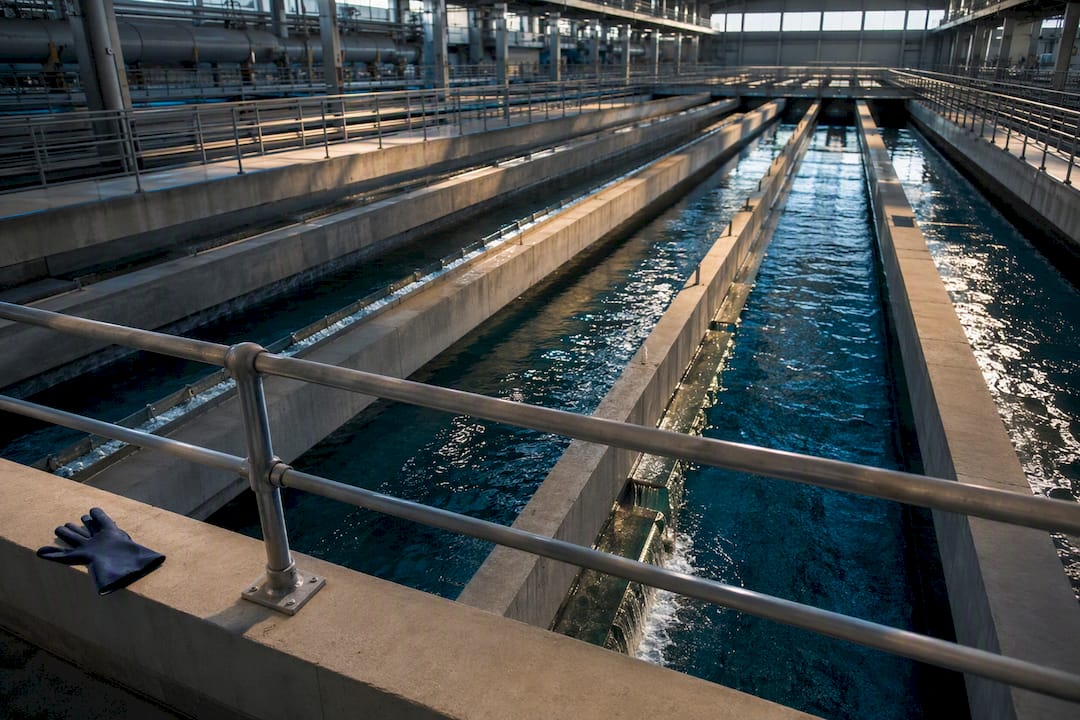
Philadelphia’s treated tap water meets current EPA and state standards, and PFAS levels have stayed low since monitoring began in 2020. The real risk to your glass of water usually starts after it leaves the treatment plant, in old service lines, solder, or fixtures on private property. If lead worries you, flush your tap for a few minutes before drinking and call the Philadelphia Water Department at 215-685-6300 to request a free test.
TL;DR:
- Philadelphia’s treated tap water meets current EPA and state standards, but lead contamination mainly comes from old plumbing on private property, not city mains.
- Flushing your tap for three to five minutes daily reduces lead exposure, especially after periods of nonuse, and using certified filters can lower risks further.
- Older homes built before 1960 are more likely to have lead pipes or fixtures, but the city actively works to replace lead service lines during street upgrades.
- PFAS levels have remained low since 2020, and the water supply generally complies with current regulations, though standards are still evolving.
- Combining municipal water reports with personal testing and online tools like TapWaterIndex provides a comprehensive picture of your water quality and any potential risks.
Table of Contents
- What Does Philadelphia Water Department Test, and Where Does the Water Come From?
- Where Does Lead in Tap Water Actually Come From?
- How Can You Check and Test Your Tap Water in Philadelphia?
- Practical Steps to Reduce Lead Exposure at Home
- PFAS and Other Contaminants: What Does PWD Actually Monitor?
- How TapWaterIndex Helps You Check Your Supplier’s Numbers
- Why Local Data and Home Testing Together Build Real Confidence
- Get Your Supplier’s Full Contaminant Report
- Where to Go for Official Reports and Testing
- Sources
- FAQ
What Does Philadelphia Water Department Test, and Where Does the Water Come From?
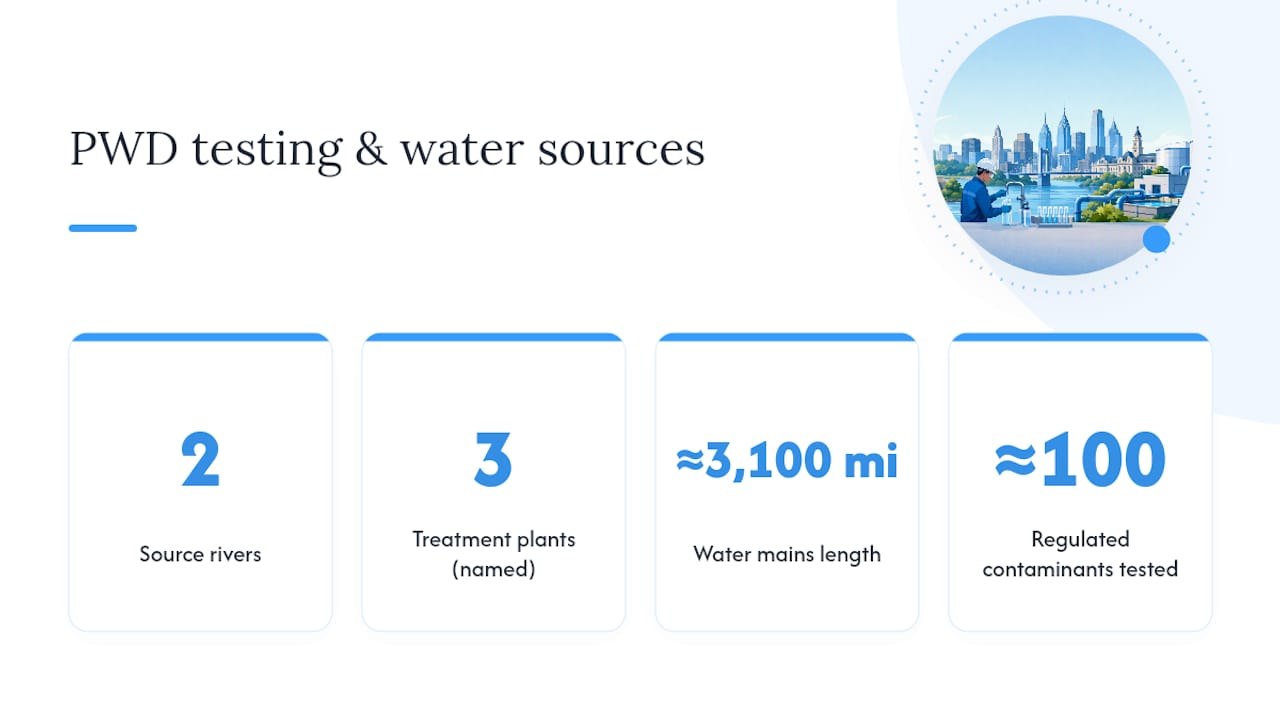
The Philadelphia Water Department (PWD) draws from two rivers and treats it at three plants: Baxter, which pulls from the Delaware River, and Belmont and Queen Lane, both fed by the Schuylkill. Together they push water through roughly 3,100 miles of water mains to reach homes across the city, from Northeast rowhomes to Center City high rises.
That’s a lot of infrastructure to monitor, and PWD does it constantly. The utility samples at more than 65 locations citywide and runs tests through its own lab, checking for roughly 100 regulated contaminants covered under the Safe Drinking Water Act. This isn’t a once-a-year formality. It’s ongoing testing built into daily operations.
The headline finding from the utility’s 2025 Drinking Water Quality Report is straightforward: treated drinking water meets or exceeds both federal and Pennsylvania Department of Environmental Protection (PA DEP) standards, and PFAS levels remain low. For a system serving a city of over a million and a half people, that’s a meaningful baseline. It doesn’t mean every tap in every rowhome is guaranteed pristine, but it means the water leaving the plants is clean by regulatory measure.
Where Does Lead in Tap Water Actually Come From?
Here’s the detail that surprises a lot of Philadelphians: the city’s own pipes aren’t the problem. PWD states plainly that city-owned water mains contain no lead. If lead shows up in your glass, it almost always traces back to something on your side of the property line, a lead service line running from the street to your house, old brass fixtures, or lead solder used in plumbing installed before 1986.
Philadelphia’s housing stock matters here. Rowhomes built before 1960 are far more likely to have lead pipes or lead solder than newer construction, simply because that’s what plumbers used at the time.
PWD does its part on the treatment side by adding zinc orthophosphate, a corrosion control chemical that coats the inside of pipes and reduces how much lead leaches into water as it flows through older plumbing. This treatment has worked well enough that tap sampling at homes with known lead plumbing generally stays below the EPA’s regulatory action level. But corrosion control manages the problem. It doesn’t remove a lead pipe sitting under your basement floor.
How Can You Check and Test Your Tap Water in Philadelphia?
Testing isn’t complicated, and much of it starts with a habit you can build today.
- Flush before you drink. If a tap hasn’t been used for six hours or more, run cold water for three to five minutes before drinking it or using it for cooking. PWD’s flushing guidance notes that homes set back further from the street, common in parts of West Philly and the Northeast, may need a longer flush to clear standing water from the line.
- Request PWD’s free residential lead test. Call the hotline at 215-685-6300, and PWD will walk you through collecting a sample from your own tap for lead and copper analysis.
- Check published results. PWD posts water quality reports online, and the EPA maintains national drinking water data you can use to compare Philadelphia’s numbers against federal limits.
- Cross-reference supplier-level data. Tools like TapWaterIndex let you look up your specific water supplier and see contaminant results without digging through PDF reports.
Practical Steps to Reduce Lead Exposure at Home
Flushing and testing tell you where you stand. These steps help you actually lower your exposure day to day.
- Always flush the tap after periods of nonuse, and never use hot tap water for drinking, cooking, or mixing baby formula. Heat pulls more lead out of old plumbing than cold water does.
- Choose a filter certified by an ANSI-accredited certifier specifically for lead reduction. Look for NSF/ANSI Standard 53 on the packaging, not just a generic “filters impurities” label.
- Replace filter cartridges on the manufacturer’s schedule. A lead-rated filter that’s overdue for a cartridge swap can stop working without any visible sign.
- If your home was built before 1960, ask a licensed plumber to inspect for a lead service line. Replacing it is the only way to remove the source entirely rather than just managing it.
- Know that PWD replaces lead service lines as part of its ongoing water main replacement projects, so your line may already be scheduled for an upgrade tied to street work in your area.
Pro Tip: If you’re deciding between a pitcher filter and a whole-house system, the choice usually comes down to scope. A whole-house filter treats every tap and appliance, while a certified pitcher or faucet filter is often enough if your only concern is drinking and cooking water.
PFAS and Other Contaminants: What Does PWD Actually Monitor?
PFAS, the “forever chemicals” linked to industrial runoff and firefighting foam, have been on PWD’s radar since 2020. The utility has monitored source water for these compounds for several years now, and its reported results consistently meet current regulations.
Federal PFAS rules are still evolving, and PWD has publicly supported tighter standards rather than resisting them, a posture worth noting given how many utilities nationwide have pushed back on stricter PFAS limits. Beyond PFAS and lead, Philadelphia’s water report also tracks disinfection byproducts, microbial contaminants, and naturally occurring minerals that affect hardness and taste. Most residents describe Philly tap water as moderately hard, which can affect soap lather and leave mineral spots on glassware, but that’s an aesthetic issue, not a safety one.
How TapWaterIndex Helps You Check Your Supplier’s Numbers
PWD’s reports cover the whole city, but if you want the specific numbers for your ZIP code or supplier, TapWaterIndex pulls official EPA monitoring data into a searchable format. You type in your ZIP code or utility name, and it surfaces recent sample results for lead, PFAS, and other regulated contaminants.
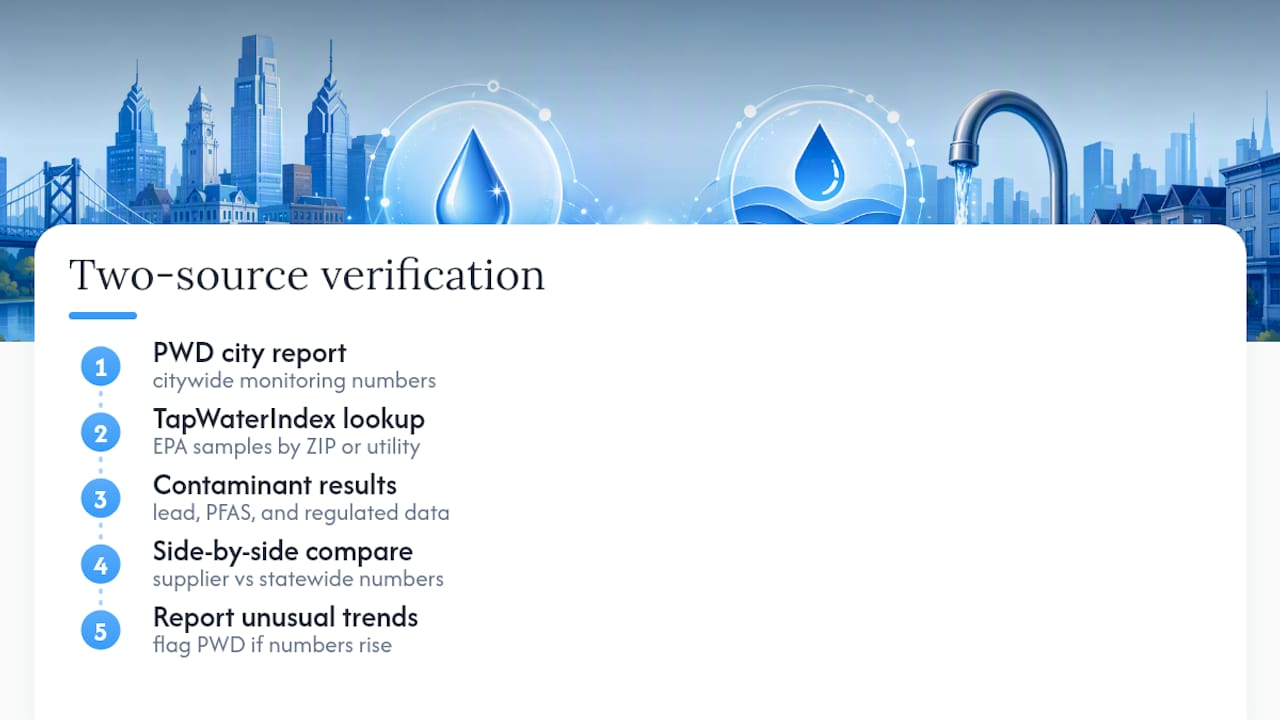
The value here is comparison. You can see how your supplier’s PFAS numbers stack up against Pennsylvania’s statewide data, or check lead results by supplier in a different jurisdiction if you’re weighing a move. Running PWD’s own report alongside TapWaterIndex’s EPA-sourced summary gives you two independent checks on the same water, which is a more solid way to build confidence than trusting a single source. If a number looks off or trends upward over a few reporting cycles, that’s worth flagging to PWD directly rather than assuming it’s a one-time blip.
Why Local Data and Home Testing Together Build Real Confidence
Municipal water reports tell you what left the treatment plant. They can’t tell you what happened between the water main and your kitchen faucet, and that gap is exactly where most lead problems in Philadelphia originate. Trusting the city’s numbers alone, or refusing to trust them at all and buying bottled water indefinitely, both miss the point.
The stronger approach combines both angles: PWD’s testing shows the water supply is fundamentally sound, and your own tap test shows whether your specific plumbing adds risk. That’s the sequence worth following. Flush your tap regularly, request PWD’s free lead test if your home predates 1960, install a certified filter if results warrant it, and check TapWaterIndex periodically to track how your supplier’s numbers move over time. None of these steps require special expertise, just a phone call, a few minutes of running water, and a habit of checking in rather than assuming.
— Sergey
Get Your Supplier’s Full Contaminant Report
Calling PWD gets you your own tap results, but if you want the fuller picture of your water supplier’s contaminant results and comparisons, online tools provide searchable EPA monitoring data. It’s free, pulls directly from EPA monitoring data, and doesn’t require you to parse a 40-page PDF report to find the numbers that matter.
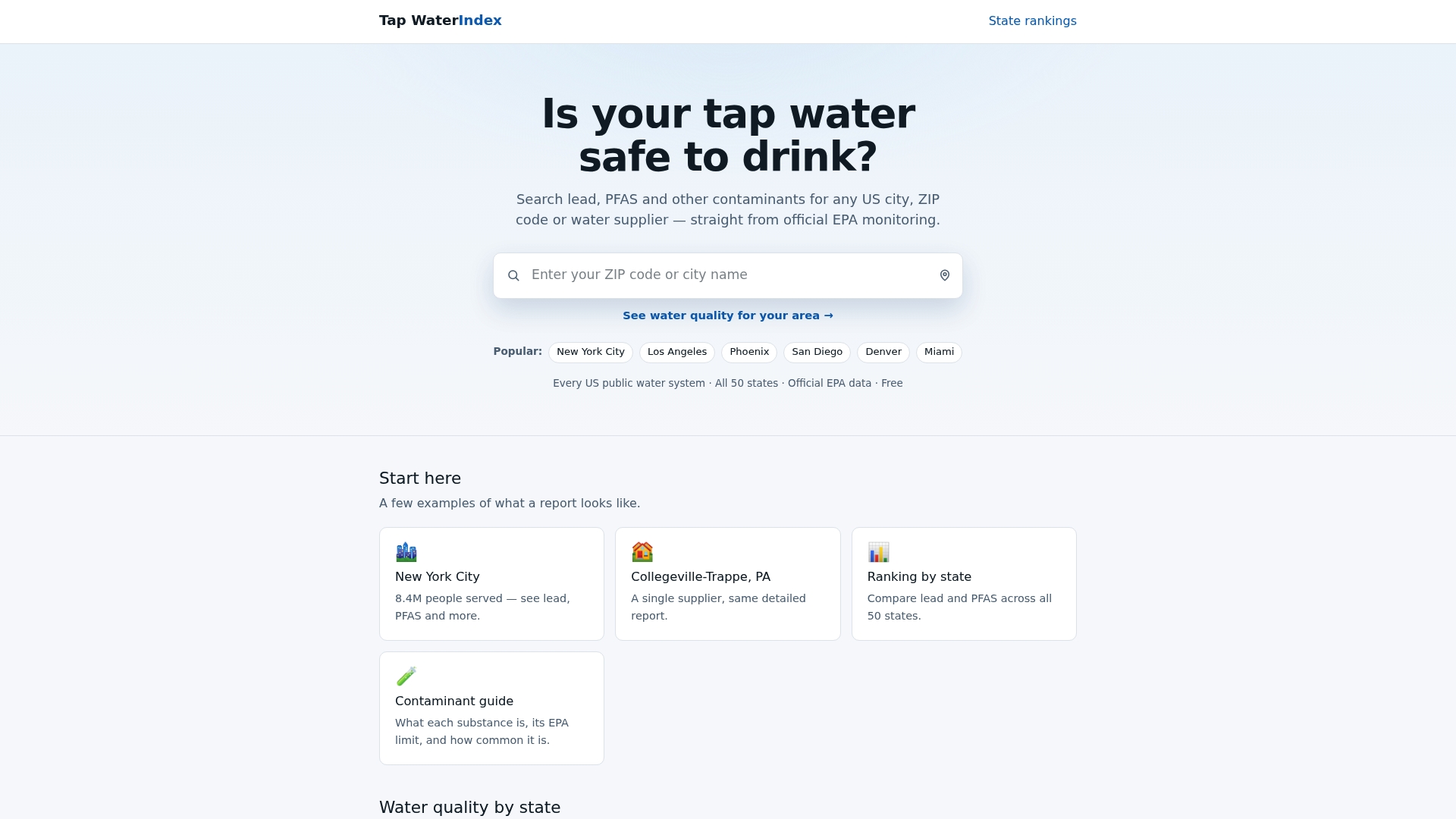
Search your ZIP code or utility name on TapWaterIndex to see recent sample results, or check the Pennsylvania rankings page to see how your city’s water stacks up against the rest of the state. If you want to understand what a specific contaminant limit actually means, the contaminants reference page breaks down EPA limits in plain language. Whether you just moved to Philadelphia or you’ve lived in the same rowhome for twenty years, five minutes on the site gives you a clearer picture than guessing.
Where to Go for Official Reports and Testing
For the full technical report, visit PWD’s 2025 Drinking Water Quality Report or call the free testing hotline at 215-685-6300. The EPA’s Safe Drinking Water Hotline and website cover federal lead guidance, and TapWaterIndex offers fast contaminant lookups by supplier or ZIP code.
This article is general information, not a substitute for advice from a qualified doctor. Consult a qualified healthcare professional about your own circumstances before acting on anything here.
FAQ
Is Philadelphia Tap Water Safe to Drink?
Yes. PWD’s treated water meets or exceeds federal and Pennsylvania state standards, though lead risk depends on your home’s plumbing rather than the water itself.
Does Philadelphia Have a Lead Problem in Its Water?
The city’s water mains contain no lead, but older homes, especially those built before 1960, may have lead service lines, solder, or fixtures that can add lead at the tap.
How Do I Get My Tap Water Tested for Free in Philadelphia?
Call PWD at 215-685-6300 to request a free residential lead and copper test kit for your home.
Is There PFAS in Philadelphia’s Drinking Water?
PWD has monitored PFAS since 2020, and reported levels have remained low and within current federal regulations.
What’s the Best Filter for Lead in Philadelphia Tap Water?
Choose a filter certified by an ANSI-accredited certifier under NSF/ANSI Standard 53 for lead reduction, and replace cartridges on the manufacturer’s schedule.
How Can I Check My Water Supplier’s Contaminant History?
Search your ZIP code or utility name on TapWaterIndex to view EPA-sourced results for lead, PFAS, and other regulated contaminants.