Homeowners: Diagnose Metallic-Tasting Water in 10 Minutes With EPA
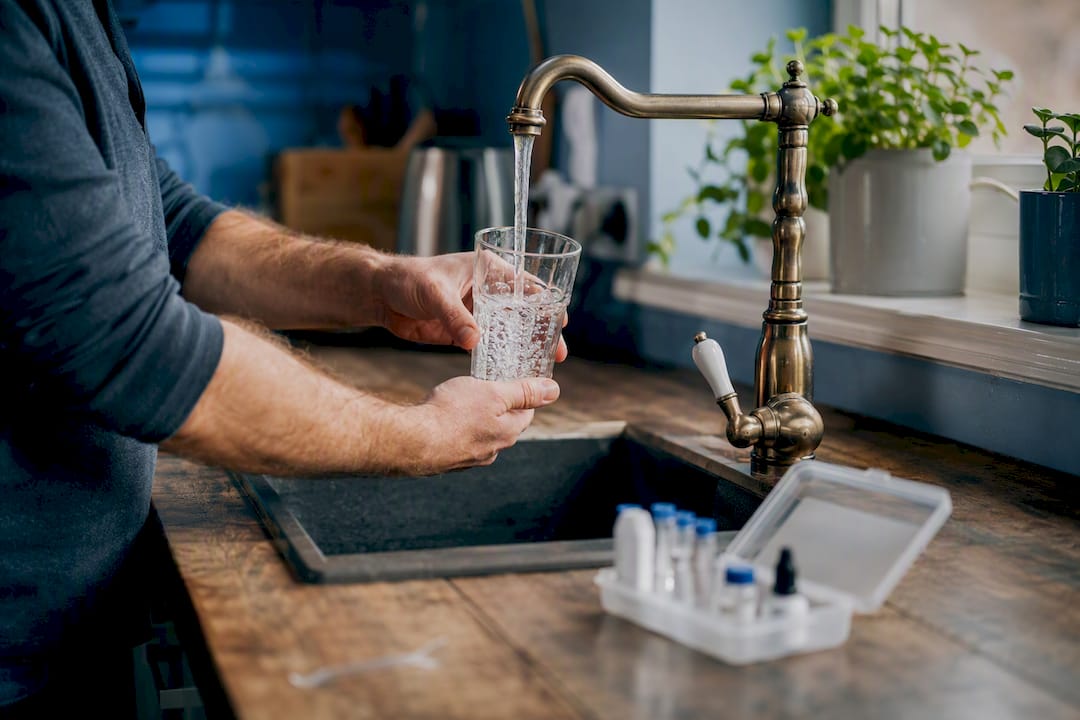
Metallic taste water usually traces back to iron or copper leaching from your pipes, water sitting too long in the lines, or occasionally low pH corroding your plumbing. Run your cold taps for two to three minutes and skip the hot tap for drinking or cooking until you know more. If the taste sticks around after flushing, it’s worth testing your water and pulling up your supplier’s data before you assume anything’s wrong.
TL;DR:
- Running cold water for two to three minutes and cleaning fixtures can often resolve metallic taste issues caused by sediment or stagnant water.
- Copper corrosion typically results in a bitter or astringent taste with blue-green stains, while iron creates reddish-brown staining and rust-colored water.
- Most metallic flavors are aesthetic and regulated as secondary standards, but elevated lead or copper levels pose health risks, requiring immediate testing and action.
- Home test strips can identify common metals like iron, copper, and lead, but lab tests are necessary for accurate safety assessments, especially for health-related concerns.
- Comparing your test results with local EPA-based water quality data helps determine if the problem is in your plumbing or sourced upstream, guiding appropriate treatment options.
Table of Contents
- Why does my water taste like metal? Quick diagnosis checklist
- What causes a metallic taste in tap water?
- Is metallic-tasting water safe to drink?
- How do I test water that tastes like metal?
- How do you fix metallic-tasting tap water?
- How TapWaterIndex helps you interpret your results
- Why local water data changes how homeowners should react
- Check your area’s water quality before you spend on fixes
- Sources
Why does my water taste like metal? Quick diagnosis checklist
Before you call a plumber or panic about lead, narrow down where the taste is coming from. This takes about ten minutes and tells you whether you’re dealing with a single fixture, your home’s plumbing, or something upstream in the supply chain.
- Test the kitchen cold tap, a bathroom cold tap, and the hot tap separately. If only one is off, the problem is local to that fixture or line.
- Let the cold water run for one to two minutes, then fill a clear glass and check for color, cloudiness, or a metallic smell.
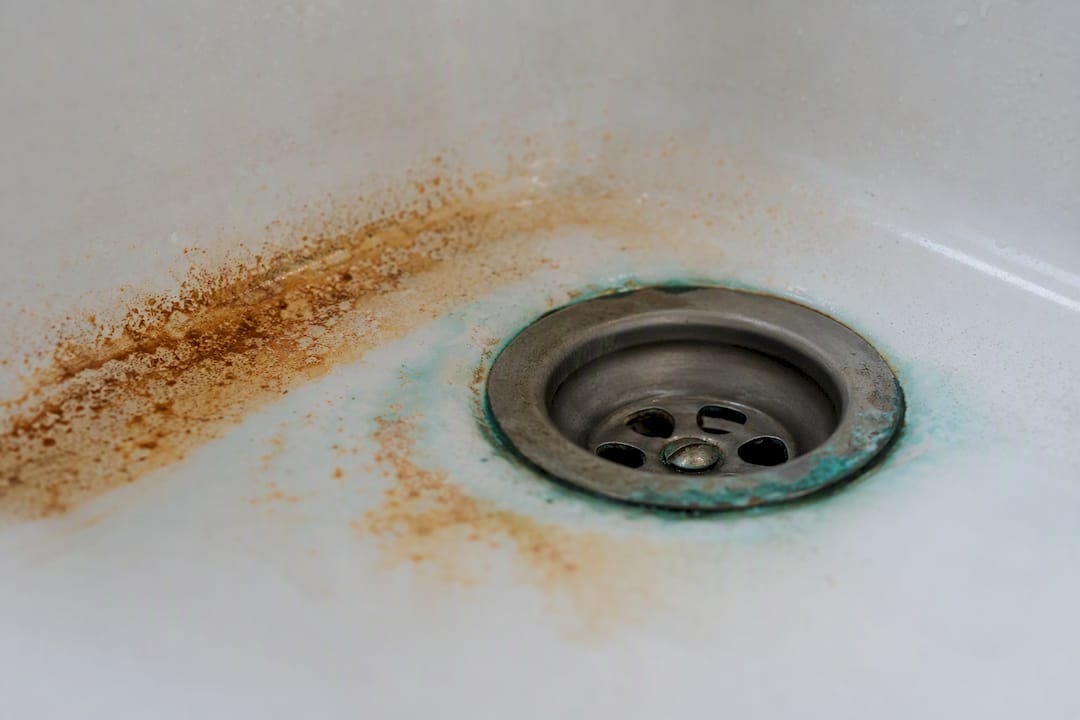
- Unscrew the faucet aerator and look for brown flakes (iron) or blue-green crust (copper corrosion).
- Think back on anything unusual nearby: a water main repair, a hydrant flush, or heavy rain that could have stirred up sediment and briefly changed the taste.
Utility troubleshooting guides consistently point to flushing standing water and cleaning aerators as the first move, and it solves more cases than people expect.
What causes a metallic taste in tap water?
Iron and copper are the two usual suspects, but they show up differently, and knowing the difference tells you a lot before you even test.
Iron and manganese, whether from groundwater or a corroding cast-iron main, tend to leave red or brown staining and can turn water a rusty tint. Copper corrosion reads differently on the tongue. It’s described more as bitter or astringent than straightforwardly “metallic,” and it often leaves blue-green stains around drains and fixtures. Research into metallic off-flavors in drinking water backs this up: iron and copper produce distinct sensory profiles, and detectable thresholds sit near the aesthetic levels set for these metals.
Low pH, or “aggressive” water, makes things worse by actively dissolving metal from your pipes rather than just passing through them. Your water heater can be its own source, too. Sediment buildup or a degrading sacrificial anode rod inside the tank can impart a metallic taste that only shows up on the hot tap.
A few other patterns worth knowing:
- Seasonal shifts, like spring runoff or utility maintenance, can temporarily cloud water and shift taste.
- Different iron forms (ferrous versus ferric) and iron bacteria produce distinct visual cues and often need different treatments, so what worked for a neighbor’s rust-colored water might not work for yours.
- Municipal guidance also flags storage tanks and pipe proximity to heat sources as overlooked contributors worth checking.
Is metallic-tasting water safe to drink?
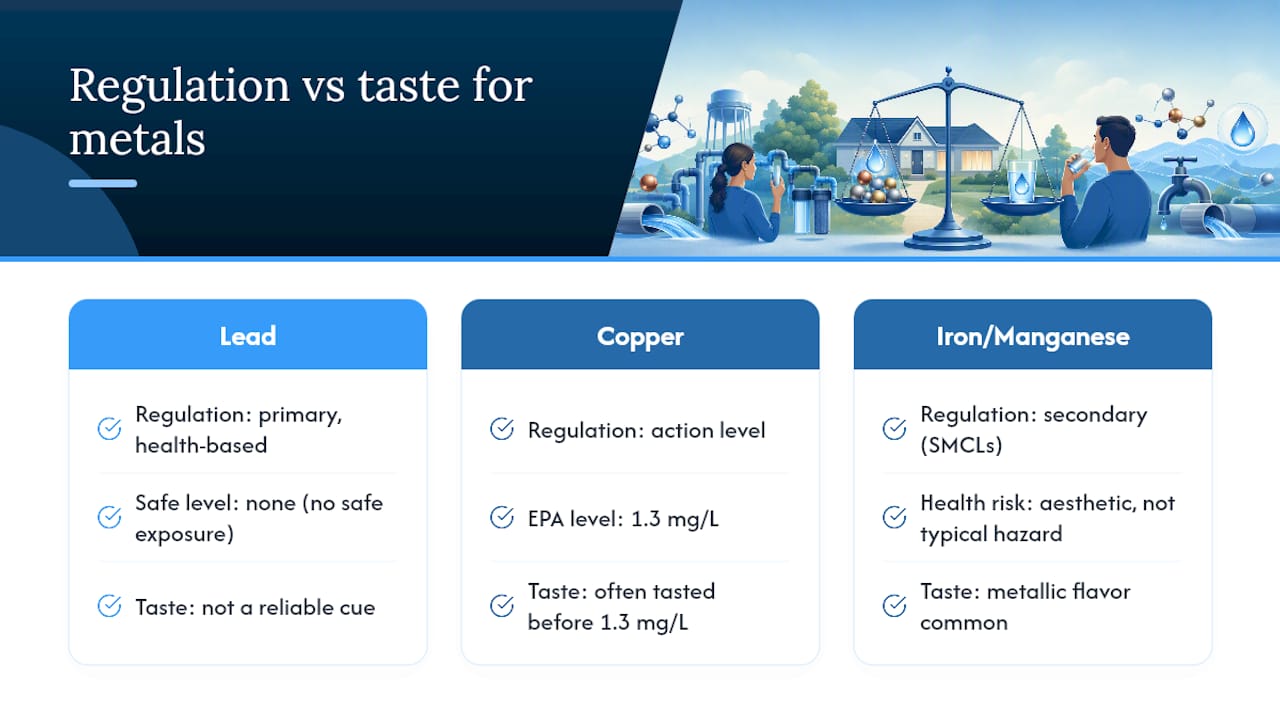
Taste and safety aren’t the same question. Most metallic flavors come from iron or manganese, which the EPA regulates under secondary standards (SMCLs) because they’re aesthetic nuisances, not health hazards at typical levels.
Other metals sit in a different category entirely. Lead has no safe exposure level and is regulated as a primary, health-based standard. Copper has an EPA action level of 1.3 mg/L, well above where most people can taste it, which means you could taste copper long before it reaches a level the EPA calls concerning, or you might not taste it at all and still have a problem. That gap is exactly why taste alone can’t confirm safety one way or the other.
Stop drinking the water and contact your utility or local health department immediately if: a household member gets suddenly sick, you already know your home has lead service lines, or a prior test showed elevated copper or lead. Otherwise, treat a persistent metallic taste as a cue to test, not a reason to panic. Sensitivity to metallic flavors also varies by age, so a taste your grandmother notices right away might slip past everyone else in the house.
How do I test water that tastes like metal?
Home test strips give you a rough read in minutes, but lab-grade accuracy requires a certified lab, especially for anything tied to health, like lead. Here’s how to approach it:
- Start with your utility. Many offer free or low-cost test kits and can walk you through next steps by phone.
- Pick the right analytes. For a metallic taste, order iron, copper, lead, pH, and alkalinity at minimum. Well owners should add manganese and arsenic, since elevated iron can signal broader geologic metal issues.
- Collect a first-draw sample from a cold tap that’s sat unused for at least six hours, this catches metals leaching from stagnant plumbing. Then take a flushed sample after running the tap for a few minutes to compare.
- Read the report against EPA limits, not just a “pass/fail” label. TapWaterIndex’s guide to EPA contaminant limits breaks down which numbers matter and which are aesthetic thresholds.
How do you fix metallic-tasting tap water?
Start with what’s free. Flush your cold-water lines for a minute or two before drawing water for drinking or cooking, clean out every aerator in the house, and stick to cold water for anything you’re going to consume. If the issue seems tied to chlorine rather than metal, some municipal utilities suggest refrigerating flushed tap water in a covered pitcher, which helps disinfectant taste fade without wasting water.
For a more durable fix, your options split by scale:
- Point-of-use filters: NSF-certified carbon filters handle most taste and odor complaints; look for a model specifically rated for lead or copper if your test results call for it.
- Under-sink reverse osmosis: worth the investment for well owners dealing with persistent iron or arsenic.
- Whole-house treatment: iron filters, water softeners, or pH correction systems address the problem at the source rather than at one tap.
- Plumbing replacement: if corroding galvanized or copper pipes are the root cause, filters are a band-aid; a licensed plumber can assess whether repiping makes sense.
Pro Tip: Ask any plumber or water-treatment contractor to test your water’s pH and alkalinity before recommending equipment. Correcting the water chemistry sometimes solves the corrosion problem outright, which means you skip buying a filter system you don’t actually need.
How TapWaterIndex helps you interpret your results
A lab report full of numbers doesn’t tell you whether your problem is your house or your street. That’s where pairing your results with local monitoring data matters.
- Look up your city, ZIP code, or water supplier on TapWaterIndex to see EPA-sourced monitoring for lead, PFAS, and other contaminants near you.
- If your elevated reading matches what your supplier is already reporting, the issue is likely upstream. If it doesn’t, the problem is probably in your own plumbing.
- Check the numbers before you spend money: knowing whether you’re facing a $30 filter fix or a $3,000 repiping job starts with knowing where the metal is coming from.
Why local water data changes how homeowners should react
Too many people treat a metallic taste as either nothing or an emergency, when it’s usually somewhere in between. Tapwaterindex exists because EPA monitoring data is public but scattered, and homeowners deserve a fast way to see what’s already been measured in their own supply before spending money on equipment they might not need. Pairing that data with a home test result turns a guess into a decision.
— Sergey
Check your area’s water quality before you spend on fixes
Tapwaterindex is the alternative to guessing your way through a filter aisle: you get EPA-sourced monitoring data for your exact city, ZIP code, or supplier before you spend a dollar on treatment.
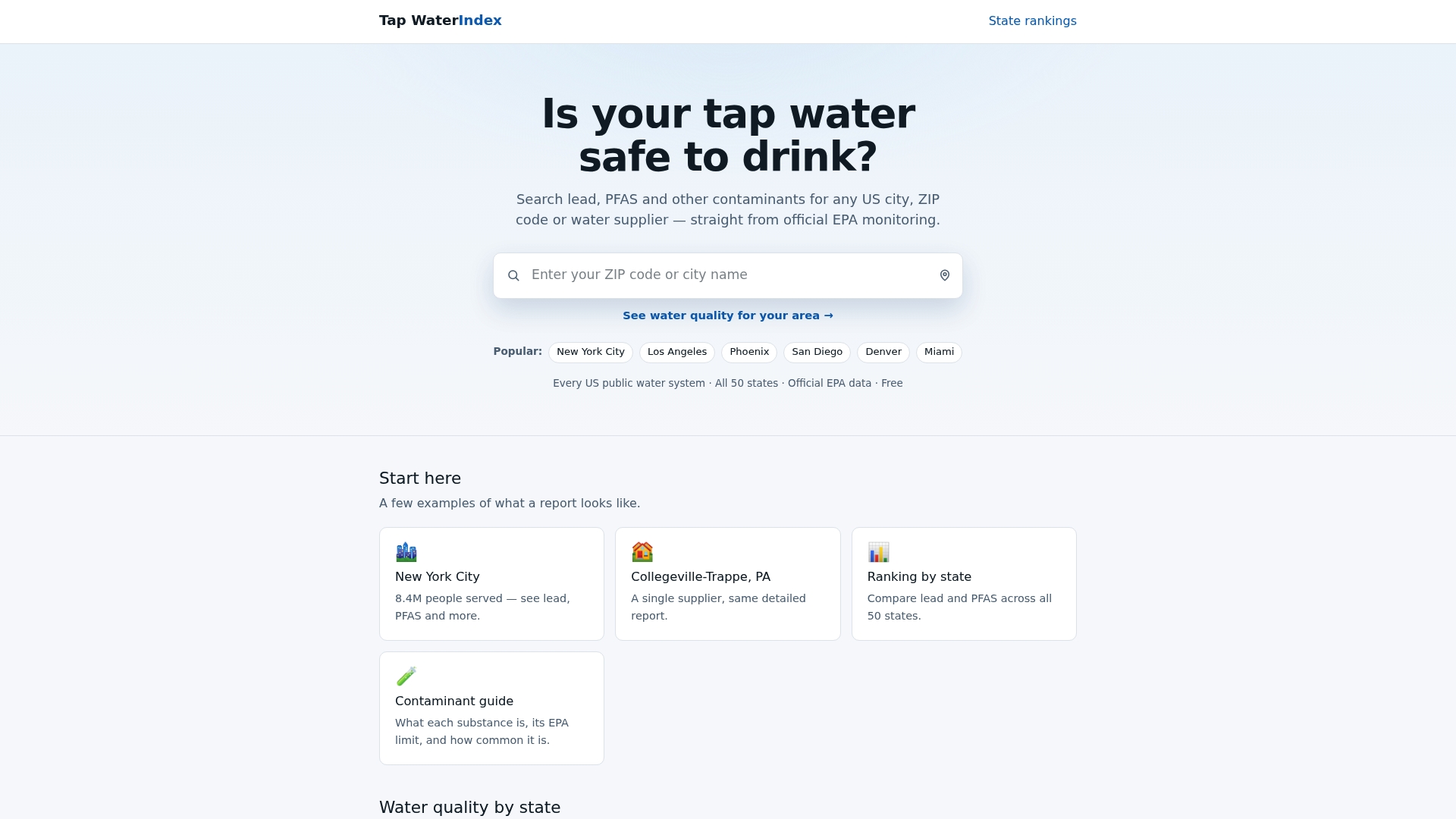
Start with the state-by-state water quality rankings to see how your local supplier compares on lead, PFAS, and other tracked contaminants. If you’re specifically worried about lead lines, the contaminant limits guide explains how EPA action levels work, so you’re not comparing your test result to the wrong number. Run a quick lookup by ZIP code or supplier name, and you’ll know within a couple of minutes whether your metallic taste lines up with a documented local issue or looks like it’s isolated to your own plumbing. That’s the difference between calling a plumber and calling your utility.
Sources
- Characterization of Metallic Off-Flavors in Drinking Water: Health, Consumption, and Sensory Perception
- Portland
- Bitter or metallic | United Utilities
- U.S. EPA
This article is general information, not a substitute for advice from a qualified doctor. Consult a qualified healthcare professional about your own circumstances before acting on anything here.