Phoenix Tap Water Meets Federal and State Standards: Check Address on TapWaterIndex
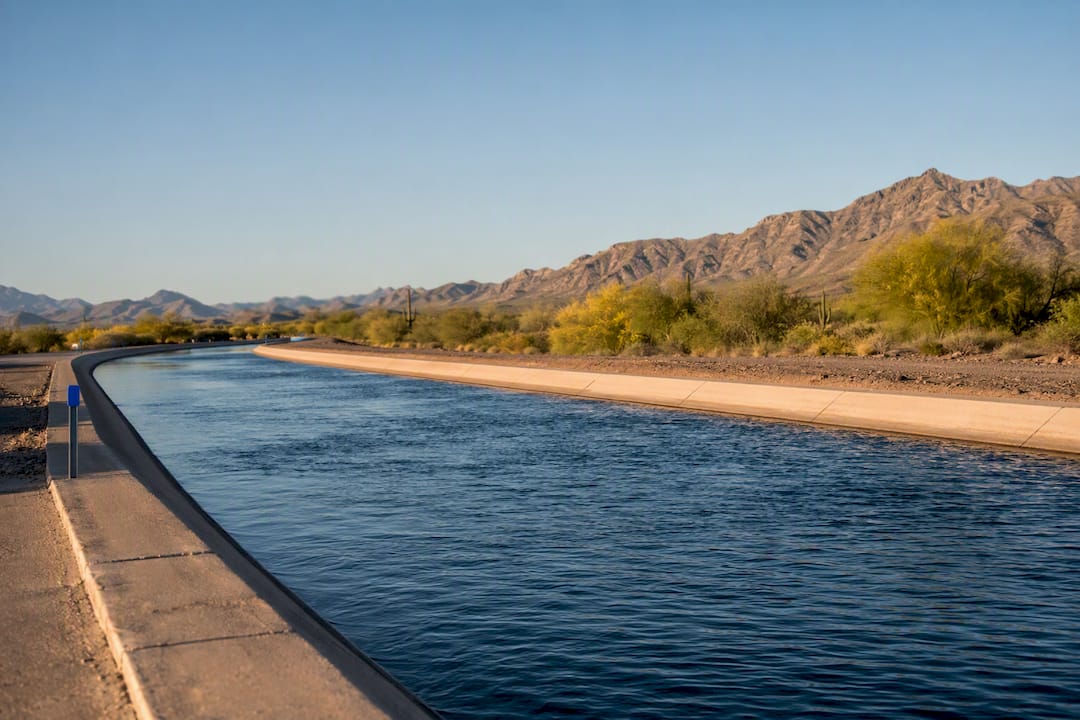
Phoenix tap water meets or exceeds every federal and state drinking water standard, according to the city’s most recent Water Quality Report. You can verify that yourself through the City of Phoenix Water Quality Report or EPA’s regulatory limits. Aesthetic quirks like hardness and occasional chlorine taste are common; regulated contaminants like lead and PFAS stay under legal thresholds. If you want certainty for your own address, search your ZIP code or supplier directly.
TL;DR:
- Phoenix’s surface water sources, mainly from rivers, require more treatment due to algae growth and organic matter from storage at Lake Pleasant.
- The city consistently meets or exceeds federal and state drinking water standards, with contaminants like lead and PFAS staying below legal limits.
- Private well owners, households with old plumbing, and vulnerable populations should take extra precautions, such as filtering and flushing, to ensure water safety.
- Regular testing through official reports and independent lab analysis is recommended for those with specific concerns about lead, PFAS, or other contaminants.
- Water clarity, taste, and mineral content vary seasonally, but secondary standards indicate no health risk despite aesthetic differences.
Table of Contents
- Where Phoenix Gets Its Drinking Water
- How Phoenix Treats and Monitors Your Water
- What’s Actually in Phoenix Tap Water
- Is Phoenix Water Safe to Drink at Home?
- How to Check Your Local Water Quality and Get Your Tap Tested
- Cutting Contaminant Exposure at Home
- Reading TapWaterIndex’s Local Contaminant Data
- Sources
Where Phoenix Gets Its Drinking Water
Almost all of it comes from rivers, not wells. Phoenix drew most of its 2024 supply from surface water: the Salt, Verde, and Colorado rivers, delivered through the Salt River Project and the Central Arizona Project, according to the City of Phoenix 2024 Water Quality Report. That report also confirms water delivered to a substantial portion of Phoenix residents met or surpassed every federal and state standard that year.
The remaining supply comes from city-owned groundwater wells, tapped mostly during peak summer demand or maintenance events on the surface system. Groundwater tends to carry different mineral loads than river water, sometimes higher in hardness or naturally occurring arsenic, which is part of why the city treats each source differently before blending it into the distribution system.
A lot of that river water doesn’t arrive fresh. CAP water often starts as Colorado River flow or mountain snowpack runoff hundreds of miles away, then sits in storage at Lake Pleasant before treatment. Storage matters for water quality because:
- Reservoirs are exposed to sun, algae growth, and runoff from surrounding land, all of which can shift taste and disinfection demand.
- The Arizona Department of Environmental Quality has flagged land uses near Lake Pleasant and the CAP corridor as factors that raise susceptibility in its source water assessments.
- Longer storage times give treatment plants more advance warning of contamination events, but also more time for algae-related taste and odor compounds to build up before water reaches a plant.
None of this means Lake Pleasant water is dirty. It means the city’s treatment plants have to work harder on certain fronts, mineral content, organic matter, algae byproducts, than a system pulling straight from a mountain stream would.
How Phoenix Treats and Monitors Your Water
Every gallon that reaches a Phoenix tap goes through a multi-step process before anyone tests it for a Water Quality Report. Plants start with raw-water analysis, then move to coagulation and filtration to strip out particles and organic matter, then disinfection, typically chlorine, with some facilities using chlorine dioxide or ozone for added control, and finally activated carbon treatment to knock down taste and odor issues that came from storage.
Monitoring runs on a strict cadence, not a one-time check:
- Turbidity, a measure of water clarity, is tracked against a target of 0.3 NTU, and Phoenix’s historical reports show results running well under that ceiling, according to the City of Phoenix 2023 Water Quality Report.
- Disinfectant residual is held to a minimum around 0.2 ppm to keep water protected against bacteria all the way to the tap.
- Sampling happens daily at treatment plants, with additional monthly and quarterly testing across the distribution system for bacteria, disinfection byproducts, and dozens of other regulated substances.
Statistic Callout: Phoenix’s 2024 report covers testing across numerous regulated substances, and the city states that year’s water met or surpassed all applicable federal and state standards for essentially the entire service population.
One rule worth knowing by name: EPA’s Long Term 2 Enhanced Surface Water Treatment Rule, or LT2ESWTR, requires extra Cryptosporidium monitoring for surface-water systems like Phoenix’s. Results from that monitoring determine whether a plant needs additional treatment barriers beyond standard filtration. Phoenix also runs dedicated control programs for disinfection byproducts, trihalomethanes and haloacetic acids, that form when chlorine reacts with organic matter, reporting results for both in every annual cycle.
What’s Actually in Phoenix Tap Water
Here’s where the numbers matter more than the marketing. Phoenix’s water clears federal legal limits, but “legal” and “zero” are different words, and knowing the difference helps you decide whether you need a filter or just peace of mind.
- Arsenic: naturally occurring in Arizona groundwater and some surface sources; Phoenix’s reported levels stay under the EPA’s Maximum Contaminant Level, though EWG’s database shows utility-specific readings that sit above the health benchmarks EWG uses, which are not legal limits.
- Lead: not typically found at the treatment plant. It’s a distribution and household plumbing issue, which is why lead sampling targets older homes and service lines rather than the water leaving the plant.
- PFAS: Phoenix has monitored for so-called “forever chemicals” as part of EPA’s Unregulated Contaminant Monitoring Rule surveillance. Surveillance data isn’t the same as a regulatory violation; it means the city is watching levels ahead of newer federal limits, not that a legal threshold has been crossed.
- Chromium-6: shows up in some third-party contaminant databases for Arizona utilities, but there’s no federal MCL specific to chromium-6 today, only a combined chromium standard. Treat any chromium-6 figure you see as a monitoring data point, not proof of a violation.
- Disinfection byproducts: chlorite, THMs, and HAAs form as a natural side effect of disinfection, and Phoenix’s control programs keep reported levels within EPA thresholds while working to minimize formation upstream of the plant.
Statistic Callout: The city’s 2024 report attributes nearly all of Phoenix’s supply to surface water, and EWG’s independent database confirms the utility reports measurable but sub-legal-limit arsenic and disinfection byproduct concentrations, exactly the profile you’d expect from a river-fed, chlorine-treated system.
Aesthetic numbers round out the picture. Total dissolved solids, hardness, and sodium all vary seasonally with source blending, which is why your water might taste different in August than in February. None of those three carry an enforceable EPA health limit; they’re graded on secondary standards that affect taste, not toxicity.
Is Phoenix Water Safe to Drink at Home?
For most healthy adults, yes. System-wide compliance with EPA and Arizona Department of Environmental Quality standards means the water leaving Phoenix’s treatment plants and traveling through its mains is safe by every regulatory measure the city and state track.
But “system-wide safe” doesn’t automatically mean “safe at your specific faucet.” A few groups and situations deserve extra caution:
- Infants, pregnant people, and immunocompromised residents face higher risk from even low-level contaminant exposure, so err toward filtered water for formula mixing and drinking.
- Homes built before the mid-1980s may still have lead solder or older service lines, meaning your water quality can diverge from the citywide report despite the plant doing everything right.
- Anyone who’s had recent plumbing work should flush new lines thoroughly, since fresh solder and fittings can leach more initially.
- Private well owners on the edge of city service areas aren’t covered by Phoenix’s municipal testing at all, and need their own annual well tests.
If you fall into any of those categories, the fix is simple: run the cold tap for consumption and cooking, never hot water, since hot water pulls more metal from pipes, flush any faucet that’s sat unused for hours, and use an NSF-certified filter rated for the specific contaminant you’re worried about.
How to Check Your Local Water Quality and Get Your Tap Tested
Verifying your own water doesn’t require a chemistry degree. Here’s the fastest path from question to answer:
- Pull the current Water Quality Report. Download it directly from Phoenix Water Services, or call the number listed on that page to request a mailed copy.
- Cross-check with federal and state databases. EPA’s ECHO system and ADEQ’s compliance records show violation history and enforcement actions for your specific utility, useful if you want a longer track record than one year’s report.
- Search your supplier or ZIP code on TapWaterIndex. It pulls EPA monitoring data into a searchable format, faster than digging through PDF reports plant by plant.
- Order a certified lab test if you have specific concerns. Ask for lead, total coliform bacteria, and PFAS if the lab offers it. Most certified labs return results in five to ten business days.
- Act on an exceedance. If a certified result comes back over an EPA limit, contact Phoenix Water Services immediately, keep the original sample and lab report, and retest before making any plumbing changes.
Pro Tip: Request your certified test from a lab that appears on your state’s certified drinking water laboratory list. A test from an uncertified lab won’t carry weight if you ever need to dispute a result or file a complaint with ADEQ.
Cutting Contaminant Exposure at Home
A filter is only as good as its certification. Look for NSF/ANSI 53 for lead and cyst reduction, NSF/ANSI 58 for reverse osmosis systems that tackle a broader range of dissolved contaminants, and NSF P473 specifically where PFAS reduction is listed, since not every filter marketed for “purity” actually tests against that standard.
Beyond hardware, a few habits do more than people expect:
- Always cook and drink with cold water; hot water dissolves more metal from aging pipes and fixtures.
- Flush the tap for 30 seconds to a minute after water has sat overnight or during a workday.
- Swap out faucet aerators every year or two, since sediment and scale collect there first.
- Run filtered water specifically for drinking and cooking rather than filtering everything, which wears cartridges out faster than necessary.
Whole-house systems make sense if you’re dealing with hardness across every fixture or you’ve confirmed elevated lead at your service line. A countertop pitcher or faucet-mounted filter covers most single-point concerns for a fraction of the cost.
Pro Tip: Set a calendar reminder for filter changes instead of trusting the “change indicator” light on cheaper units. Most of those lights track time, not actual contaminant load, so a heavy-use household needs changes sooner than the light suggests.
Reading TapWaterIndex’s Local Contaminant Data
TapWaterIndex builds its reports by pulling official EPA monitoring data for every public water system in the country, then organizing it by supplier, city, and ZIP code so you’re not parsing a raw regulatory filing to find your own numbers.
For Arizona specifically, that means you can look up PFAS and lead surveillance trends for Phoenix and surrounding suppliers without cross-referencing multiple state and federal databases yourself. The tool is a summary layer on top of official monitoring, not a substitute for a certified in-home test, if you need a legally defensible result for a specific address, order a lab test. But for getting a fast read on how your supplier compares to state and national trends, it’s built exactly for that. Search your Phoenix ZIP code or supplier name to see the current contaminant tables.

How I read Phoenix’s water data
Official reports settle the compliance question: Phoenix’s water meets its legal obligations, full stop. Where I get more skeptical is when advocacy benchmarks get treated as if they were legal thresholds. They’re not, and conflating the two scares people unnecessarily. My rule: trust the city’s Water Quality Report for system-level compliance, then use a point-of-use test if your household has a specific reason to doubt what’s at your own faucet. Call Phoenix Water Services if you have questions the report doesn’t answer, and use a supplier-level tool when you want the numbers faster than a PDF search allows.
— Sergey
Look Up Your Exact Water Supplier on TapWaterIndex
Phoenix’s citywide report tells you what the average gallon looks like. It won’t tell you how your specific supplier or ZIP code compares to other utilities across Arizona or the rest of the country, and that gap is what some online tools aim to close.
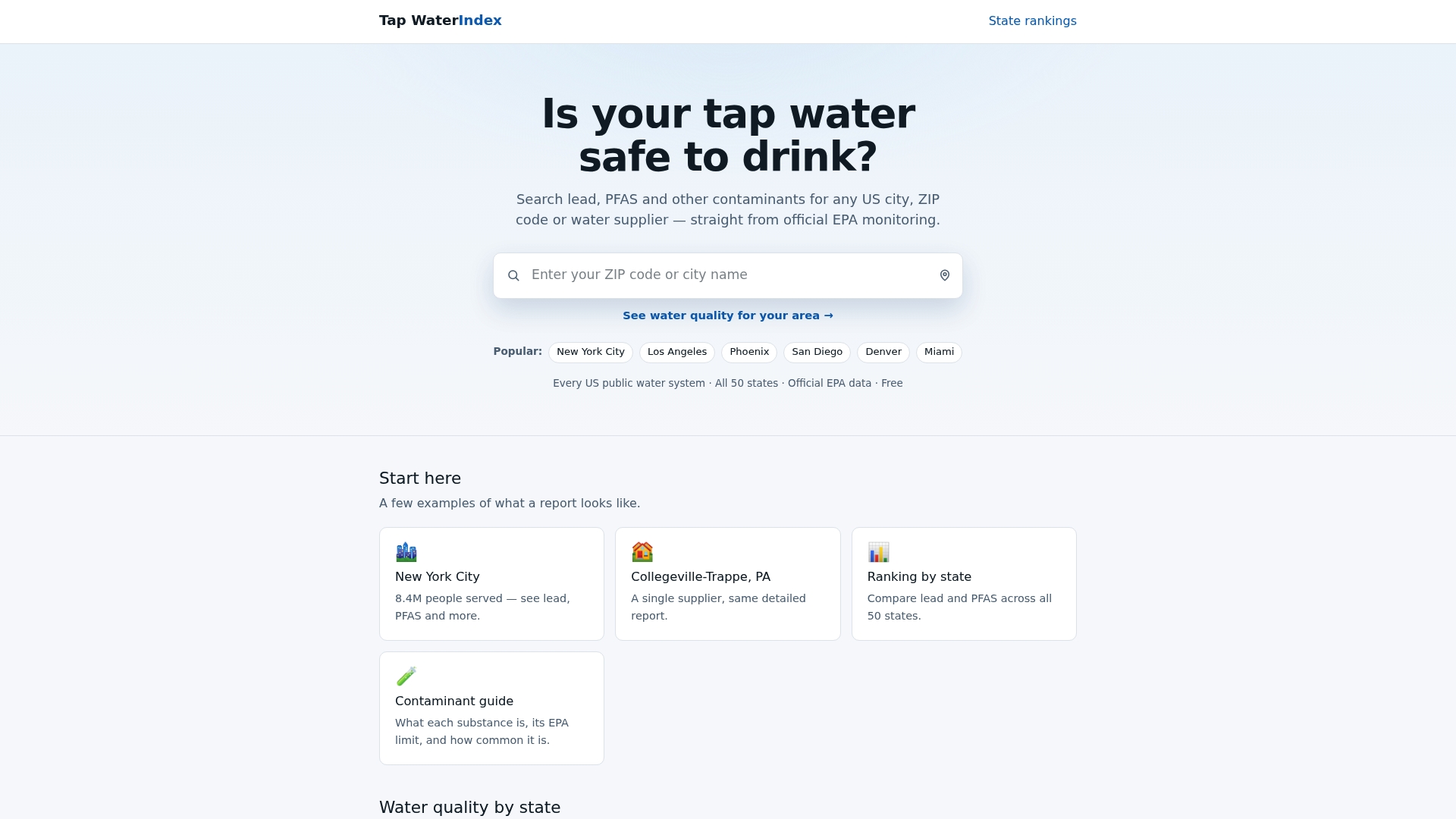
The platform turns raw EPA monitoring data into searchable tables by state, supplier, city, and ZIP, no PDF hunting, no regulatory jargon to decode first. You can check PFAS levels reported for Arizona suppliers, compare where Phoenix ranks against other utilities on the state-by-state water quality rankings, or dig into specific contaminant limits and how common they are nationally. If your household has particular concerns about lead exposure, the contaminant pages break down EPA limits and typical sources in plain language.
Search your supplier or ZIP code on TapWaterIndex right now to see exactly what’s been reported for your address, not just the citywide average.
Where to Verify Phoenix’s Water Data Yourself
- The City of Phoenix Water Quality Report gives full system-level test results and contact details for questions or printed copies.
- The Arizona Department of Environmental Quality publishes source water assessments covering risk factors near Lake Pleasant and the CAP corridor.
- EPA’s Safe Drinking Water Act resources explain federal limits, LT2ESWTR monitoring, and disinfection byproduct rules.
- TapWaterIndex offers supplier- and ZIP-level lookups for PFAS, lead, and other tracked contaminants.