US Homes: Is Lead in Your Tap Water Above 15 ppb? Check Local Data
There is no safe level of lead in drinking water. Start today: drink and cook only with cold water, never boil water to remove lead, check your utility’s data or order a certified test, and add a certified filter if children or pregnant people live in your home.
TL;DR:
- Testing your household water with a certified lab and using a First draw sample provides the most accurate lead exposure data.
- Regularly flush your plumbing after repairs or stagnant periods and use only filters certified to NSF/ANSI Standard 53 for lead removal.
- Lead service lines, fixtures, and solder from homes built before the 1980s are the main sources, especially in cities with older infrastructure.
- Children and pregnant women are most vulnerable, with even low levels of lead linked to long-term developmental and health issues.
- Utility responses are triggered when more than 10% of samples exceed 15 ppb, but the EPA’s action level is a regulatory benchmark, not a safety threshold.
Table of Contents
- What Causes Lead In Tap Water?
- Who Is Most At Risk From Lead Exposure?
- How Do You Test Your Tap Water For Lead?
- How Can You Reduce Lead Exposure Right Now?
- When Should You Contact Your Water Utility?
- How to Check Your Local Lead Risk With Public Data
- What Health Monitoring Should Follow Lead Exposure?
- How Do You Choose And Maintain A Lead Filter?
- Does Water Chemistry Affect How Much Lead Leaches?
- What Should Homeowners Prioritize First?
- Check Your Local Lead Results With Tapwaterindex
- Sources
What Causes Lead In Tap Water?
Lead almost never comes from the water source itself. It comes from what the water touches on its way to your glass.
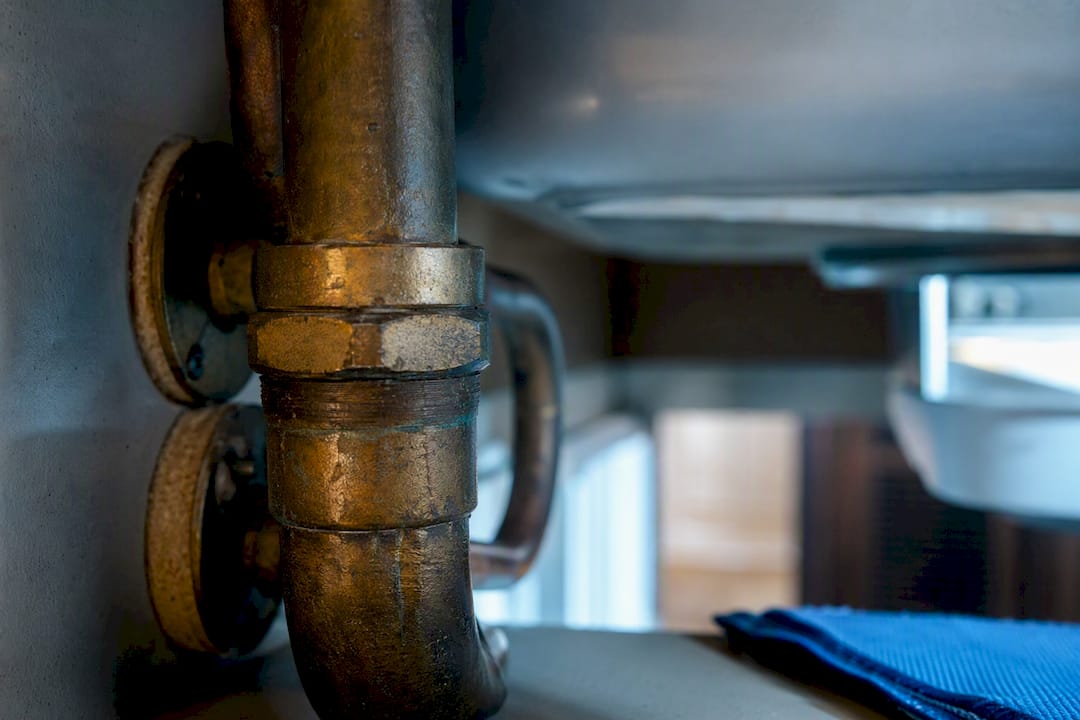
Lead service lines connecting your home to the water main are the biggest culprit where they still exist, particularly in cities with housing built before the 1980s. Even where the main line is lead-free, brass faucets, fixtures, and lead solder used on copper pipe joints (common until 1986) can leach lead directly into water sitting in your own plumbing. Lead in drinking water tends to concentrate most in homes built before the mid-1980s, when lead solder and lead pipe were both still legal.
Whether that lead ends up in your glass depends heavily on water chemistry. Several factors accelerate corrosion and leaching:
- Acidity — low pH water is more corrosive to metal pipes
- Low mineral content — soft water lacks the buildup that can coat and protect pipe interiors
- Stagnation time — water sitting overnight or over a weekend picks up more lead than water that’s flowing
- Temperature — warmer water speeds up chemical reactions with pipe metal
- Pipe age and condition — older, corroded plumbing releases more lead than newer fixtures
None of this is something you can see, taste, or smell. A PubMed study on lead in drinking water and consistent EPA guidance both make the same point: lead is undetectable without a test, no matter how clear the water looks in your glass.
Who Is Most At Risk From Lead Exposure?
Lead is a neurotoxin, and children absorb it far more efficiently than adults do. Even low-level exposure during early childhood is linked to reduced IQ, attention problems, and slower development, effects that don’t reverse once the damage is done. Pregnant people carry an added risk: lead crosses the placenta, and prenatal exposure has been tied to lower birth weight and developmental issues in infants.
Adults aren’t off the hook. Years of chronic, lower-level exposure are associated with higher blood pressure, cardiovascular strain, and reduced kidney function over time.
The regulatory numbers, translated:
| Term | Value | What it actually means |
|---|---|---|
| MCLG (health goal) | 0 ppb | No amount of lead is considered fully safe |
| Action level | 15 ppb | Legal trigger point, not a safety threshold |
| Trigger for utility action | >10% of samples over 15 ppb | System-wide response required |
That gap between “0” and “15” often confuses people. The EPA’s lead standard sets 15 ppb as an enforcement trigger for utilities, not a line that says water below it is risk-free. It’s a regulatory compromise based on what’s practically achievable at scale, not a medical judgment about your child’s safety. If you’re worried about past exposure, a simple blood lead test through your doctor or pediatrician is the only way to know what’s actually in someone’s body, since water tests only tell you what’s coming out of the tap.
How Do You Test Your Tap Water For Lead?
You don’t need to guess. Testing follows a clear path, and most of it is inexpensive.
- Check your utility’s Consumer Confidence Report first. Every public water system publishes annual results, including lead sampling data, and many post the report on their website or mail it directly to customers.
- Order a certified lab test if you want household-specific results. A first-draw sample, water that’s sat in your pipes for at least six hours, gives the most realistic picture of what you’re actually drinking, since that’s when lead concentration peaks.
- Find a certified lab through your state or local health department. Certified lab testing typically runs between $20 and $100 per sample, depending on how many contaminants you screen for.
- Ask your utility about your service-line material directly. Many utilities maintain records or offer free lead testing kits, especially in cities actively replacing lead lines.
- Call a licensed plumber if you can’t determine your plumbing’s age or material. They can inspect exposed pipe and identify lead solder or lead service connections on sight.
Pro Tip: Skip any test that only checks water straight from the tap without a “first draw” stagnant sample; you’ll miss the peak lead reading that matters most for children’s exposure.
For a full walkthrough of sample types and lab selection, see how to test tap water for lead.
How Can You Reduce Lead Exposure Right Now?
Some fixes take five minutes. Others take a service-line replacement crew. Both matter.
Do this today:
- Use only cold water for drinking, cooking, and mixing baby formula; hot water leaches more lead from pipes and fixtures.
- Run the tap before use if water has sat for hours, following your utility’s specific flush-time guidance since flush duration depends on your home’s plumbing length.
- Remove and clean faucet aerators every few months; lead particles can collect in the mesh screen.
- Never boil water to remove lead. Boiling doesn’t eliminate lead and can actually concentrate it, since water evaporates while dissolved lead stays behind.
Choose the right filter: Look specifically for a point-of-use filter certified to NSF/ANSI Standard 53 for lead removal. NSF/ANSI 42 covers particulate reduction only and won’t touch dissolved lead, so check the box or spec sheet carefully before buying. Replace cartridges exactly on the manufacturer’s schedule; an expired filter can stop removing lead entirely while still letting water flow through normally.
Pro Tip: If your neighborhood recently had water main or service-line repair work done, extend your flushing routine for several months afterward. Construction disturbance can knock loose lead deposits that had settled inside old pipes, and elevated readings after this kind of work have been documented for up to six months.
The permanent fix: filters and flushing manage risk, but replacing lead service lines and lead-soldered plumbing removes the source entirely. Contact your utility about active replacement programs. Many are now expanding under federal rules. For deeper filter selection guidance, see NSF water filter certifications.
When Should You Contact Your Water Utility?
Your utility has legal obligations under the EPA’s Lead and Copper Rule Improvements, which requires ongoing monitoring, public education, corrosion control treatment, and, increasingly, full lead service line replacement.
If testing shows more than 10% of sampled homes exceed 15 ppb, the utility must act. As a customer, that means you should expect:
- A public notice explaining the exceedance and what it means for your area
- Educational materials on reducing your exposure at home
- Adjustments to corrosion control treatment at the treatment plant
- A timeline for partial or full lead service line replacement, if lines are the source
If you want help paying for a private-side replacement, ask your utility about Drinking Water State Revolving Fund (DWSRF) loans and grants, along with any state or local lead-line replacement assistance programs. Many utilities will also tell you your service-line material on request, sometimes just by looking up your address in their records.
How to Check Your Local Lead Risk With Public Data
You don’t have to wait for a mailed report to see where your water stands. Tapwaterindex lets you search by city, ZIP code, or water supplier and pull the lead and PFAS results already on file with the EPA.
- Look up first-draw sample results and compare them against the 15 ppb action level, not zero, since that’s the enforcement benchmark utilities are held to.
- Use state-by-state comparisons to see if your area’s lead prevalence runs higher or lower than the national picture.
- If results are recent and clean, prioritize routine flushing habits over urgent testing.
- If results are old, missing, or elevated, order a certified test and consider a certified filter while you wait on results.
What Health Monitoring Should Follow Lead Exposure?
A one-time high test result doesn’t mean the story ends there. Lead exposure calls for follow-up, not just a filter purchase and a shrug.
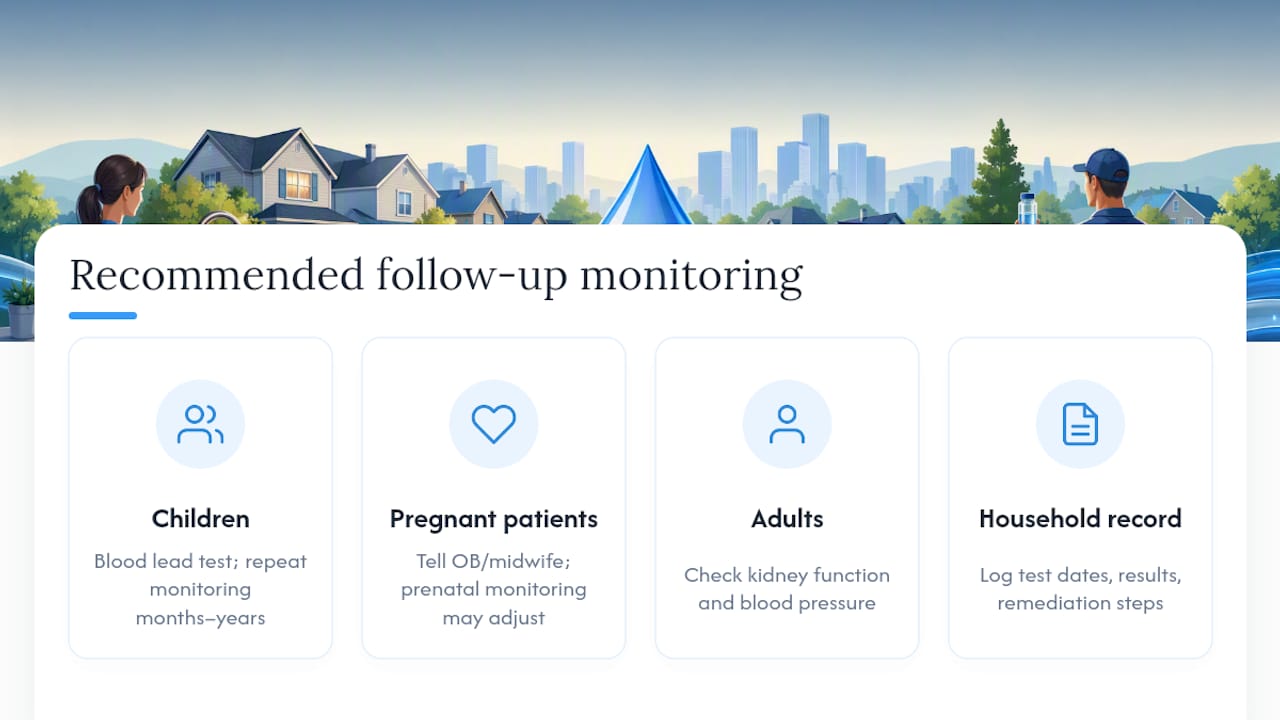
For children, pediatricians typically recommend a blood lead level test as the primary monitoring tool, especially for kids under six, since that’s the window of peak neurological vulnerability. If a child’s water source tested elevated, ask your pediatrician about testing even without obvious symptoms; lead exposure frequently causes no visible signs early on. Repeat testing over months or years helps track whether levels are falling as household fixes take hold.
Pregnant patients should raise water testing history with their OB or midwife, since lead crosses the placenta and prenatal monitoring protocols may adjust based on known exposure risk.
Adults with long-term exposure, especially those who lived for years in a home later found to have a lead service line, may want to discuss kidney function and blood pressure monitoring with their doctor, given the documented links between chronic lead exposure and both conditions. This isn’t about panic. It’s about giving a doctor the full picture so they can watch the right numbers over time instead of guessing.
Keep a simple record: test dates, results, and any remediation steps taken (filter installed, service line replaced). That history becomes genuinely useful if a doctor ever asks, “Has anyone in this house had elevated lead exposure?”
How Do You Choose And Maintain A Lead Filter?
Not every water filter pulled off a shelf removes lead, and that’s the mistake people make most often.
The only certification that matters here is NSF/ANSI Standard 53, specifically for lead reduction. A pitcher, faucet-mount, or under-sink filter can carry NSF/ANSI 42 certification for taste and particulates while doing nothing for dissolved lead. Read the box or the manufacturer’s spec sheet, not just the marketing claim on the front.
Installation type matters less than certification, but a few practical notes help:
- Pitcher filters are cheapest and easiest but have the lowest flow capacity; fine for drinking water only in low-use households.
- Faucet-mount filters treat water at the point of use with minimal plumbing changes.
- Under-sink systems typically offer higher capacity and are worth it for larger households or higher lead readings.
Maintenance is where filters quietly fail. A cartridge left in past its rated capacity can stop removing lead effectively while water still flows through it looking completely normal, giving you false confidence at exactly the wrong time. Set a calendar reminder tied to the manufacturer’s cartridge life, usually measured in gallons filtered or months of use, whichever comes first.
Does Water Chemistry Affect How Much Lead Leaches?
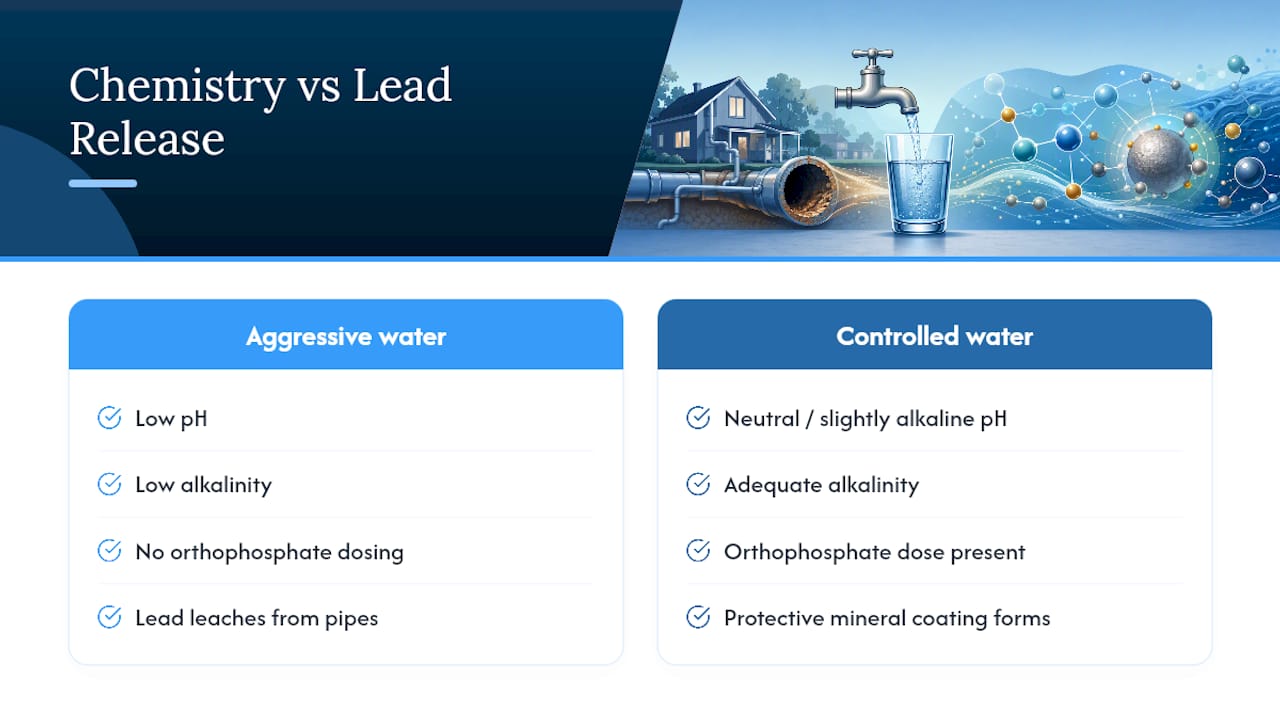
Yes, and this is the part most homeowners never learn until a utility notice mentions it. Water’s pH and alkalinity directly control how much lead dissolves out of pipe and solder.
Acidic water (lower pH) is chemically more aggressive toward metal, pulling lead out of old solder joints and brass fixtures faster than neutral or alkaline water would. Low-alkalinity water also lacks the buffering capacity to resist pH swings, which makes corrosion less predictable over time.
This is exactly why utilities run corrosion control treatment, adjusting pH and adding compounds like orthophosphate to build a protective mineral coating inside old pipes. When that treatment works well, it can meaningfully suppress lead release even in a system with lead service lines still in the ground. When treatment falters or gets adjusted without careful monitoring, lead levels can spike, sometimes dramatically, even in a system that previously tested clean for years.
That’s part of why a single clean test result doesn’t guarantee permanent safety. Corrosion control chemistry, source water changes, and seasonal temperature shifts can all move lead levels up or down between testing periods. It’s a legitimate reason to retest periodically rather than treating one good result as a lifetime pass.
What Should Homeowners Prioritize First?
The research here points one direction: protect kids and pregnant household members first, then work outward. Test before you assume, filter with real NSF/ANSI 53 certification, and push your utility for straight answers on service-line material and replacement timelines.
— Sergey
Check Your Local Lead Results With Tapwaterindex
You don’t have to wait on a mailed report or dig through a utility’s PDF archive to find out where your water stands. The website pulls official EPA monitoring data into a searchable format, so you can look up lead and PFAS results by city, ZIP code, or water supplier.
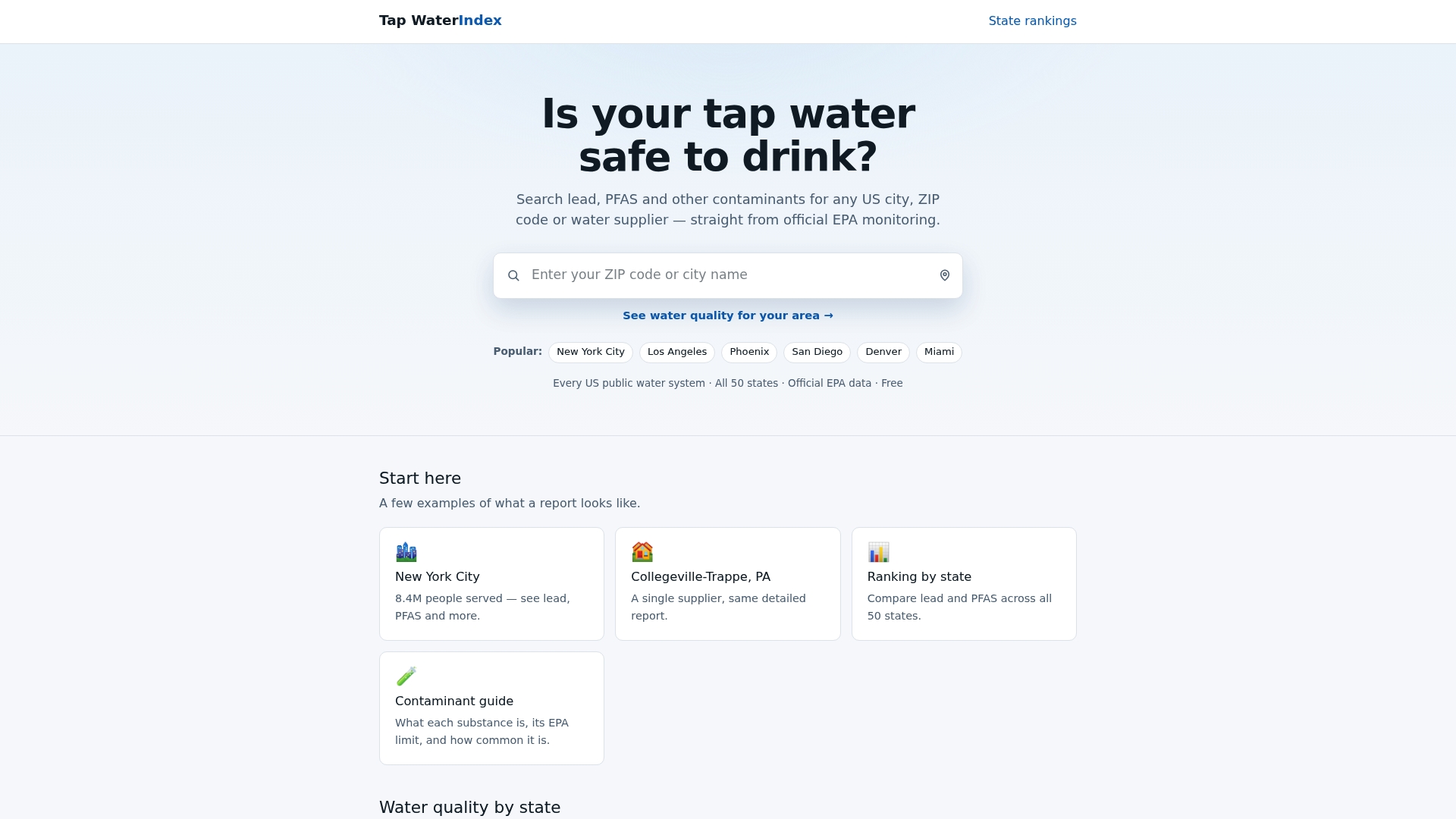
The site’s state-by-state rankings show how your area’s lead prevalence compares to the rest of the country, which helps you decide whether a certified home test is worth the money right now or whether your system’s recent record looks clean. For a deeper look at the contaminant itself, including EPA limits and where lead most commonly turns up, the lead contaminant page breaks down the regulatory numbers alongside your local data. Search your address on Tapwaterindex now to see your supplier’s latest results and figure out your next move.
Sources
- Basic Information about Lead in Drinking Water | US EPA
- Study referencing filtration and standards (PubMed entry)
This article is general information, not a substitute for advice from a qualified doctor. Consult a qualified healthcare professional about your own circumstances before acting on anything here.