No, Boiling Water Does Not Remove Lead
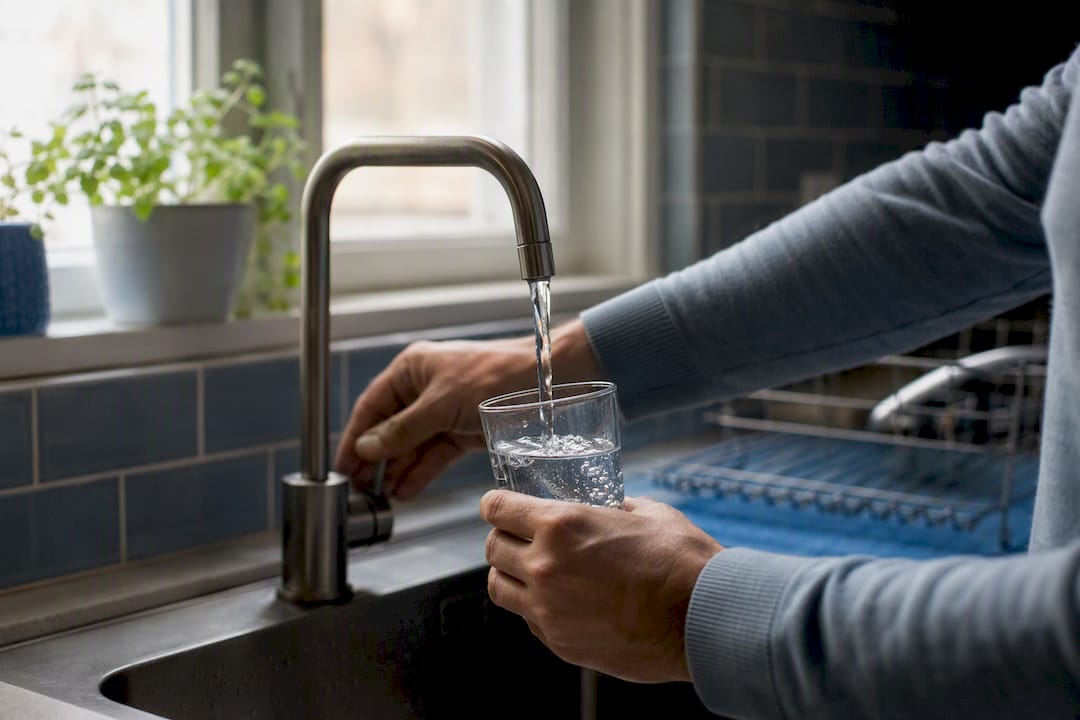
No, boiling does not remove lead from water. It can actually make lead concentrations higher, not lower. This is one of the most persistent myths in home water safety, and it matters because the wrong move here isn’t neutral. It’s actively worse than doing nothing.
The EPA states this directly: boiling offers no protection against lead and can concentrate it as water evaporates. If you’ve been boiling tap water before making coffee, pasta, or a baby’s bottle because you’re worried about lead, stop. Two rules matter more than anything else right now:
- Use only cold tap water for drinking, cooking, and mixing infant formula. Never hot.
- Never boil water as a lead-reduction step. It doesn’t work, and it can push concentrations up.
The CDC recommends using cold, flushed water and a point-of-use filter certified to NSF/ANSI Standard 53 for lead reduction. If you’re not sure what’s actually in your tap water, Tapwaterindex lets you search official EPA monitoring data by city, ZIP code, or water supplier in seconds, no lab visit required to get a starting picture.
Lead exposure is a serious, cumulative risk, especially for children and pregnant women. The good news is that once you understand why boiling fails, the actual fixes are straightforward.
Key Takeaways
Boiling water never removes lead and can raise its concentration, so the household fix depends on cold water use, verified flushing, and certified filtration, not heat.
| Point | Details |
|---|---|
| Boiling backfires | Evaporation reduces water volume but leaves the same lead mass behind, raising concentration. |
| Cold water is the rule | Use cold, flushed tap water for drinking, cooking, and infant formula, never hot. |
| Flush before use | Run the tap for a short time before drawing water to flush out stagnant water — longer if you have a lead service line. |
| Test to confirm | Lead has no taste or smell, so a state-accredited lab test is the only way to know your actual level. |
| Filter certification matters | Choose filters certified to NSF/ANSI Standard 53 for lead, and replace cartridges on schedule. |
Table of Contents
- Does Boiling Water Remove Lead? The Chemistry Explained
- What To Do Right Now If You Suspect Lead In Your Water
- How To Test Your Water For Lead And Read The Results
- Which Water Filters Actually Remove Lead
- When To Replace Pipes Or Call In A Professional
- Checking Your Local Water Supplier’s Lead Data With Tapwaterindex
- What Actually Moves The Needle On Lead Exposure
- Sources
Does Boiling Water Remove Lead? The Chemistry Explained
Boiling water removes some contaminants, but lead isn’t one of them, and the reason comes down to basic chemistry. Chlorine, certain bacteria, and some volatile organic compounds break down or evaporate when heated to a rolling boil. Lead does neither.
Lead in tap water exists as dissolved metal ions or tiny particulate fragments that flaked off old pipes, solder, or brass fittings. It has no vapor pressure worth mentioning at boiling temperature, so it stays put. Water evaporates. Lead does not. That single fact is the whole story.
Here’s where it gets worse than “boiling just doesn’t help.” When you boil a pot of water, you lose volume to steam. Say you start with one quart of water containing a certain mass of lead, and boiling drives off 20% of that volume as vapor. The lead atoms that were dissolved in that quart don’t leave with the steam. They stay behind in the remaining 80% of liquid. Same amount of lead, less water to dilute it in, so the concentration per liter goes up. The UNL Extension explains this directly: water mass decreases while total lead mass stays fixed, so what’s left in the pot is measurably more concentrated than what you started with.
Think of it like reducing a sauce. If you simmer down a pot of tomato sauce to thicken it, the salt you added at the start doesn’t cook off. It just gets more concentrated as the liquid reduces. Lead in boiling water behaves the same way.

There’s a second problem that compounds the first: hot water is chemically more aggressive at pulling lead out of plumbing in the first place. Heat increases the rate at which lead leaches from lead service lines, old lead solder joints, and brass fixtures that contain trace lead. That’s why health guidance consistently tells you to avoid hot tap water for consumption, not just to skip boiling it after the fact. The problem often starts before the water even reaches your pot.
A few things worth knowing as you think through your own household risk:
- Hot water pulls more lead from pipes and fixtures than cold water does, even before boiling starts.
- Boiling then concentrates whatever lead was already dissolved in that hot water.
- Neither step is safe to skip. Avoiding hot water and avoiding boiling are two separate protective actions, not one.
Pro Tip: If you’ve been running the hot tap to “get water faster” for cooking, switch to cold and let it heat on the stove or in a kettle instead. You avoid the extra leaching that comes from drawing hot water straight from the tap.
None of this means your water is automatically contaminated. Most U.S. tap water meets federal standards. But if your home has older plumbing, a lead service line, or you simply don’t know what’s running through your pipes, the chemistry above explains exactly why the “just boil it” instinct backfires.
What To Do Right Now If You Suspect Lead In Your Water
If you’re worried about lead today, before test results, before a plumber, before anything else, here’s the order of operations that actually protects your household.
-
Switch to cold water immediately for anything you drink or cook with. This includes coffee, tea, ice, rice, pasta water, and any recipe that uses tap water. Cold water leaches far less lead from pipes and fixtures than hot water does.
-
Never use hot tap water for infant formula. This is worth its own line because the risk is highest for infants and the mistake is common. Fill a cup or bottle with cold water, then heat that water separately on the stove or in a warmed bottle warmer. Don’t run the tap on hot and fill the bottle directly.
-
Flush your tap before drawing water for consumption. Water that’s been sitting in pipes overnight or for several hours picks up more lead from stagnant contact with plumbing. The Minnesota Department of Health recommends running the cold tap for 30 to 60 seconds before use if you don’t have a lead service line, and for 3 to 5 minutes if you do. If you don’t know whether you have a lead line, flush for the longer window until you find out.
-
Use bottled water or a certified filter while you sort this out. You don’t need to solve the whole problem today. A jug of bottled water or a pitcher filter certified to NSF/ANSI Standard 53 buys you time to test properly and figure out a permanent fix.
-
Do not boil water as a workaround. It’s tempting to think heat kills whatever’s wrong with the water. It doesn’t touch lead, and as covered above, it can make things worse.
A note on where the real risk lives: showering and bathing in water containing lead is generally considered safe because lead isn’t absorbed through skin in meaningful amounts, per the UNL Extension’s guidance. The danger is ingestion, so your energy is best spent on drinking and cooking water, not worrying about the shower.
Pro Tip: Keep a labeled pitcher of flushed, filtered cold water in the fridge specifically for cooking and drinking. It removes the temptation to grab straight from the tap when you’re in a hurry.
If your home was built before 1986, when federal law restricted lead in plumbing materials, treat these steps as standard practice rather than a one-time emergency response. Older homes and older municipal service lines are where lead risk concentrates, and a CDC insight on exposure risk points out that risk can also temporarily spike after nearby water main work or service line replacement disturbs sediment in the pipes.
How To Test Your Water For Lead And Read The Results
You cannot taste, see, or smell lead in water, so the flushing and cold-water habits above are precautions, not confirmation. Testing is the only way to know what’s actually coming out of your tap.
Skip the drugstore test strips for anything beyond a rough screen. They’re not sensitive enough to give you an actionable number. Instead, order a kit from a state-accredited laboratory. Most state health department or environmental agency websites maintain a list of certified labs, and many municipal water utilities will point you toward one directly if you call and ask. Costs typically run in the modest double digits per sample, a small price for a definitive answer.
Sample collection technique matters more than people expect. A proper test actually asks for two separate samples:
- A first-draw sample, taken from the cold tap first thing in the morning after water has sat in the pipes for at least six hours overnight. This captures the worst-case scenario, since lead has had time to leach from stagnant contact with your plumbing.
- A flushed sample, taken after running the water for the recommended interval. This shows you what your water looks like after you’ve done the flushing step covered above.
Comparing the two tells you whether your fix (flushing) is actually working, or whether the contamination is severe enough that flushing alone won’t cut it.
When your results come back, you’ll see a number in parts per billion (ppb) or micrograms per liter (µg/L), which are equivalent. The EPA’s regulatory action level for lead in public water systems is 15 ppb, but don’t read that number as a safety threshold. Health authorities are consistent on this point: there is no known safe level of lead exposure, particularly for children. The action level is a trigger for utility-side intervention, not a green light for anything below it. If your first-draw sample comes back detectable at all, especially above single digits, that’s your signal to filter, replace fixtures, or investigate your service line.
Re-test after any of the following: plumbing repairs or replacement, installing a new filter (to confirm it’s performing as expected), or nearby utility work on water mains or service lines. Each of these can temporarily disturb sediment or change the corrosion chemistry in your pipes, and a one-time test months ago won’t tell you what’s true today.
If you want a starting point before you spend money on a lab kit, check what’s already been reported for your area. Tapwaterindex compiles EPA monitoring data by water supplier, so you can see documented lead detections for your specific utility before deciding how urgently to act.
Which Water Filters Actually Remove Lead
Three treatment methods have real, documented lead-removal performance: certified filtration, reverse osmosis, and distillation. They are not interchangeable, and picking the wrong one for your situation means paying for a fix that doesn’t fix anything.
NSF/ANSI Standard 53-certified filters are the most common and most affordable option. These include pitcher filters, faucet-mounted units, and under-sink systems, and the certification specifically tests and verifies lead reduction claims, which is different from a filter that’s merely certified under Standard 42 for taste and odor. The CDC is explicit that you should look for a filter certified to Standard 53 for lead, not just any filter with “purification” on the box.
Reverse osmosis (RO) systems push water through a semipermeable membrane under pressure, and point-of-use RO units commonly remove 90% or more of lead, according to UNL Extension research. Most residential RO systems install under the sink and produce treated water through a dedicated tap, typically a few gallons a day, which is plenty for drinking and cooking but not a whole-house solution.
Distillation boils water and then condenses the resulting steam, leaving lead and most other dissolved solids behind in the boiling chamber. This is not the same as simply boiling water in a pot and drinking what’s left. The steam that’s captured and recondensed is what you drink, and lead doesn’t travel with steam. The UNL Extension notes distillation can remove approximately 99% of lead, the highest of the three methods, but it’s slow, energy-intensive, and produces limited daily volume, making it a niche choice for most households.
| Treatment Type | Lead Removal | Format Options | Best For |
|---|---|---|---|
| NSF/ANSI 53 filter | Certified to remove lead (verify specific model rating) | Pitcher, faucet-mounted, under-sink | Everyday affordability, easy install |
| Reverse osmosis | 90% or more | Under-sink with dedicated tap | Households wanting a strong, ongoing reduction |
| Distillation | Approximately 99% | Countertop unit | Low-volume, maximum-removal needs |
A few practical notes that determine whether any of these actually work in your home:
- Always confirm the specific model carries NSF/ANSI Standard 53 certification for lead, not just Standard 42 for aesthetics. NSF’s own certification database lets you check a model before buying.
- Replace filter cartridges on the manufacturer’s schedule. A filter past its rated capacity can stop removing contaminants effectively, or in some cases release what it previously captured.
- Never run hot water through a lead-reduction filter. Heat can damage the filter media and reduce its effectiveness, and it defeats the point since hot water leaches more lead to begin with.
- Water softeners do not remove lead. Worse, if a softener is installed or adjusted without professional guidance, it can shift your water’s chemistry in ways that make it more corrosive to lead-bearing pipes and solder, potentially increasing lead pickup rather than reducing it.
Pro Tip: If you’re comparing filter brands, search the model number plus “NSF certified” before you buy. A quick search on the NSF public database or through a filtration specialist can confirm the exact standard a unit meets rather than relying on marketing language on the box.
For most households, a certified pitcher or faucet filter covers day-to-day drinking and cooking needs at low cost. Reverse osmosis makes sense if your test results show elevated lead and you want a stronger, largely hands-off reduction. Distillation is worth considering only if you have modest daily water needs and want the highest removal rate available.
When To Replace Pipes Or Call In A Professional
Filters and flushing manage exposure. They don’t fix the underlying source. If your test results show persistent lead, especially in first-draw samples, the long-term answer is usually addressing the plumbing itself, not treating water forever.
Start by finding out whether you have a lead service line, the pipe connecting your home to the municipal water main. Many utilities now maintain public service line inventories as part of the EPA’s Lead and Copper Rule, and you can often check your address directly through your utility’s website or by calling their customer service line. Homes built before the mid-1980s in older cities are the highest-risk category.
A few paths forward once you know what you’re dealing with:
- Full service line replacement is the most durable fix, and some municipalities now offer partial or full funding for this work as part of federally supported lead line replacement programs. Ask your utility directly whether you qualify.
- Utility-side corrosion control is a separate lever that only your water provider can pull. Utilities adjust water chemistry, often by adding orthophosphate, to create a protective coating inside pipes that reduces leaching. This doesn’t replace your household actions, but it’s part of why lead levels can shift over time even without any work on your end.
- In-home plumbing fixes, like replacing old lead solder joints or brass fixtures with lead-free alternatives, matter even if your service line itself is safe. A good chunk of household lead exposure comes from fixtures inside the home, not just the incoming line.
- Vetting a plumber or water treatment professional should include asking for before-and-after water testing as part of the job, not just a visual inspection. A contractor who won’t test before and after the work isn’t giving you a way to confirm the fix actually worked.
If you’re unsure where to start, your state or local health department typically has a water program office that can point you toward accredited testing labs, known problem areas, and any active funding programs for line replacement. This is also where you’d report a suspected public health issue if you believe your utility’s water is a broader community concern, not just a household one.
Checking Your Local Water Supplier’s Lead Data With Tapwaterindex
Before you spend money on a lab test, it’s worth seeing what’s already documented for your water supplier. Utilities report lead monitoring results to the EPA as part of routine compliance testing, and that data is public. It’s just scattered across thousands of individual utility and state databases, which makes it nearly impossible to check without knowing exactly where to look.
Here’s how to use it:
- Review the reported lead concentration and sampling date. A result from three years ago tells a different story than one from last quarter, especially if your area has had recent plumbing work or a service line replacement program.
- Compare your supplier against others in your state. State-level pages, like Massachusetts lead data or Colorado lead data, show how your utility ranks against neighboring systems, which can flag whether a problem is isolated to your area or part of a broader regional pattern.
Supplier-level EPA data tells you what’s happening at the source, before water travels through your home’s own pipes. It won’t catch lead that comes from your specific plumbing, which is exactly why household testing still matters even when your utility’s reported numbers look clean. The two data sources answer different questions: one tells you what left the treatment plant, the other tells you what came out of your tap.
Public EPA monitoring data is the starting point for understanding lead risk at the utility level, but the final answer for any individual household still depends on what’s inside the walls between the meter and the faucet.
Sergey built this section of the analysis around a simple idea: transparency about where the data comes from, and where its limits are, is worth more than a false sense of certainty either way.
What Actually Moves The Needle On Lead Exposure
The conventional advice on lead in tap water tends to bury the most useful information under a pile of generic “drink filtered water” platitudes. That’s backwards. The single highest-leverage action isn’t buying a filter, it’s figuring out whether you have a lead service line in the first place, because that one fact determines almost everything else: how long to flush, how urgently to test, and whether a pitcher filter is enough or you need reverse osmosis.
Most people also underestimate how much hot water habits matter compared to what they’re actually drinking. Cooking pasta in hot tap water, or filling a kettle from the hot side out of convenience, does more damage than skipping a filter most days would.
Start with the free step: look up your supplier’s EPA data, learn whether your service line is a concern, then decide how much you need to spend on treatment. Testing and data first. Equipment second.
— Sergey
This article is general information, not a substitute for advice from a qualified doctor. Consult a qualified healthcare professional about your own circumstances before acting on anything here.
Sources
- Does boiling water remove lead? | US EPA
- Reduce or eliminate exposure to lead in tap water | CDC
- Drinking Water contaminants: Lead (G1333) | UNL Extension
- Let it run … and get the lead out! - MN Dept. of Health