Uranium in Drinking Water: A Homeowner’s Action Guide
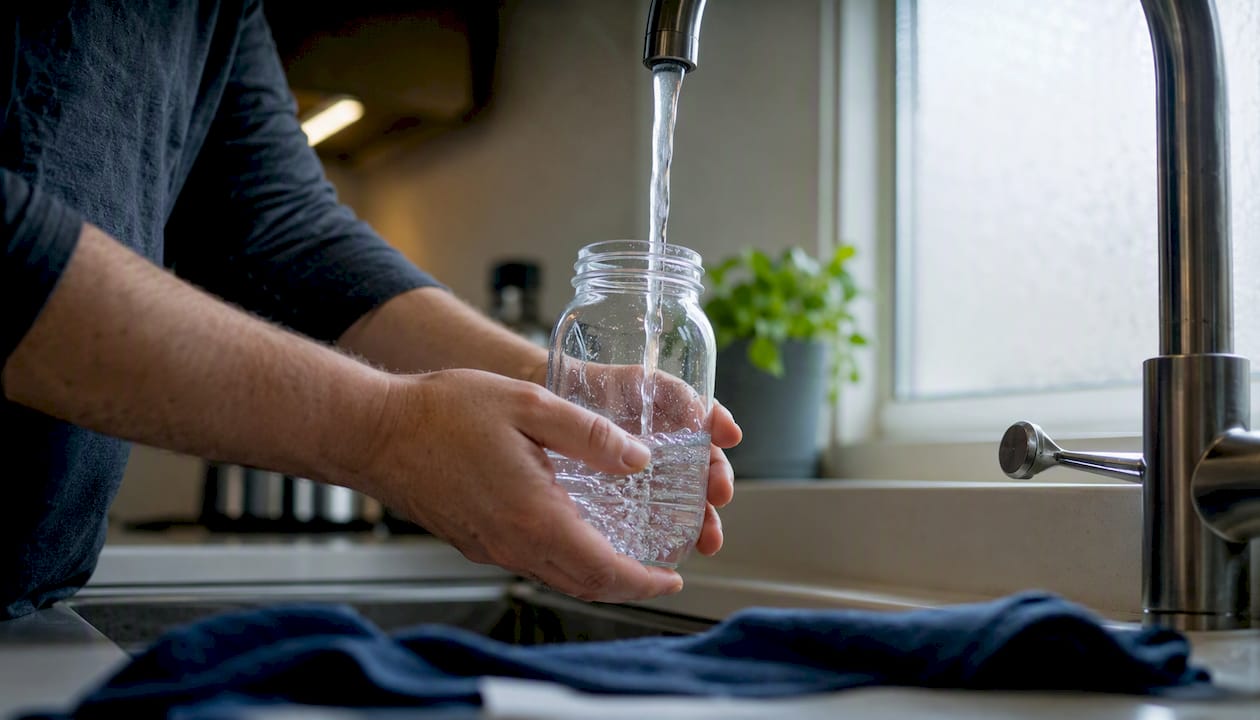
Low to moderate uranium in drinking water is mainly a slow-building kidney risk, not an acute radiation hazard, and the first move if you suspect a problem is simple: stop drinking and cooking with that water until you get a test result back. Uranium occurs naturally in groundwater across wide parts of the country, and the only way to know your number is to test for it. This is not a wait-and-see contaminant, but it is also not a call-poison-control emergency the way something like arsenic or acute lead exposure can be.
The EPA’s Maximum Contaminant Level (MCL) for uranium is 30 micrograms per liter (30 ppb) for public water systems. That’s the benchmark you compare any lab result against. The U.S. Geological Survey tracks where uranium shows up in groundwater nationally, and Tapwaterindex lets you check whether your local public utility has already reported it.
Here’s what to do in the next 24 hours if you’re worried:
- Switch to bottled water for drinking, cooking, and making baby formula until you have an answer.
- If you’re on a public water system, pull up your supplier’s Consumer Confidence Report or search it on Tapwaterindex.
- If you’re on a private well, order an ICP-MS uranium test from a state-certified lab this week, not next month.
- Don’t panic about showering or bathing. Ingestion is the exposure route that matters here, not skin contact.
30 µg/L (30 ppb) is the number to memorize. Anything reported above that on a certified lab result means you treat the water before drinking it again.
Pro Tip: Keep your lab report even after you fix the problem. Retesting six months and five years down the road only makes sense if you have a documented baseline to compare against.
Key Takeaways
Testing is the only way to know your actual uranium number, and the 30 µg/L EPA threshold is the line that determines whether you treat before drinking again.
| Point | Details |
|---|---|
| Test before you assume | ICP-MS testing through a certified lab is the only reliable way to know your uranium level. |
| Compare against 30 µg/L | The EPA MCL of 30 µg/L (30 ppb) is your benchmark for public systems and a useful reference for private wells. |
| Treat with RO for most cases | Point-of-use reverse osmosis handles the majority of residential uranium removal needs at typical concentrations. |
| Retest after any change | Confirm elevated results with a second test, and retest annually after installing treatment. |
| Check public data first | Tapwaterindex lets you search your city, ZIP, or supplier against official EPA data before committing to private testing. |
Table of Contents
- Where Does Uranium in Drinking Water Come From?
- Is Uranium in Drinking Water Actually Bad for Your Health?
- What Are the Legal Limits for Uranium in Drinking Water?
- How Do You Test Drinking Water for Uranium?
- What Do Your Uranium Test Results Actually Mean?
- Which Home Treatment Systems Remove Uranium From Water?
- What Should You Do If Your Uranium Level Is Too High?
- Where Can You Check Local Uranium and Radionuclide Data?
- What I’ve Learned Watching Homeowners Handle This
- How Tapwaterindex Helps You Check Your Water Fast
- Frequently Asked Questions
- Sources
Where Does Uranium in Drinking Water Come From?
Uranium is a naturally occurring element, and it’s been sitting in rock formations for millions of years before it ever reaches your tap. It leaches into groundwater when water moves through uranium-bearing rock, particularly crystalline rock like granite, which is common across large stretches of New England, the Rocky Mountain corridor, and parts of the upper Midwest and Southwest.
Mining activity, certain industrial discharges, and phosphate fertilizer runoff can add uranium to water on top of what’s already there geologically, though natural leaching is the dominant source almost everywhere it’s found. Groundwater and private bedrock wells carry the highest risk by a wide margin. Surface water systems and most treated municipal supplies see lower concentrations, though they aren’t automatically immune if the source water sits over uranium-rich bedrock.
What surprises a lot of homeowners is how much variation exists between two wells a quarter mile apart. Uranium mobility depends on redox conditions, pH, and bicarbonate levels in the water, not just how much uranium sits in the surrounding rock. One neighbor’s well can test clean while yours comes back at 40 µg/L, and geology alone won’t tell you which side of that line you’re on.
- Bedrock wells drilled into granite, gneiss, or certain sedimentary formations carry the highest natural risk.
- Shallow dug wells in sand and gravel aquifers tend to run lower, though not universally.
- Public systems drawing from deep groundwater wells face more exposure than those pulling from lakes or rivers.
- Old mining regions or areas with heavy phosphate fertilizer use warrant extra caution regardless of well depth.
Pro Tip: If your neighbor’s well tested clean, don’t assume yours will too. Local bedrock chemistry can flip results within a few hundred feet, so treat every private well as its own case.
Is Uranium in Drinking Water Actually Bad for Your Health?
The main health concern from drinking water uranium is chemical kidney toxicity, not cancer from radiation. That distinction changes how you should think about risk. Uranium is technically radioactive, but at the concentrations typically found in residential wells, clinical and toxicological research points to the kidneys as the organ that takes the hit, acting essentially as a heavy metal rather than a radiation source.
Only a small fraction of ingested uranium actually gets absorbed into the bloodstream, generally estimated around 1 to 2 percent in adults, with the rest passing through the digestive system unabsorbed. What does get absorbed accumulates mainly in the kidneys and, to a lesser degree, bone tissue. Over years of chronic low-level exposure, this can contribute to reduced kidney function, which is why the health framing centers on long-term ingestion rather than a single glass of contaminated water.
The most serious documented uranium health effects come from occupational exposure, think uranium miners and processing plant workers, not from typical residential drinking water. Epidemiological studies looking at low-level chronic exposure in general populations show mixed and often subtle findings. Researchers sometimes track biomarkers like beta-2-microglobulin, a protein that shows up in urine when kidney tubules are under stress, to detect early changes before they’d show up on a standard blood panel.
Pro Tip: If your well has tested above the MCL for any period and you have kidney disease, diabetes, or another condition affecting renal function, mention the exposure history to your doctor. It’s a detail most physicians won’t think to ask about unless you bring it up.
What Are the Legal Limits for Uranium in Drinking Water?
The number that matters for public water systems is 30 µg/L, or 30 ppb. That’s the EPA’s Maximum Contaminant Level for uranium, and it’s enforceable under the Safe Drinking Water Act for any regulated public utility. If a public system’s uranium levels creep above that threshold, the utility is required to take corrective action and disclose it.
Some state health departments and advisory bodies apply more conservative guideline values for private wells, since the federal MCL technically governs public systems and doesn’t directly regulate the roughly one in seven American households relying on a private well. That gap matters more than most homeowners realize.
- Public water systems must test regularly, report results, and stay under 30 µg/L, or face regulatory consequences.
- Private well owners have zero regulatory oversight and no one testing on their behalf.
- Public utilities publish Consumer Confidence Reports annually, which include radionuclide results when applicable.
- State environmental or public health departments typically publish separate guidance specifically for private well owners, since they fall outside SDWA enforcement.
If you’re on a public system, checking your provider’s report is the fastest path to an answer, and you can search that data by city, ZIP code, or supplier through Tapwaterindex. If you’re on a private well, no government agency is checking this for you. That responsibility sits entirely with you.
Pro Tip: Don’t assume “under the legal limit” means “zero risk.” The MCL is a regulatory line drawn for public system enforcement, not a guarantee of complete safety at every microgram below it.
How Do You Test Drinking Water for Uranium?
Request an ICP-MS test specifically, which stands for inductively coupled plasma mass spectrometry. It’s the analytical method state health departments recommend for uranium screening because it’s accurate, relatively fast, and reasonably priced compared to older radiochemical methods. Don’t just ask for a general “water quality panel.” Ask for uranium or radionuclide analysis by name, since some basic packages skip it entirely.
- Find a certified lab. Start with your state’s list of certified environmental laboratories, usually published by the state health or environmental department. Local public health departments can also point you toward accredited options.
- Request the right test. Specifically ask for uranium via ICP-MS, not just a generic mineral or metals panel that may not include it.
- Follow sample collection instructions exactly. Use the container the lab provides, avoid touching the inside of the cap or bottle, and follow any preservation or chain-of-custody steps to the letter.
- Ship or drop off promptly. Most labs want samples processed within a specific window, so don’t let a collected sample sit in your car for three days.
- Expect results in one to three weeks. Turnaround varies by lab volume and whether you need standard or rush processing.
Costs for a standalone uranium test typically run in a moderate price range at most certified labs, though bundled radionuclide panels covering uranium, radium, and gross alpha/beta activity together often cost more. Test at purchase or when a new well is drilled, then retest every five years if levels come back clean and you’re not treating the water. If you install treatment, test annually to confirm the system is still doing its job.
Pro Tip: Call the lab before you drive over with a sample. Some require you to schedule ahead so they can prep the right bottle type, and showing up with the wrong container means starting over.
What Do Your Uranium Test Results Actually Mean?
A number on a lab report only matters relative to where it falls against the 30 µg/L threshold, and there’s real nuance in that range beyond a simple pass/fail. Here’s how to read it:
- Nondetectable: No action needed beyond your normal five-year retest schedule.
- Detectable but well below 30 µg/L: Generally low concern, but note the number and retest on schedule so you can track any upward trend over time.
- Approaching 30 µg/L (roughly 20 to 29 µg/L): Worth a confirmatory retest and a serious look at point-of-use treatment, especially if you have young children or anyone with kidney issues in the household.
- At or above 30 µg/L: Stop drinking and cooking with the water, arrange treatment, and retest after installation.
Pay attention to the units. Results usually come back in micrograms per liter (µg/L), which is the same numeric value as parts per billion (ppb), just a different way of expressing it. Also ask the lab what its detection limit and reporting limit are. A result of “nondetectable” from a lab with a high detection threshold isn’t the same guarantee as nondetectable from a lab that can measure down to trace levels.
Isolated private wells have tested well above 30 µg/L in documented cases, sometimes reaching hundreds of micrograms per liter, which underscores just how much local geology can swing a result. If your uranium comes back elevated, it’s also worth testing for radium and radon, since all three are radionuclides that can occur together in the same groundwater and share some of the same bedrock sources.
Pro Tip: If your result lands in the 20s, don’t treat that as “basically fine.” Retest in three to six months rather than waiting the full five years, especially if you’re pregnant or have small children drinking that water daily.
Which Home Treatment Systems Remove Uranium From Water?
Reverse osmosis, ion exchange, and lime softening are the three treatment methods with the strongest track record for removing uranium from drinking water, with activated alumina working in some smaller-scale applications. Since ingestion is the exposure pathway that actually matters for uranium, point-of-use treatment at the kitchen tap is usually enough. Whole-house treatment becomes worth the extra cost mainly when concentrations run extremely high or when a household has specific reasons to want every tap treated.
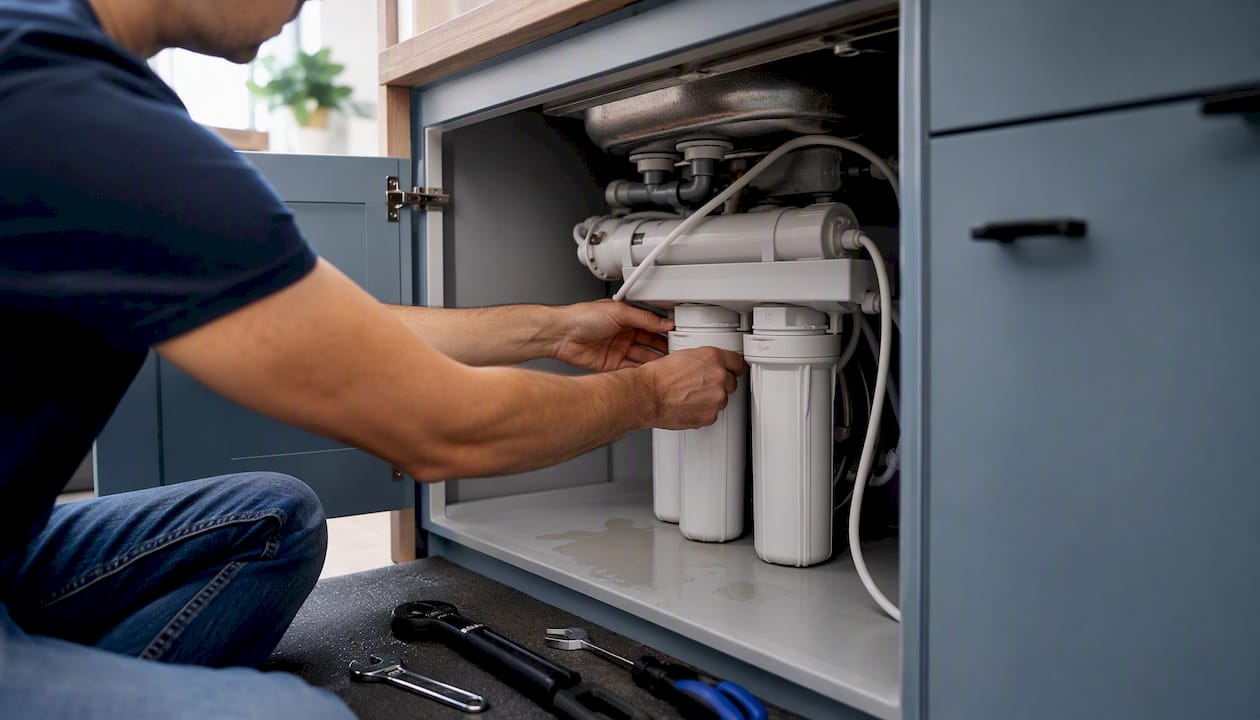
| Method | Typical uranium removal | POU or POE | Approximate cost and upkeep | Best use case |
|---|---|---|---|---|
| Reverse osmosis (RO) | Often highly effective when properly maintained | Primarily POU (under-sink) | Moderate upfront cost; membrane and filter changes periodically | Most residential situations, especially moderate to high readings |
| Ion exchange (IX) | Strong removal, varies by resin type and water chemistry | Available as POU or POE | Upfront cost varies depending on scale; resin regeneration or replacement needed periodically | Households also dealing with hardness or other dissolved minerals |
| Lime softening | Effective, more common in municipal-scale treatment | Primarily POE / municipal | Higher upfront cost, not typical for single-home retrofits | Larger systems or public utilities rather than individual homes |
| Activated alumina | Variable, works in some smaller system applications | POU or small POE setups | Moderate cost; media replacement needed on a schedule | Supplemental option when RO isn’t feasible |
A few practical notes before you buy anything:
- Look for NSF/ANSI certification or a validated third-party test report specific to radionuclide or uranium removal, not just a general “purification” label on the box.
- RO systems produce reject water, meaning a portion of what goes in doesn’t come out as drinking water, so factor in that water use if you’re on a metered supply.
- Set a calendar reminder for filter and membrane changes. A neglected RO system can fail silently and let uranium back through without any obvious sign.
Pro Tip: Test your water again about a month after installing any treatment system, then annually after that. Manufacturers rate removal efficiency under ideal lab conditions, and real-world performance can drift depending on your specific water chemistry.
What Should You Do If Your Uranium Level Is Too High?
- Stop drinking and cooking with the water immediately. Switch the whole household to bottled water for anything that goes in your mouth, including coffee, ice, and pet water bowls if you’re being thorough.
- Get a confirmatory retest. One elevated result is worth confirming before you spend money on treatment, since sample handling errors do happen.
- Contact your local public health department or state environmental agency. They can point you toward certified labs, share regional data on uranium prevalence, and sometimes offer testing assistance programs for private well owners.
- If you’re on a public system, notify your water supplier. They’re required to investigate radionuclide exceedances and communicate with affected customers.
- Get written estimates from a water treatment professional. Ask specifically about system sizing for your household’s usage and confirmation that the proposed system is rated for uranium removal.
- Schedule installation and set a retest date. Most under-sink RO installations take a few hours; whole-house systems can take a full day depending on plumbing complexity.
Pro Tip: If your water comes from a shared well serving multiple households, tell your neighbors. Uranium contamination from shared bedrock geology rarely respects property lines.
Where Can You Check Local Uranium and Radionuclide Data?
If you’re on a public water system, someone has already tested for this, and that data is public. EPA monitoring records and your utility’s Consumer Confidence Report are the first stop, and state environmental agencies often maintain their own searchable databases layered on top of federal reporting. USGS also publishes broader occurrence studies mapping where uranium tends to concentrate regionally.
Tapwaterindex pulls together official EPA monitoring data into searchable reports by city, ZIP code, or supplier, which makes checking your public system’s uranium history a five-minute task instead of a multi-agency hunt. It won’t tell you anything about a private well, since private wells fall entirely outside public reporting requirements, but it’s a smart first move before you spend money on private testing, and you can also review broader radionuclide monitoring standards to understand how these results get measured.
- Check your utility’s annual Consumer Confidence Report for radionuclide results, usually mailed or posted online each summer.
- Search your address or ZIP code on Tapwaterindex to pull public-system contaminant history without digging through PDFs.
- Contact your state’s environmental or public health department for certified lab lists if you’re on a private well.
- Ask your local health department whether they maintain a regional database of private well test results, since some counties do track voluntary submissions.
Pro Tip: Even if your public system reports clean, check again in a year or two. Uranium levels in groundwater sources can shift slowly as aquifer conditions change, and reports get updated annually.
What I’ve Learned Watching Homeowners Handle This
Most homeowners overcorrect or undercorrect, rarely landing in the reasonable middle. Some spend $3,000 on a whole-house treatment system before they’ve even confirmed a real problem with a second test. Others see a borderline number and shrug it off because it’s “under the limit,” missing that 25 µg/L isn’t meaningfully safer than 31 µg/L, it’s just on the other side of an enforcement line drawn for regulatory convenience.
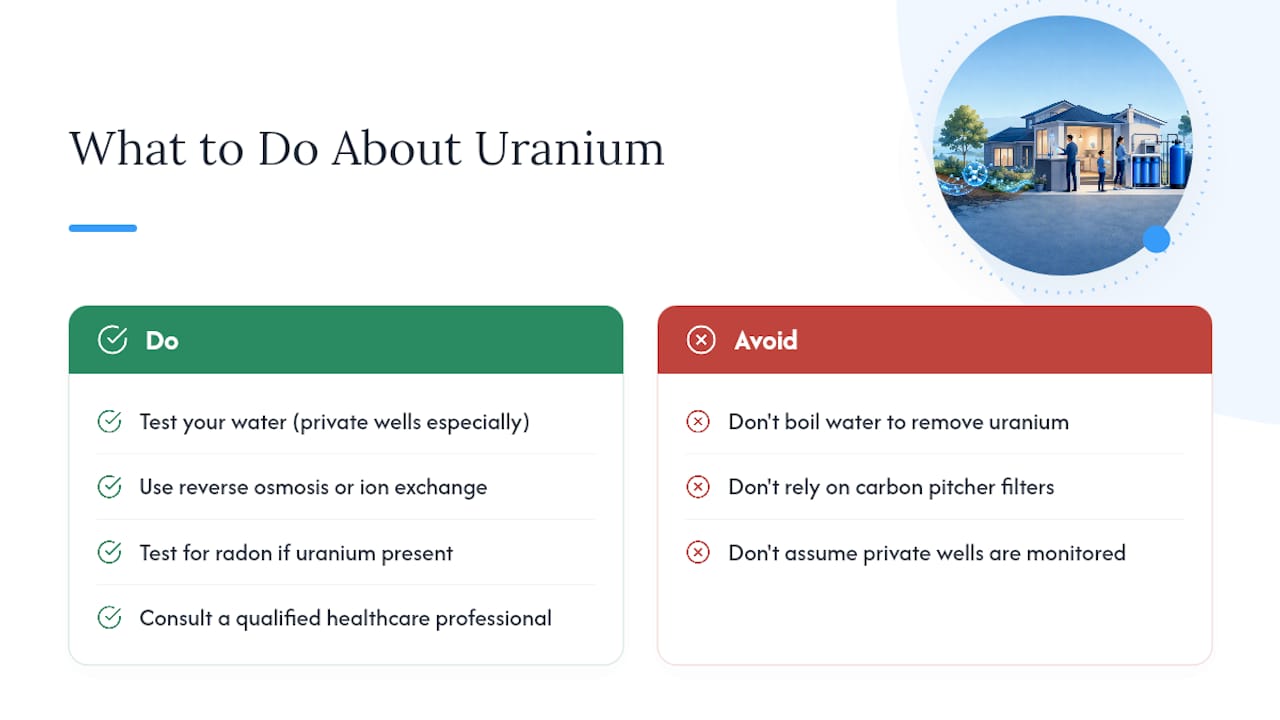
The pattern I’d push back on hardest: relying on a basic carbon pitcher filter as if it solves this. Standard carbon filtration, the kind in most consumer pitcher filters, isn’t designed to remove uranium or other radionuclides, and treating it as protection gives people false confidence while they keep drinking contaminated water. If your result comes back elevated, a pitcher filter is not your fix.
The other mistake is stopping at one test. An initial positive result deserves a confirmatory retest before you commit to an expensive treatment plan, and if uranium turns up, it’s worth checking for radium and radon too, since they often share the same bedrock origins. If radon specifically turns up in your water or home air, radon mitigation specialists can address that separately from your drinking water treatment plan. Test first, confirm second, treat third. Skipping any of those three steps is where homeowners waste money or, worse, keep drinking water they shouldn’t.
How Tapwaterindex Helps You Check Your Water Fast
If you’re on a public water system, you don’t need to guess whether uranium has ever shown up in your supply. Tapwaterindex is built specifically to pull that answer up in seconds using official EPA monitoring data, searchable by city, ZIP code, or supplier name, without you having to track down a PDF Consumer Confidence Report buried somewhere on a utility website.
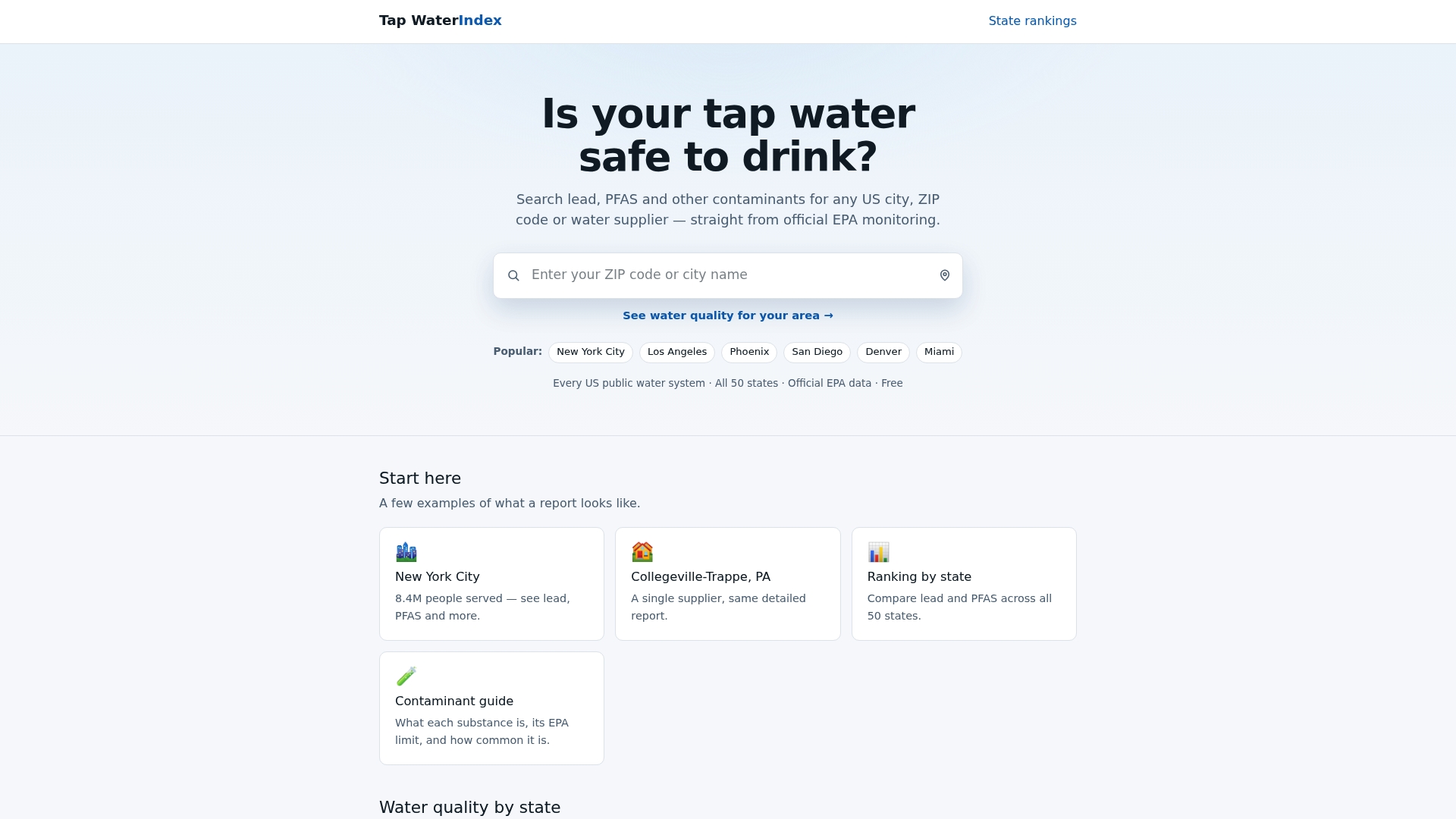
Search your address or ZIP on Tapwaterindex to see what your public system has reported for uranium and other radionuclides, and use the state-by-state rankings to see how your region compares on contaminant prevalence overall. This won’t cover a private well, since private well testing remains the owner’s responsibility under current federal and state rules, but it’s the fastest, no-cost way to rule public supply concerns in or out before you spend money on lab work. If your check comes back clean, that’s useful information. If it doesn’t, you’ll know exactly where to focus your private testing budget next. Run your ZIP code search now and see what’s already on record for your water.
Frequently Asked Questions
Does boiling water remove uranium? No. Boiling concentrates uranium rather than removing it, since the water evaporates while the dissolved uranium stays behind. Boiling is not a treatment method for this contaminant.
Do standard carbon pitcher filters like Brita remove uranium? Standard consumer carbon pitcher filters are not designed or certified to remove uranium or other radionuclides. If your test shows elevated uranium, you need reverse osmosis, ion exchange, or another method proven effective for this specific contaminant.
Can uranium in water damage pipes or appliances? Uranium at typical residential concentrations does not cause noticeable damage to plumbing or appliances the way hardness minerals or corrosive water chemistry can. The primary concern is health from ingestion, not equipment wear.
How long does it take to get uranium test results back? Most certified labs return ICP-MS uranium results within one to three weeks, depending on lab volume and whether you request standard or expedited processing.
Should I test for radon if my water has uranium? It’s worth considering. Radium and radon are decay products that can occur alongside uranium in groundwater from the same bedrock sources, and if radon shows up, a radon mitigation specialist can address the airborne component separately from water treatment.
Is my public water system required to tell me if uranium is a problem? Yes. Public water systems must comply with EPA’s Safe Drinking Water Act requirements, test regularly, and disclose radionuclide results in their annual Consumer Confidence Report. Private well owners get no such notification and must test independently.
This article is general information, not a substitute for advice from a qualified doctor. Consult a qualified healthcare professional about your own circumstances before acting on anything here.
Sources
- Uranium - Standards (CDC / ATSDR archive)
- Natural radionuclides in public drinking water | US EPA
- Radionuclides | U.S. Geological Survey
- Uranium in Private Well Water (Connecticut DPH factsheet)
- Treatment methods report (NTIS)
Check your state’s certified laboratory list and your utility’s Consumer Confidence Report for the most current local data beyond what’s covered here.