What a Total Coliform Result in Your Water Actually Means
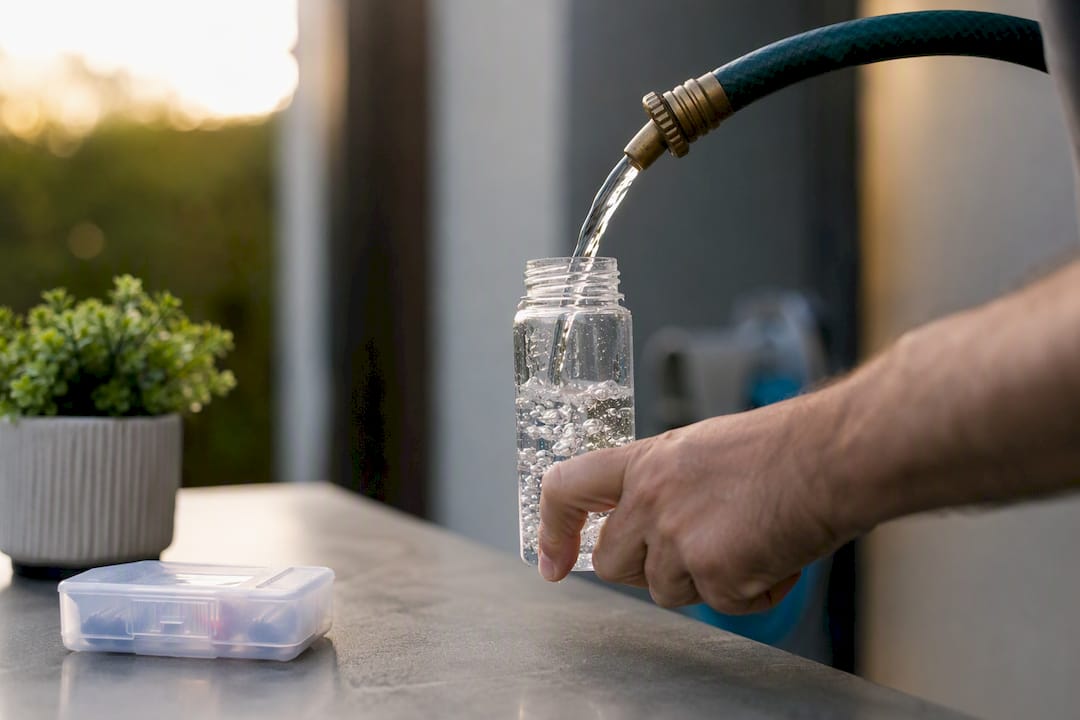
A safe drinking water bacterial test result is “absent.” Any total coliform detection is a red flag that needs follow-up, since it signals a pathway for pathogens into your supply. If E. coli also turns up, follow boil water guidance immediately, then contact your testing lab and local or state health department for repeat sampling instructions.
TL;DR:
- Any detection of total coliform bacteria in your water requires follow-up testing, as even one colony indicates a potential pathway for contamination.
- The presence of E. coli confirms fecal contamination and warrants immediate action, including boiling water and consulting health authorities.
- Properly timing retests after shock chlorination is crucial, with waiting one to two weeks before sampling again to avoid false negatives.
- Regular testing at least annually, especially after repairs or flooding, helps detect contamination early, since bacteria do not alter water’s appearance or taste.
- Tracking local water quality records can reveal regional contamination patterns that impact your well, supporting more informed responses.
Table of Contents
- What Are Total Coliform Bacteria, and How Do They Differ From E. Coli?
- What Does It Mean if Total Coliform Is Present in Your Water?
- What Should You Do Right After a Positive Test?
- How Do You Fix and Prevent Recurring Contamination?
- How Often Should You Test Your Private Well?
- How Do the Rules Differ for Public Systems vs. Private Wells?
- How Can You Check Local Water Records Before You Call for Help?
- Why Testing Beats Treating Alone
- Check Your Local Water Records Before You Act
- Where to Go for Official Guidance
- Sources
What Are Total Coliform Bacteria, and How Do They Differ From E. Coli?
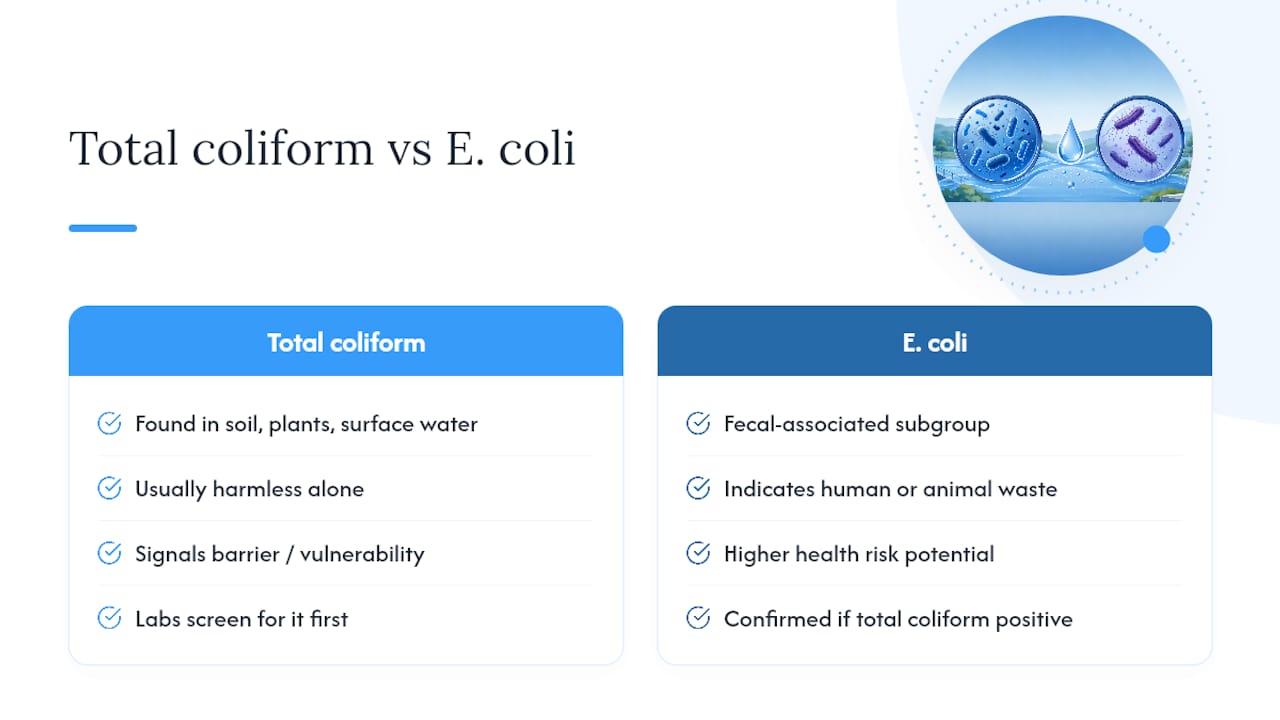
Total coliforms are a broad group of bacteria found naturally in soil, vegetation, and surface water. Most are harmless on their own, which confuses a lot of well owners who assume a positive result means someone is about to get sick. That’s not quite it.
E. coli is different. It’s a fecal-associated subgroup within the total coliform family, and its presence points specifically toward contamination from human or animal waste. Total coliforms work as a canary in the coal mine: they flag a broken barrier, not necessarily a dangerous pathogen. That’s why labs run a two-step process, screening first for total coliform, then automatically confirming for E. coli or fecal coliform whenever the initial screen comes back positive. The USGS frames total coliforms as a general vulnerability marker, not proof of fecal contamination on their own.
What Does It Mean if Total Coliform Is Present in Your Water?
“Absent” or “non-detect” is the only result that means your water passed. There’s no such thing as a normal or acceptable positive count. Even one colony counts as a positive, and the EPA’s Revised Total Coliform Rule treats every detection as something requiring investigation, not a number to shrug off.
A routine total coliform positive (often written TC+) with no E. coli detected is the most common scenario. It usually triggers a repeat sample, typically collected within 24 hours for public systems, and a look at whether the source is a fixture, a well cap, or something upstream. Multiple positives across repeat samples, or any confirmed E. coli, escalate things fast. For public water systems, that can mean a formal Level 2 assessment and, in the case of E. coli, mandatory public notice within 24 hours. Private well owners don’t face that regulatory clock, but the biology doesn’t care whether your water is regulated. The same urgency applies.
What Should You Do Right After a Positive Test?
Your next move depends on which bacteria showed up.
- If E. coli is confirmed, stop drinking the tap water immediately. Switch to bottled water or boil water for at least one minute (three minutes at higher elevations) before drinking, cooking, or brushing teeth, following your local health department’s specific guidance. Public systems under similar circumstances issue formal boil water advisories, and private well owners should treat a confirmed E. coli result with the same seriousness even without a government order.
- If it’s total coliform only, no E. coli, don’t panic, but don’t ignore it either. Arrange a repeat sample as soon as your lab or health department recommends, usually within a few days, and avoid relying on that tap for drinking water until you get a clean follow-up result.
- Document everything. Save the lab report, note the collection date and method, and write down who you called and when. That paper trail matters if the problem recurs and a health department specialist needs to diagnose a pattern.
Call a certified laboratory and your state or local health department before you do anything drastic like dumping chlorine down the well. They’ll tell you what sample timing and remediation sequence actually applies to your situation.
How Do You Fix and Prevent Recurring Contamination?
Start with a sanitary inspection, not a jug of bleach. A cracked well cap, a corroded casing, or surface water pooling near the wellhead causes a large share of chronic positives, and no amount of disinfectant fixes a structural gap.
Shock chlorination is the standard first-line treatment once you’ve ruled out or corrected physical defects. The process involves mixing a strong chlorine solution, circulating it through the well and plumbing, and letting it sit for several hours before flushing the system. It’s a temporary fix. Chlorine kills what’s currently in the water but does nothing for the crack in the casing that let bacteria in last time.
- Never sample immediately after shock chlorination. Residual chlorine can mask live bacteria and produce a false negative.
- Wait one to two weeks for chlorine to fully dissipate, then collect a true bacteriologic sample.
- If positives return after a properly timed retest, the entry point wasn’t fixed, and it’s time to call a licensed well contractor rather than chlorinating again.
- For recurring or severe contamination, consider permanent treatment like continuous chlorination, UV disinfection, or a point-of-entry system.
Pro Tip: Keep a simple log of every test date, chlorination event, and repair. If total coliform shows up again eight months later, that log helps a well contractor or health department specialist spot the pattern instead of starting from scratch.
How Often Should You Test Your Private Well?
Testing is the only way to know, since coliform bacteria don’t change how water looks, tastes, or smells.
- Test right after well construction or any repair work that opens the system.
- Test annually at minimum, ideally in spring when snowmelt or heavy rain raises runoff risk.
- Test after flooding, or any time someone in the household develops unexplained gastrointestinal illness.
University of Nebraska extension guidance recommends this cadence specifically because contamination is invisible until a lab confirms it. Use the sterile sample bottles your lab provides, follow their chain-of-custody instructions exactly, and don’t disinfect or flush the faucet beforehand unless the lab tells you to. Confirm ahead of time whether the lab automatically runs an E. coli confirmation on any total coliform positive. Most certified labs do, but it’s worth asking before you drop off the sample.
How Do the Rules Differ for Public Systems vs. Private Wells?
Public water systems operate under the EPA’s Revised Total Coliform Rule, which focuses on finding and fixing sanitary defects rather than counting bacteria for its own sake. A single total coliform positive triggers repeat sampling, and enough positives (or any E. coli) trigger a Level 2 assessment, where an inspector digs into the system’s infrastructure for the source of the breach.
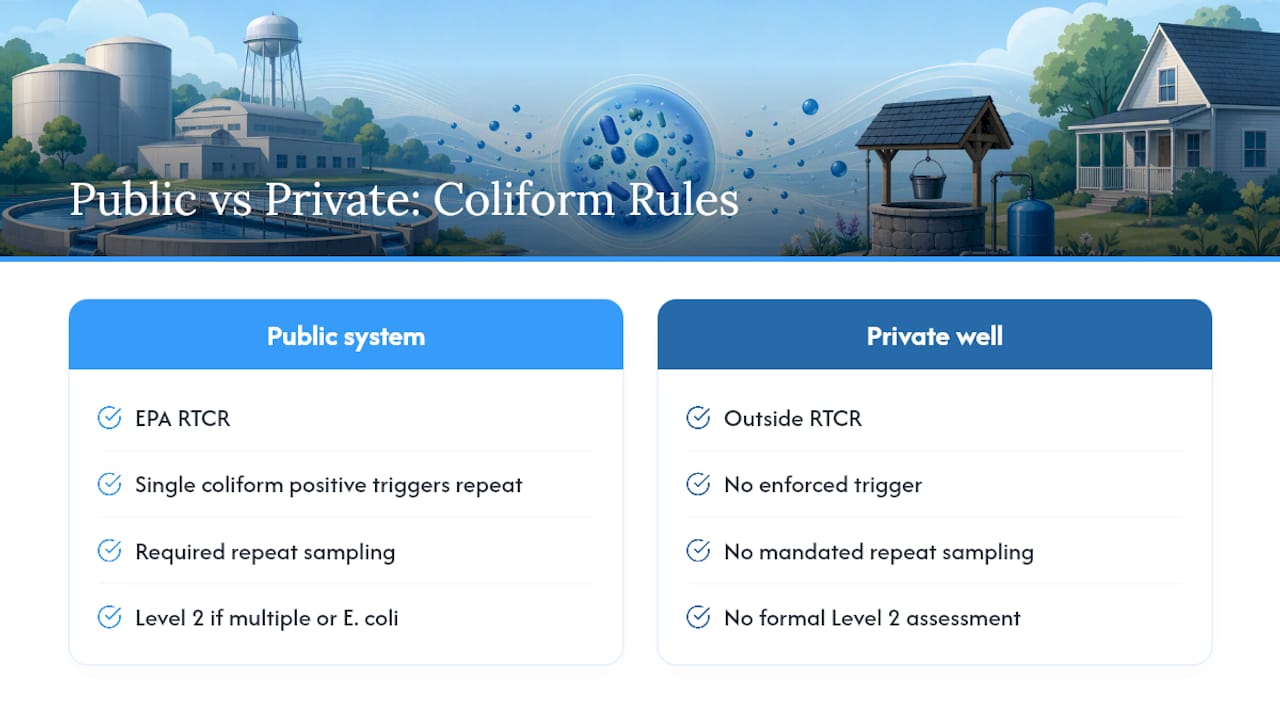
Private wells sit outside that framework entirely. Nobody enforces testing frequency or repeat sampling timelines on your well the way the RTCR does for a municipal utility. State and local health departments offer guidance, and some counties provide subsidized testing kits, but the responsibility for testing, interpreting results, and fixing the problem rests entirely with you as the owner. That gap is exactly why proactive testing matters more for well owners than for anyone on a public system.
How Can You Check Local Water Records Before You Call for Help?
Before you pick up the phone, pull up your area’s monitoring history. Tapwaterindex compiles EPA monitoring data by utility, city, and ZIP code, so you can see whether bacterial flags or violations have shown up in your region before, not just at your own tap.
If you’re near a public supplier rather than fully on well water, check its contaminant history for prior coliform violations or advisories. Noting a pattern of past issues gives you something concrete to bring up when you call a health department or a well contractor. It won’t diagnose your well, but it tells you whether you’re dealing with an isolated event or something with a history in your area.
Why Testing Beats Treating Alone
Treating water without finding the entry point just buys you a few clean weeks before the next positive. Testing tells you where the barrier failed. Keep every result and repair record. That history is what turns a homeowner into an informed partner when a health department or well contractor tries to solve a recurring problem, rather than someone guessing alongside them.
— Sergey
Check Your Local Water Records Before You Act
Tapwaterindex gives you something a single lab slip can’t: context. A total coliform positive on your own well test is worth more once you know whether nearby public suppliers have logged similar bacterial issues or violations in EPA monitoring records.
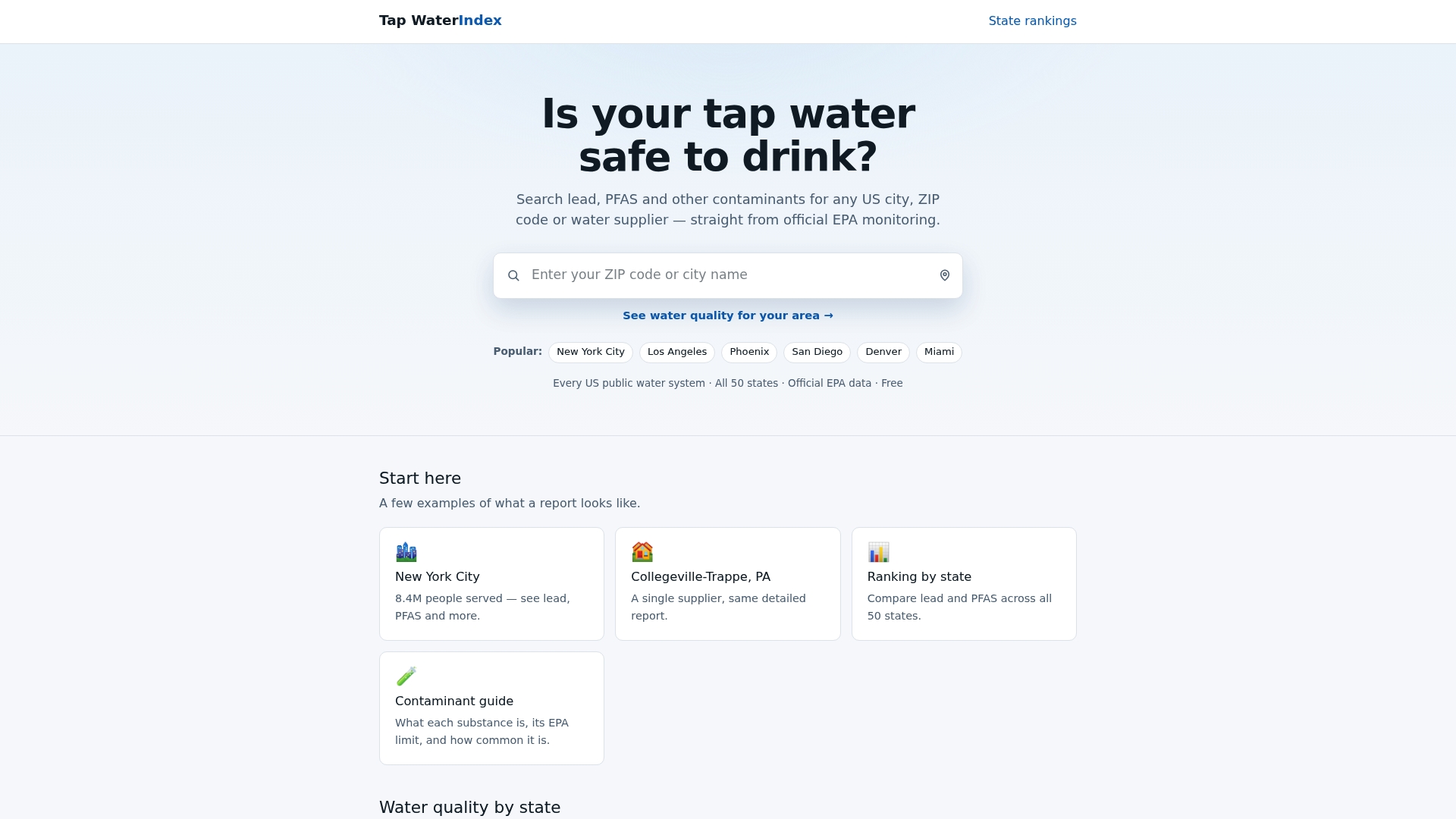
Search your state’s water quality rankings or look up your specific city or ZIP code to see supplier-level history, including whether contamination has been a recurring theme in your area or an isolated fluke. This complements, and never replaces, your certified lab test or your health department’s instructions. It’s a way to walk into that phone call already knowing the local landscape. Start by pulling up your area’s report and comparing what you find against your own test results.
Where to Go for Official Guidance
For rule details and public notice requirements, see the EPA’s Revised Total Coliform Rule and CDC guidance on waterborne germs. Contact your state health department or local extension office for well-specific remediation steps.
This article is general information, not a substitute for advice from a qualified doctor. Consult a qualified healthcare professional about your own circumstances before acting on anything here.
Sources
- EPA: Revised Total Coliform Rule and Total Coliform Rule
- UNL: Total coliform bacteria in drinking water
- CDC: Germs that can contaminate tap water
Recommended
- Drinking Water Contaminants — EPA Limits & How Common | TapWaterIndex
- US Tap Water Quality Ranking by State | TapWaterIndex
- TapWaterIndex — Drinking water quality by utility, city and ZIP
- Gross Beta Particle Activity in Drinking Water — EPA Limit & Where It’s Found | TapWaterIndex
Related open-source project: vybor discussions.