Well Water vs City Water: What US Homeowners Should Know
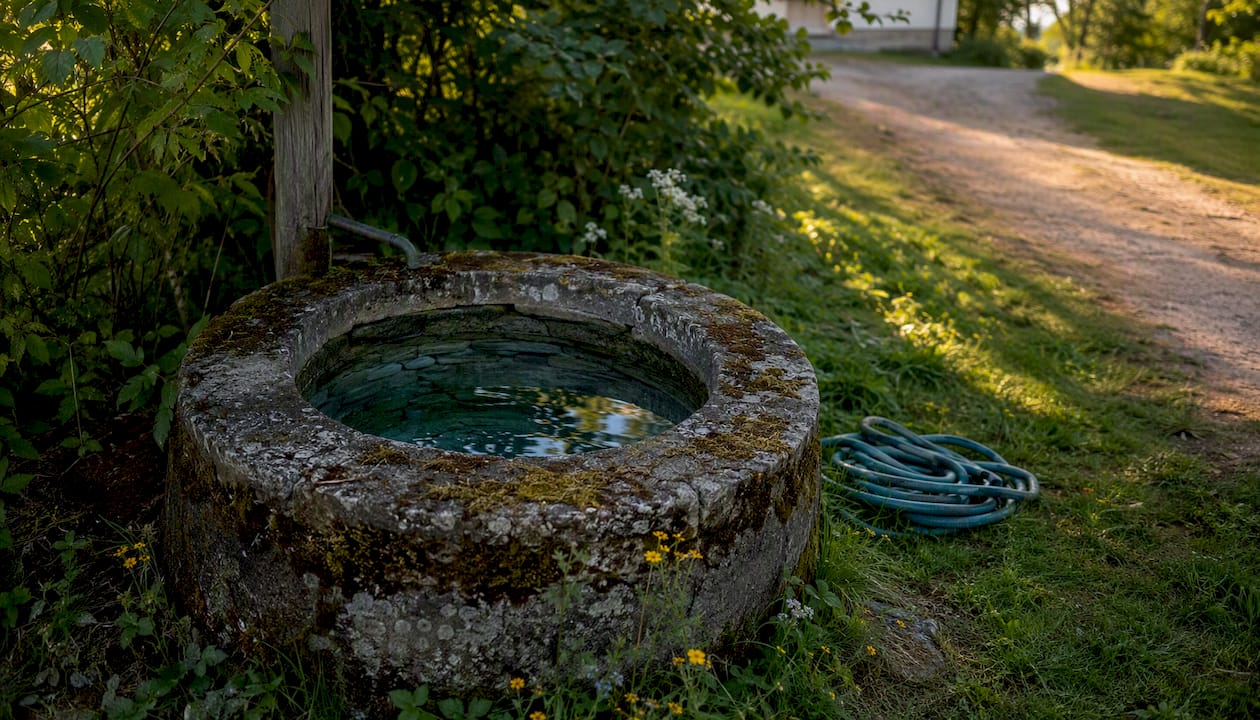
For most U.S. homeowners, city water is the safer default because it’s federally regulated, routinely tested, and backed by public reporting that a well simply doesn’t have. Well water can be excellent, sometimes even cleaner at the source, but the burden of proving that falls entirely on you.
Three reasons drive that verdict:
- Municipal systems answer to the Safe Drinking Water Act; private wells answer to no one but the owner.
- City water comes with a predictable monthly bill; well water trades that bill for upfront drilling costs and ongoing testing you have to schedule yourself.
- Wells depend on an electric pump, so a power outage can mean no water at all, while city outages are rarer and usually shorter.
If you already have a well, test it now. If you’re buying a home on city water, pull the utility’s latest water quality report before you sign anything.
Key Takeaways
City water suits most U.S. homeowners because it’s federally regulated and routinely tested, while well water demands owner-led testing that roughly 1 in 5 wells would fail today.
| Point | Details |
|---|---|
| City water wins by default | Regulation under the Safe Drinking Water Act and mandatory reporting make it the safer baseline for most buyers. |
| Wells put you in charge | Annual bacteria and nitrate testing is non-negotiable, with arsenic, radon, and PFAS tests added based on local risk. |
| Costs run opposite directions | Wells trade a monthly bill for $5,000 to $25,000+ in drilling costs plus $200 to $1,000 a year in maintenance. |
| Reliability risks differ | Wells depend on pump and electricity; city water depends on aging distribution infrastructure. |
| Verify before you assume | Use Tapwaterindex to check your city or ZIP’s actual EPA contaminant history before trusting a summary report. |
Table of Contents
- Well Water vs City Water: A Side-By-Side Comparison
- Private Well Fundamentals Every Owner Needs To Understand
- What To Expect From Municipal Water Systems
- How To Choose Between Well And City Water When Buying A Home
- Building A Testing And Treatment Plan That Actually Works
- Costs, Outages, And What Buyers Will Ask About Resale
- What US Agencies Actually Say About Well And Municipal Safety
- Switching Between Well And City Water: What The Process Actually Looks Like
- Author Perspective: How I’d Decide As A Homeowner
- Check Your City’s Water Quality Before You Decide
- Frequently Asked Questions
- Sources
Well Water vs City Water: A Side-By-Side Comparison
The two systems differ on almost every axis that matters to a homeowner, starting with who’s watching the water and ending with what happens when the power goes out.
| Dimension | Private Well | City (Municipal) Water |
|---|---|---|
| Health & safety monitoring | Owner’s responsibility; no federal oversight | Regulated under the Safe Drinking Water Act, routine testing required |
| Who is responsible | Homeowner tests, treats, and reports to no one | Utility tests, treats, and publishes annual reports |
| Upfront cost | Drilling, pump, and pressure tank installation | None; connection often already exists |
| Ongoing cost | Testing, maintenance, electricity for pump | Monthly water and sewer bill |
| Maintenance/skill needed | Moderate to high; owner-managed | Low; utility manages treatment and pipes |
| Taste and minerals | Varies widely; often no additives, can carry iron or sulfur | Consistent; may carry chlorine taste or trace disinfection byproducts |
| Reliability | Tied to pump and electricity | Tied to aging distribution infrastructure |
| Treatment options | UV, shock chlorination, filters, softeners, RO | Point-of-use filters for taste, lead, or PFAS concerns |
A few trade-offs jump out once you look at the table side by side:
- No monthly water bill on a well, but you own every testing and repair decision.
- City water gives you a documented safety record; a well gives you none unless you build one yourself.
- Wells can taste better (no chlorine) but often need a filter for iron, sulfur, or hardness that city water customers rarely deal with.
Private Well Fundamentals Every Owner Needs To Understand
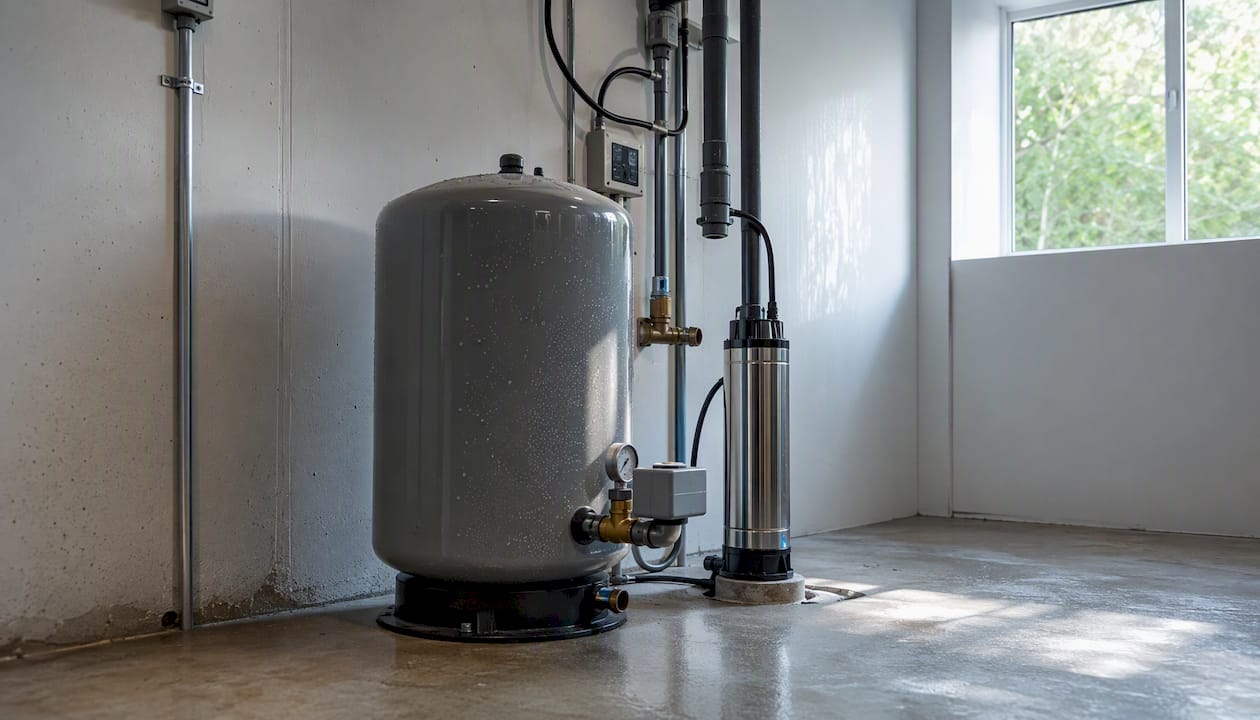
A private well pulls water from an underground aquifer through a drilled shaft, then a submersible pump pushes it up into a pressure tank that feeds your house on demand. There’s no treatment plant in that chain unless you install one yourself, which is exactly why well water quality is so dependent on what’s actually in the ground beneath your property.
The contaminant profile for wells looks different from city water. Bacteria (including E. coli) and nitrates from nearby agriculture or septic systems are the most common acute risks. Arsenic and radon occur naturally in some regions’ bedrock. Iron, manganese, sulfur, and general hardness don’t threaten health but will stain fixtures, smell like rotten eggs, or leave your dishwasher full of white film.
A basic annual maintenance routine covers most of what can go wrong; for more details, see our water conservation and RV sanitation guide.
- Test for coliform bacteria and nitrates every year, minimum.
- Inspect the well cap, casing, and surrounding grading for cracks or pooling water.
- Check pump pressure and pressure tank function during routine home maintenance.
- Confirm setback distances from septic fields, livestock, or fertilized fields haven’t changed.
- Properly retire any old, unused wells on the property to protect the aquifer, following CDC guidance on well safety.
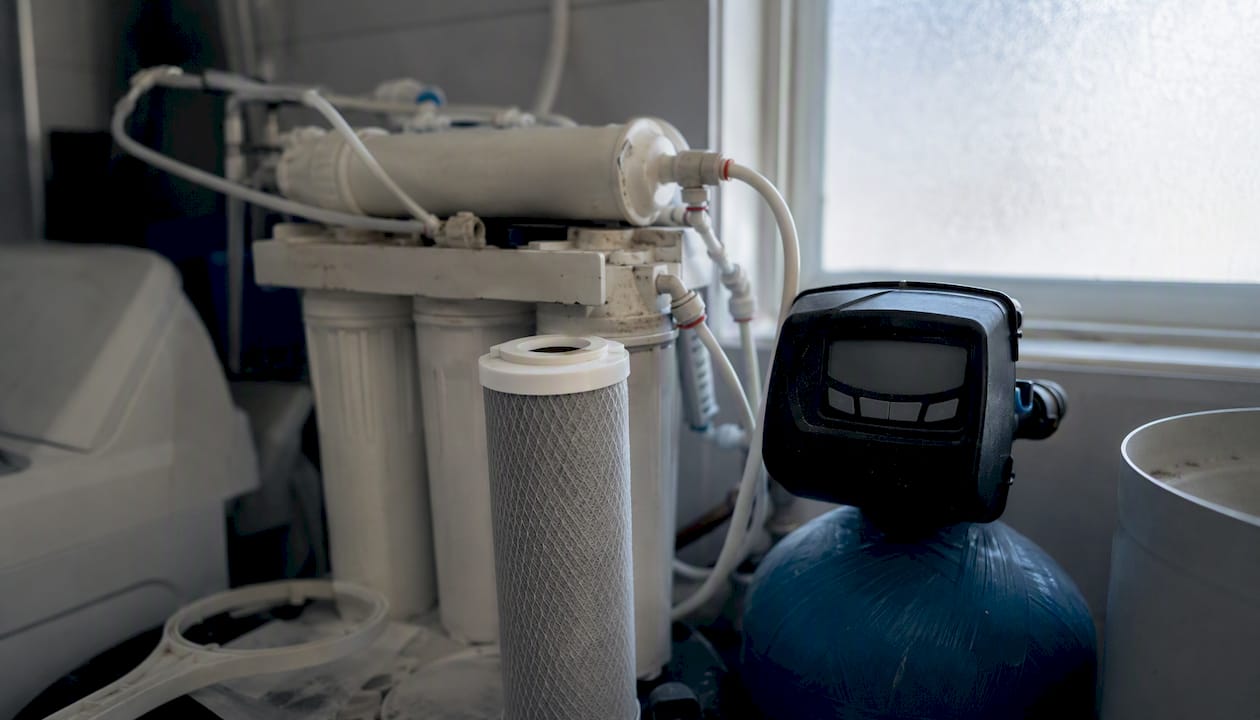
Treatment should match the actual problem, not a generic system. Bacteria calls for UV disinfection or shock chlorination after a positive test. Iron and manganese need oxidizing filters. Hardness needs a softener. Nitrates and arsenic usually require reverse osmosis at the point of use, since whole-house removal for those two is expensive and often unnecessary.
Pro Tip: If your well water suddenly changes color, smell, or taste after heavy rain, treat it as contaminated until a fresh coliform test says otherwise. Nearby flooding is one of the fastest ways bacteria gets into a well.
Call a licensed well contractor if pressure keeps dropping, the pump short cycles, or a water test comes back positive for bacteria twice in a row. Those are signs of a mechanical problem or a compromised well casing, not something a filter fixes.
What To Expect From Municipal Water Systems
City water goes through a treatment plant before it ever reaches your tap: filtration, disinfection with chlorine or chloramines, and in many systems, fluoridation. From there it travels through miles of distribution mains before arriving at your faucet, which is where most of the system’s actual weak points live.
Every public water system operates under the Safe Drinking Water Act, which sets maximum contaminant levels and requires utilities to monitor and publicly report water quality. That report, called a Consumer Confidence Report, lands in mailboxes or online once a year and lists exactly what was found and at what concentration.
The real municipal concerns aren’t usually at the treatment plant. They’re in the pipes:
- Disinfection byproducts can form when chlorine reacts with organic matter in the source water.
- Lead can leach from aging service lines and old household plumbing, even when the utility’s own water leaves the plant clean.
- PFAS detections have become more common as testing methods improve nationwide.
- Microplastics are an emerging concern researchers are still quantifying.
Roughly 43 million Americans rely on private wells, which means the vast majority of the country drinks water that’s already being monitored on their behalf. That doesn’t mean you skip your own homework. Read your utility’s CCR, follow any boil-water or lead advisories immediately, and if you’re worried about lead or taste, a point-of-use carbon filter solves most of what city water customers actually complain about.
How To Choose Between Well And City Water When Buying A Home
Touring a house doesn’t tell you what’s in the water. Asking the right questions does.
- Ask for the seller’s most recent well test results, or the well log if it’s a private system.
- Find out the pump’s age and when the pressure tank was last serviced.
- If it’s on city water, pull the utility’s Consumer Confidence Report before closing.
- Ask directly whether the area has known nitrate, arsenic, or radon issues.
- Check the well’s proximity to septic fields, livestock, or agricultural land.
A few situations should make you slow down and test harder before buying:
- A shallow well (less than 100 feet) is more exposed to surface contamination than a deep one.
- Heavy nearby agriculture raises nitrate and pesticide risk.
- A failing or aging septic field near the well is a direct bacterial threat.
- The region has documented arsenic or radon in local groundwater.
If you’re deciding for yourself rather than inheriting a system, weigh how long you plan to stay, how much water your household actually uses, and whether you’re comfortable managing tests and equipment. Heavy irrigation or large lots often tip the math toward a well; a short time horizon and low tolerance for maintenance point toward staying on the municipal grid.
Building A Testing And Treatment Plan That Actually Works
Well owners need a testing rhythm, not a one-time check. The baseline is annual: coliform bacteria and nitrates, every year, no exceptions. Beyond that baseline, test for arsenic, radon, lead, and PFAS if your region has documented issues with any of them, following CDC recommendations for well safety.
| Contaminant | Typical Treatment |
|---|---|
| Bacteria/E. coli | UV disinfection or shock chlorination |
| Iron/manganese | Oxidizing filter |
| Hardness | Water softener |
| Nitrates | Reverse osmosis or ion exchange |
| Arsenic | Point-of-use reverse osmosis |
| Sulfur odor | Aeration or carbon filtration |
Use a state-certified lab, not a mail-in kit from a big-box store, for anything beyond a basic bacteria check. Your state or county health department can point you to an accredited lab and will usually tell you which contaminants are common in your specific area.
Sample collection matters more than people expect. Run the tap for a few minutes before drawing a sample, use the sterile container the lab provides, and get the sample to the lab within the timeframe they specify, usually within 24 to 30 hours for bacteria testing.
Pro Tip: Whole-house systems handle problems that affect every tap (hardness, iron, sulfur). Point-of-use systems like under-sink RO make more sense for a single contaminant like nitrates or arsenic, since treating your entire water supply for one localized risk is expensive overkill.
Costs, Outages, And What Buyers Will Ask About Resale
Drilling a new well typically runs $5,000 to $25,000 or more depending on depth and geology, plus $200 to $1,000 a year in ongoing testing and maintenance. Municipal water and sewer combined typically run $500 to $1,500 a year, though rates vary significantly by region and have been climbing in many areas, which can make a well look more attractive to high-volume users over a long enough horizon.
The reliability trade-off runs in opposite directions. A well fails when the pump loses power or breaks down; a generator solves most of that risk. City water fails when a distribution main breaks or an aging pipe leaks, which is out of your hands entirely.
Resale value follows local expectations more than any universal rule: buyers in rural areas often expect a well and won’t blink, while buyers in suburban markets frequently see a private well as an added maintenance item they’d rather avoid.
What US Agencies Actually Say About Well And Municipal Safety
The scale gap between the two systems is the story here. About 43 million Americans get their water from private wells, and a USGS study of roughly 2,100 wells found that close to 1 in 5 had at least one contaminant above a federal health benchmark.
- The CDC recommends annual well testing and publishes step-by-step disinfection guidance for wells after flooding or contamination events.
- USGS research is the primary national source tracking how common contamination actually is in private wells.
Switching Between Well And City Water: What The Process Actually Looks Like
Connecting a home to city water after years on a well usually starts with a call to the local utility to confirm a main runs near your property. If it does, you’ll need a permit from the municipality, and a licensed plumber to tie into the main and run service to your house. Expect several weeks for permitting and scheduling, plus the excavation itself, and a connection fee that varies widely by city and lot distance from the main.
Going the other direction, from city water to a private well, takes longer. You’ll need a permit from your county or state health department before drilling starts, and many jurisdictions require a licensed well driller to handle the work. Drilling itself typically takes one to three days depending on depth and geology, but the full timeline, permit approval, drilling, pump installation, and initial water testing, often runs four to eight weeks start to finish.
Either direction, budget time for the mandatory water quality test before the new system goes into service. A well needs a clean bacteria test before you drink from it. A new municipal connection usually just requires final inspection sign-off, since the utility’s water is already tested at the source.
Author Perspective: How I’d Decide As A Homeowner
If I had both options on a property, I’d test the well first and use it for irrigation while waiting on results, keeping city water as the safety net for drinking and cooking. I’d also pull the utility’s history on Tapwaterindex before assuming municipal water is automatically fine. Comfort with ongoing maintenance, more than water quality alone, usually decides which source wins long term.
Check Your City’s Water Quality Before You Decide
If you’re leaning toward staying on city water, or buying a home that’s already connected, don’t just trust the Consumer Confidence Report summary. Tapwaterindex pulls official EPA monitoring data for every public water system in the country, so you can search your city, ZIP code, or supplier and see the actual PFAS, lead, and contaminant levels behind that report.
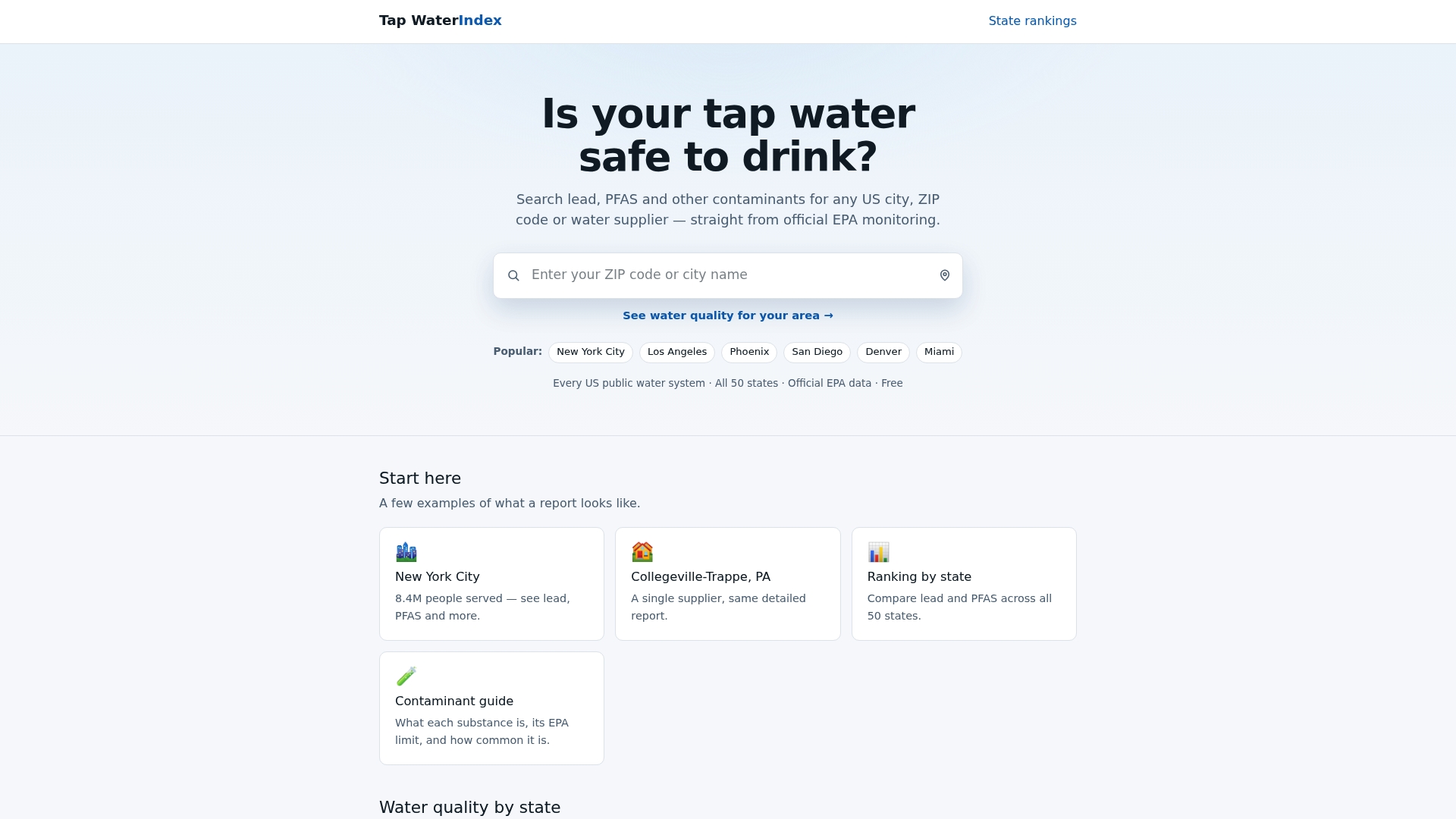
This is public utility data, not a substitute for the testing a private well legally requires you to do on your own. But if you’re weighing a move, comparing neighborhoods, or just want to know what’s actually coming out of your tap, checking your local numbers takes two minutes. Start with the state-by-state water quality rankings or search your specific supplier’s contaminant report directly.
Frequently Asked Questions
Is well water safer than city water? Not automatically. Well water can be cleaner at the source, but without regular testing, it carries more unknown risk than city water, which is monitored under the Safe Drinking Water Act and reported annually.
What’s the biggest difference between well water vs city water? Regulation and responsibility. Municipal systems must test, treat, and report; private well owners handle all of that themselves, with no federal requirement to do so.
How often should I test well water? At minimum, once a year for coliform bacteria and nitrates. Add arsenic, radon, lead, or PFAS testing if those are known issues in your area.
Does city water have contaminants too? Yes. Disinfection byproducts, lead from aging service lines, and PFAS detections are the most common municipal concerns, even though the source water itself is treated and monitored.
Can I switch from city water to a well, or the other way around? Yes, both directions require permits. Drilling a new well typically takes four to eight weeks start to finish; connecting to an existing municipal main usually takes several weeks depending on permitting and distance from the main.
Sources
- Domestic (private) supply wells — USGS
- Well Water vs. City Water: An Honest Comparison for Homeowners | The Well Guide
Recommended
- US Tap Water Quality Ranking by State | TapWaterIndex
- Lead in Connecticut Drinking Water — by Water Supplier | TapWaterIndex
- Lead in Massachusetts Drinking Water — by Water Supplier | TapWaterIndex
- Lead in DC Drinking Water — by Water Supplier | TapWaterIndex
Related open-source projects: apppricer discussions and noqa discussions.