How to Remove Chloramine from Water: Fast Home Methods

Catalytic activated carbon, chemical neutralizers like sodium metabisulfite (Campden tablets) or ascorbic acid, and reverse osmosis with upstream carbon protection are the three reliable ways to remove chloramine from water at home. Boiling, aeration, and standard pitcher filters do not work reliably — and boiling can actually make things worse.
- Catalytic carbon filter: Best for drinking water and whole-house treatment. Requires 6–10 minutes of empty bed contact time (EBCT) for effective removal. Ongoing but manageable maintenance.
- Campden tablets or ascorbic acid: Instant neutralization for batch uses — aquarium water changes, brewing, and one-time batches. Not practical for continuous whole-house flow without metered injection.
- Reverse osmosis (RO): Removes 85–99% of chloramine at the tap, but only when paired with upstream catalytic carbon or a chemical neutralizer to protect the membrane.
For drinking water, an under-sink catalytic carbon filter or RO system is the cleanest long-term fix. For aquariums or brewing, a Campden tablet or vitamin C dose is faster and cheaper. For medical-grade needs like home dialysis, household filters alone are never sufficient.
Key Takeaways
Catalytic carbon and chemical neutralizers like Campden tablets are the most reliable home methods for chloramine removal, but the right choice depends on your use case, flow rate, and what else is in your water.
| Point | Details |
|---|---|
| Catalytic carbon is the standard | Use CAC with 6–10 min EBCT for drinking and whole-house treatment; standard GAC needs much longer contact time. |
| Chemical neutralizers work instantly for batches | One Campden tablet per 20 gallons neutralizes chloramine for aquariums and brewing in under a minute. |
| RO needs upstream protection | Install catalytic carbon or SMBS before the RO membrane to prevent irreversible damage from chloramine. |
| Boiling concentrates chloramine | Never rely on boiling, aeration, or standard pitcher filters for chloramine removal. |
| Test before and after treatment | Use a monochloramine-specific test kit to confirm removal; retest every 3–4 months. |
| Tapwaterindex for local data | Check your utility’s EPA-reported disinfectant type at Tapwaterindex before buying any treatment equipment. |
Table of Contents
- How to remove chloramine from water: why it’s harder than chlorine
- Activated carbon for chloramine: GAC vs. catalytic carbon
- Chemical neutralizers: Campden tablets, SMBS, and ascorbic acid
- Reverse osmosis and distillation: what they remove and what they need
- What doesn’t actually work: boiling, aeration, and basic pitcher filters
- How to test for chloramine and confirm removal
- Choosing the right method for your situation
- When household methods are not enough
- Environmental and regulatory considerations
- How chloramine removal affects water quality and byproducts
- Your local water data changes everything about this decision
- Sources
How to remove chloramine from water: why it’s harder than chlorine
Chloramine is chlorine bonded with ammonia, and that bond is the whole problem. According to the EPA, utilities use chloramine precisely because it is more stable than free chlorine, meaning it stays active longer through distribution pipes and produces fewer regulated disinfection byproducts. That same stability is what makes it so resistant to the tricks that work on free chlorine.
Free chlorine dissipates when you let water sit, run it through a fan, or boil it briefly. Chloramine does none of those things. Its nitrogen-chlorine bond requires either a catalytic surface reaction, a chemical reducing agent, or a physical membrane to break it. The CDC confirms that chloramine cannot be removed simply by letting water sit — a fact that surprises most people who’ve handled chlorinated water for years.
The EPA allows chloramine in public water at levels permitted as a maximum residual disinfectant level. Most utilities run well below that ceiling, but even low concentrations matter for sensitive uses like aquariums, brewing, and dialysis. Chloramine also produces its own disinfection byproducts — notably haloacetic acids and nitrosamines under certain conditions — which is one reason some water systems are moving away from it, even as others adopt it to reduce trihalomethanes from free chlorine.
Activated carbon for chloramine: GAC vs. catalytic carbon
Catalytic activated carbon (CAC) and properly sized granular activated carbon (GAC) systems are the industry-standard treatment for chloramine. The distinction between the two matters more than most filter marketing lets on.
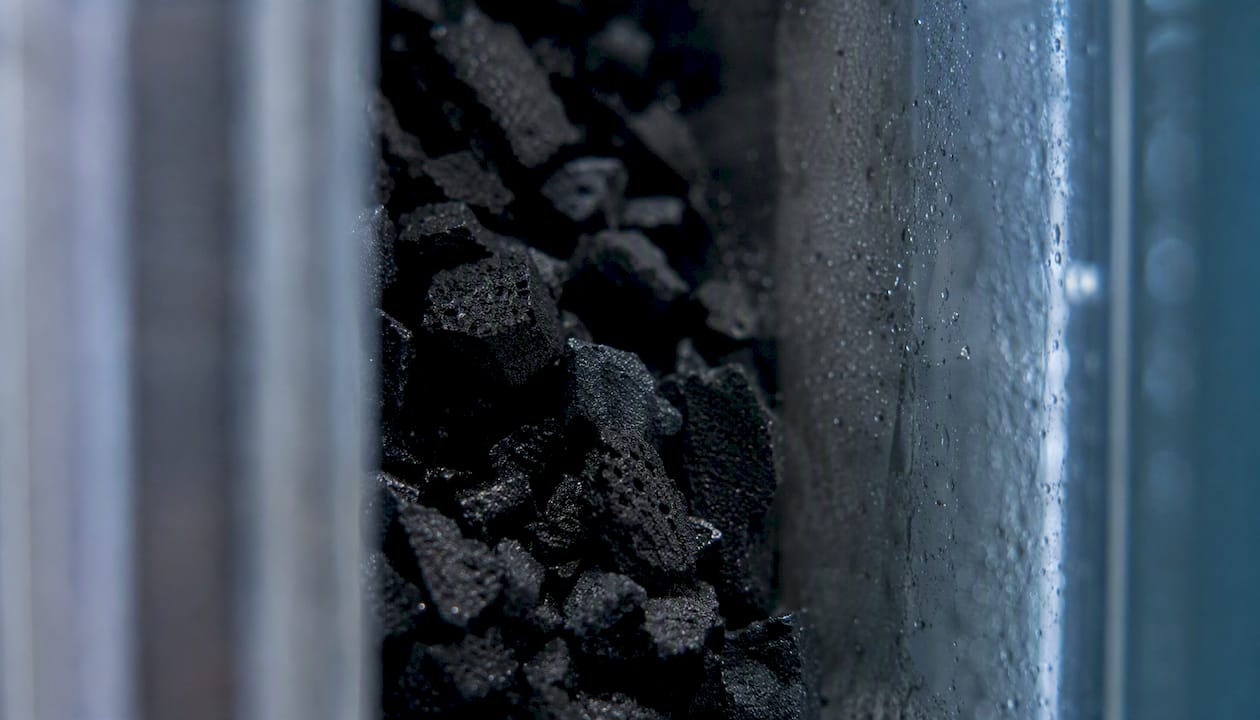
Standard GAC removes chloramine through adsorption — the chloramine molecule sticks to the carbon surface. The problem is that chloramine adsorbs slowly, so a GAC bed sized for chlorine removal often lets chloramine pass right through at normal household flow rates. Catalytic carbon has a chemically modified surface that actively breaks the nitrogen-chlorine bond rather than just trapping it, which dramatically speeds up the reaction and allows practical bed sizes and flow rates for whole-house chloramine removal.
EBCT — the number that actually matters
Empty bed contact time (EBCT) is how long water spends in contact with the carbon bed. For chloramine removal, the benchmarks are:
| Carbon type | Minimum EBCT | Recommended EBCT | Best use case |
|---|---|---|---|
| Standard GAC | 10+ min | 6–10 min | Low-flow point-of-use only |
| Catalytic carbon | 6–10 min | 10+ min for critical uses | Whole-house, under-sink, brewing |
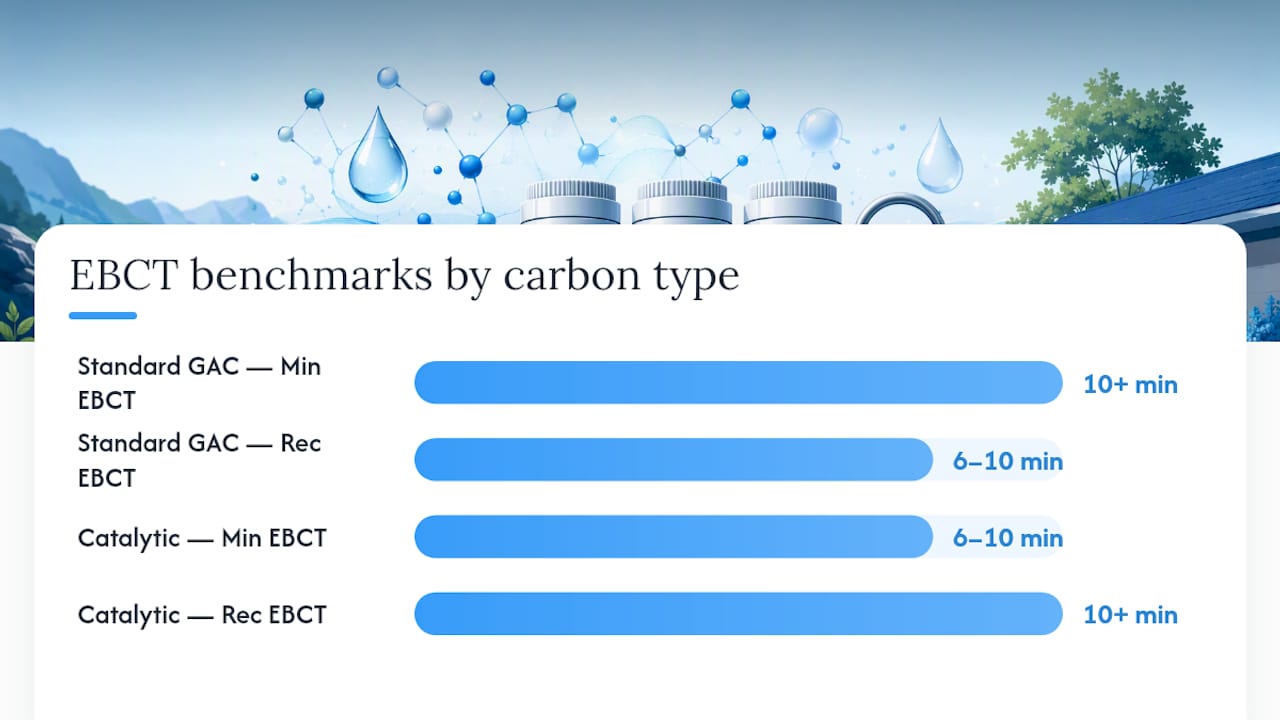
A filter rated for high flow but with a small carbon bed will almost certainly under-perform on chloramine. Slow the flow or increase bed volume.
Maintenance and replacement
Carbon beds do not last forever, and chloramine-loaded carbon can become a biofilm risk if left too long. Watch for:
- Pressure drop across the filter increasing noticeably (sign of fouling or channeling)
- Chloramine detectable downstream (use a test kit — see Section 7)
- Manufacturer’s rated capacity reached, whichever comes first
Pro Tip: If you’re running a whole-house catalytic carbon system, install a post-filter test port and check for chloramine every 3–4 months. Carbon that’s exhausted for chloramine may still look clean and flow freely — you won’t know it’s spent without testing.
When PFAS are also a concern alongside chloramine, EPA research on activated carbon shows that carbon performance depends heavily on bed depth, flow rate, and water chemistry — not just carbon type. A comparative study in ACS EST Water found that GAC and PAC each have distinct trade-offs for PFAS removal under different operational conditions, which reinforces why system design matters as much as media selection when multiple contaminants are present.
Chemical neutralizers: Campden tablets, SMBS, and ascorbic acid
Chemical neutralizers provide fast, complete neutralization for batch or protected systems. They are typically not suitable for continuous whole-house use unless metered injection equipment is installed.
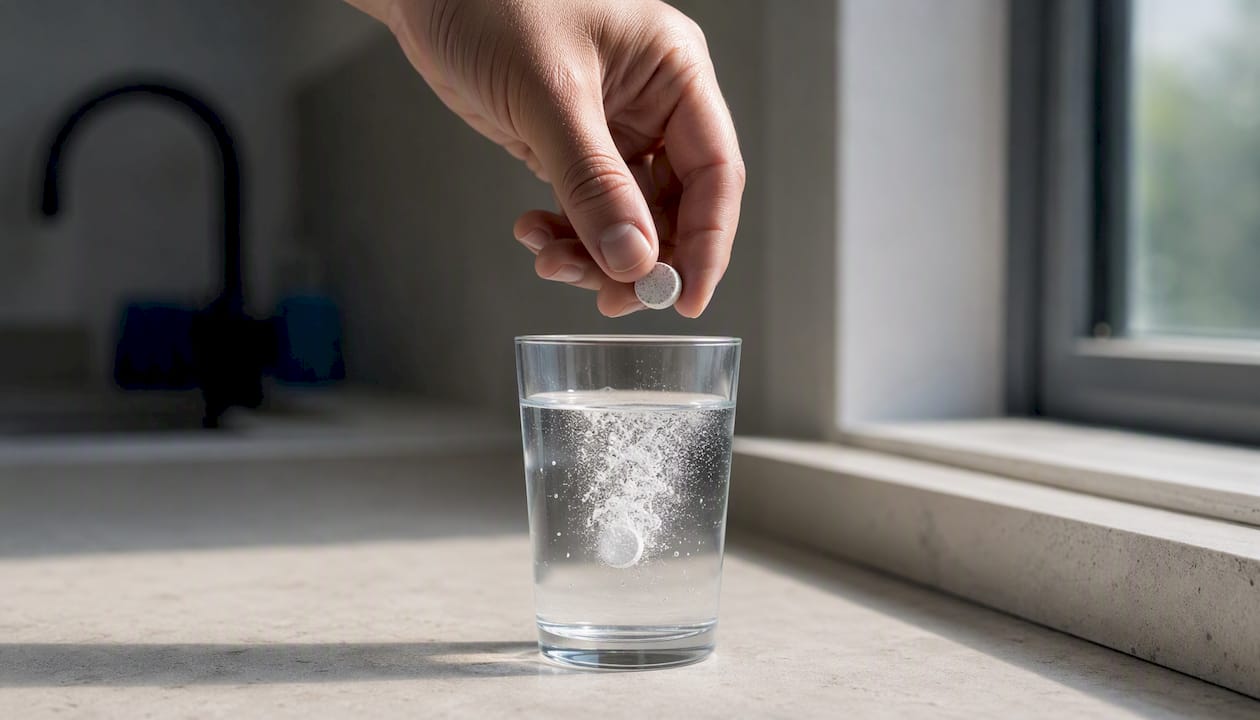
Sodium metabisulfite (SMBS) and ascorbic acid both neutralize chloramine quickly and completely when dosed correctly. Campden tablets — potassium metabisulfite, a close relative of SMBS — are the brewer’s and aquarist’s go-to because they’re cheap, shelf-stable, and easy to dose.
Dosing reference for common volumes:
- Campden tablets (potassium metabisulfite): One tablet per 20 gallons neutralizes chloramine at typical municipal concentrations. Crush and dissolve before adding to water.
- SMBS powder: Roughly 50 mg per gallon at 1 ppm chloramine. Scale up proportionally for higher concentrations. Contact time is under 1 minute.
- Ascorbic acid (vitamin C): Approximately 35–40 mg per gallon at 1 ppm chloramine. Reacts within seconds. Note that the treated water should be used within 24–48 hours — ascorbic acid degrades and the neutralization effect does not persist.
Safety and byproduct notes:
- SMBS produces sulfate as a byproduct. At batch doses for brewing or aquariums, this is negligible. For continuous injection into a drinking water line, sulfate levels and ORP (oxidation-reduction potential) should be monitored.
- Ascorbic acid is food-safe and leaves no harmful residue at these doses, but the treated water is not shelf-stable.
- Both compounds are sensitive to heat and moisture during storage. Keep them sealed and cool.
For continuous industrial injection, SMBS with ORP monitoring is the standard approach. For home use, batch treatment with Campden tablets or ascorbic acid is simpler and more reliable than trying to rig a metered injection system.
Reverse osmosis and distillation: what they remove and what they need
RO and distillation remove chloramine effectively at the point of use, but RO membranes require upstream neutralization to avoid irreversible damage. This is the most commonly overlooked detail when people buy an RO system for a chloraminated supply.
Chloramine attacks the polyamide membranes used in most residential RO systems. Unlike free chlorine, which degrades membranes slowly and somewhat predictably, chloramine can cause rapid, irreversible membrane failure. RO systems typically remove 85–99% of chloramine — but only when the membrane is intact and protected.
Pre-treatment checklist before installing RO on a chloraminated supply:
- Confirm your water supplier uses chloramine (check your Consumer Confidence Report or use Tapwaterindex to look up your utility’s data)
- Install a catalytic carbon pre-filter or SMBS injection upstream of the RO membrane
- Verify the pre-filter’s EBCT is sufficient — a thin carbon block rated for chlorine may not protect the membrane
- Check the RO membrane manufacturer’s warranty terms; most void the warranty if chloramine exposure is documented
- Replace the pre-filter on schedule, not just when flow drops
Pro Tip: Distillation removes chloramine through the boiling and condensation process, but it’s slow, energy-intensive, and impractical for whole-house use. For point-of-use drinking water, a countertop distiller works — just don’t confuse it with boiling water in a pot, which does not reliably remove chloramine and can concentrate it.
What doesn’t actually work: boiling, aeration, and basic pitcher filters
Boiling, short aeration, and ordinary low-contact-time pitcher filters do not reliably remove chloramine. Boiling is the most dangerous misconception because it concentrates chloramine rather than driving it off.
- Boiling: Free chlorine volatilizes when heated. Chloramine does not. Boiling reduces water volume while chloramine stays behind, raising its concentration in what remains.
- Leaving water to sit: Works for free chlorine over hours. Chloramine is stable enough that sitting for 24 hours removes only a small fraction, even in an open container.
- Standard pitcher filters (Brita-style): Most use GAC with very short contact time — seconds, not minutes. That’s enough for taste improvement and some chlorine reduction, but not for meaningful chloramine removal.
- Aeration/agitation: Effective for free chlorine. Largely ineffective for chloramine because the nitrogen-chlorine bond doesn’t release under mechanical agitation alone.
Pro Tip: If you’ve been relying on a standard pitcher filter for chloramine removal, test your filtered water with a monochloramine test kit. The result is usually a wake-up call. Switch to a catalytic carbon filter or use a Campden tablet for batch treatment while you upgrade.
How to test for chloramine and confirm removal
The reliable way to confirm chloramine presence or removal is a targeted test: a test kit that specifically detects monochloramine, or a lab analysis. Checking your water supplier’s Consumer Confidence Report (CCR) is the right starting point, but it tells you what the utility sends out — not what arrives at your tap after treatment.
Testing workflow:
- Check your supplier’s CCR or use Tapwaterindex to look up your utility. This tells you whether your system uses chloramine and at what typical levels.
- Purchase a monochloramine-specific test kit. Generic “chlorine” test strips often cannot distinguish between free chlorine and combined chloramine — look for kits labeled for “total chlorine” and “free chlorine” separately; the difference between the two readings indicates combined chloramine.
- Test your untreated tap water to establish a baseline before installing any filter.
- Test downstream of your treatment system within the first week of operation and again at 30 days.
- Retest every 3–4 months or whenever you notice taste or odor changes.
For high-stakes applications (brewing, aquariums, medical use), a certified water testing lab gives more reliable quantitative results than home strips. Lab tests also catch other contaminants that may affect your treatment choice.
Choosing the right method for your situation
The best method depends entirely on what you’re treating water for. A whole-house system that works well for drinking water is overkill for a 10-gallon aquarium change, and a Campden tablet is completely wrong for a household with a dialysis patient.
Quick match by use case:
- Drinking water (under-sink): Catalytic carbon filter with sufficient EBCT, or RO with catalytic carbon pre-filter
- Whole-house: Point-of-entry catalytic carbon system sized for your household flow rate
- Aquarium: Campden tablet or ascorbic acid dose per batch; catalytic carbon for continuous top-off systems
- Brewing: One Campden tablet per 20 gallons, added to strike water before mashing
- Home dialysis or medical use: Professional-grade treatment only — see the next section
| Method | Chloramine removal | Speed | Cost/maintenance | Best for |
|---|---|---|---|---|
| Catalytic carbon (CAC) | Excellent | Minutes (contact time) | Moderate; filter replacement | Drinking, whole-house, brewing |
| Standard GAC | Fair (with long EBCT) | Slow | Low to moderate | Low-flow point-of-use only |
| Campden/SMBS | Complete (batch) | Instant | Very low | Aquarium, brewing, batch |
| Ascorbic acid | Complete (batch) | Instant | Very low | Aquarium, batch; short shelf life |
| RO + pre-treatment | 85–99% | Minutes (fill time) | Higher; membrane + pre-filter | Drinking water, point-of-use |
| Distillation | High | Slow (hours) | Moderate energy cost | Point-of-use drinking |
Selection checklist:
- What removal percentage do you need? (Medical uses require near-complete removal)
- What’s your flow rate? (High flow demands larger carbon beds)
- Are other contaminants present? (PFAS or lead may change the system design)
- How much ongoing maintenance can you commit to?
- Is chemical residue a concern? (Brewing and aquariums are sensitive to sulfate)
When household methods are not enough
For dialysis or other medical-grade needs, household filters are insufficient. This is not a gray area. The CDC is explicit that water used for dialysis must be completely free of disinfectants, and no consumer-grade filter carries the validation required for that application.
Situations that require professional intervention:
- Home hemodialysis (any disinfectant residual is dangerous)
- Mixing infant formula for immunocompromised newborns in a clinical setting
- Households with severely immunocompromised members where medical guidance specifies treated water
- Any application where a regulatory or clinical standard specifies water purity levels
A note on dialysis water: The CDC and dialysis device manufacturers require that water used in dialysis machines be completely free of chloramine. Standard home filters — including catalytic carbon and RO systems — are not validated for this use unless they meet the specific treatment train and monitoring requirements set by the device manufacturer or a clinical water treatment specialist. If you or a family member uses home dialysis, contact your dialysis equipment provider or a certified water treatment engineer before relying on any household system.
If any of the above situations apply, contact your dialysis equipment manufacturer, nephrologist, or a certified water treatment engineer. The stakes are too high for a DIY approach.
Environmental and regulatory considerations
Chloramine’s regulatory status reflects a genuine trade-off. The EPA permits it as a secondary disinfectant because it reduces trihalomethanes (THMs) and haloacetic acids (HAAs) — two classes of disinfection byproducts that form when free chlorine reacts with organic matter. From a regulatory standpoint, that’s a meaningful public health benefit at the population level.
The environmental side is more complicated. Chloramine is toxic to aquatic life at very low concentrations, which is why aquarium keepers and pond owners need to neutralize it before any water change. Disposal of SMBS-treated water in large volumes can affect local waterways if sulfate loads are high — relevant for commercial operations, less so for home use.
From a regulatory standpoint, the EPA’s chloramine guidance focuses on distribution-system performance and byproduct control, not on household removal. There is no federal requirement to remove chloramine at the tap. The decision to treat is yours, based on your use case and local water data. Checking EPA contaminant limits alongside your supplier’s CCR gives you the full picture.
How chloramine removal affects water quality and byproducts
Removing chloramine improves taste and odor noticeably for most people — that faint swimming-pool or medicinal smell disappears. For brewing, it eliminates the chlorophenol compounds that form when chloramine reacts with phenolic compounds in malt, which can ruin a batch even at trace levels.
The byproduct question cuts both ways. Removing chloramine means losing its disinfectant residual, so treated water stored for extended periods can support microbial growth. This matters most for whole-house systems where treated water sits in pipes. Catalytic carbon systems that develop biofilm in exhausted beds can actually introduce bacteria downstream — another reason regular testing and timely media replacement are not optional.
Chemical neutralization with SMBS adds sulfate to the water. At batch doses for brewing or aquariums, this is generally within acceptable ranges. For continuous injection into drinking water, monitoring sulfate levels alongside ORP keeps the system in check. Ascorbic acid neutralization leaves no harmful residue but does lower pH slightly and reduces dissolved oxygen — worth knowing for aquarium applications where both parameters matter.
A practical take on balancing cost, convenience, and certainty
The pattern that works for most households is simple: start with local data, then test, then buy. Too many people purchase a whole-house catalytic carbon system before confirming their utility even uses chloramine — and some utilities have switched back to free chlorine in recent years. Before spending several hundred dollars on equipment, check your supplier’s Consumer Confidence Report or run a quick lookup on Tapwaterindex to see what your utility actually reports. If chloramine is confirmed, a catalytic carbon filter sized for your flow rate handles most household needs. For batch uses like brewing or aquariums, a Campden tablet costs pennies and works instantly. The only situation where that calculus changes is medical use, where professional guidance replaces all of the above.
Your local water data changes everything about this decision
Knowing whether your utility uses chloramine — and at what levels — determines whether you need to act at all. Tapwaterindex pulls EPA monitoring data for every public water system in the country, searchable by city, ZIP code, or supplier name. You can see your utility’s reported disinfectant type, contaminant levels, and how your system compares to others in your state.
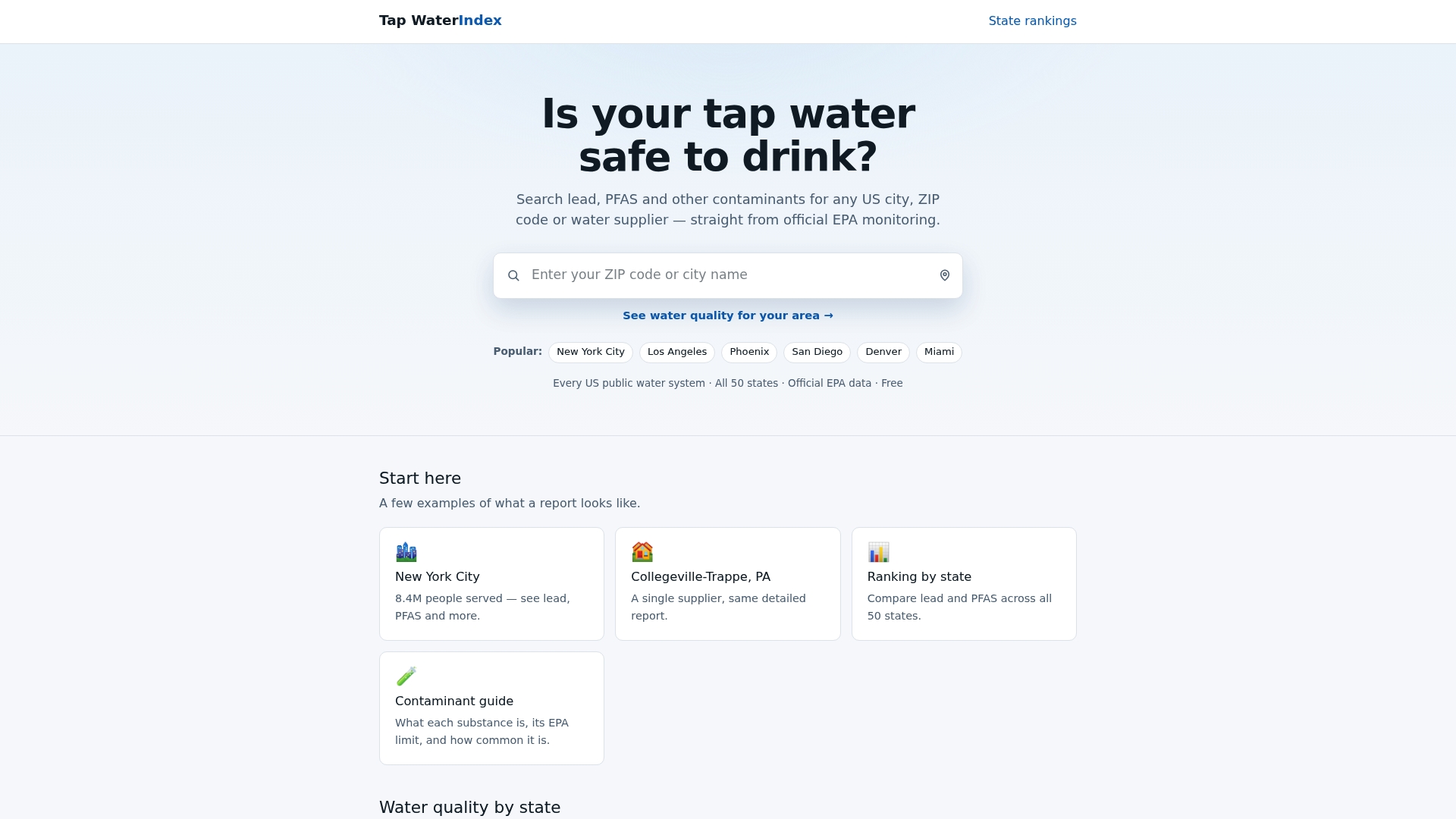
That matters because chloramine is not universal. Some utilities use free chlorine year-round; others switch seasonally. If your supplier uses free chlorine, a standard carbon filter may be adequate. If chloramine is confirmed, you need catalytic carbon or a chemical neutralizer — and if PFAS or lead also appear in your supplier’s data, the treatment design changes again. Tapwaterindex provides EPA-based monitoring data and does not sell filters, so the information is independent of any product recommendation.
Check your local water quality data before purchasing any treatment system.
Sources
- About Water Disinfection with Chlorine and Chloramine | Drinking Water | CDC
- Chloramines in drinking water | EPA
- Chloramine in Water: What Removes It, What Doesn’t & Commercial Treatment Guide (2026) — Commercial Water Lab
- How to Remove Chloramines from Water – Fresh Water Systems
- Performance of powdered and granular activated carbon for PFAS removal — ACS EST Water
This article is general information, not a substitute for advice from a qualified doctor. Consult a qualified healthcare professional about your own circumstances before acting on anything here.