Cloudy Tap Water: Why It Happens and When to Worry

Most cloudy tap water is harmless. The milky look comes from tiny air bubbles trapped in the water, and it typically clears within seconds to a few minutes of sitting in a glass, according to the U.S. Geological Survey. Run the test now: fill a clear glass, set it on the counter, and watch.
- Clears from the bottom up in under a few minutes: it’s air. Drink it.
- Stays cloudy, or clears from the top down: it’s likely sediment or hardness minerals. Keep reading before you drink it.
- First move either way: run the cold kitchen tap at full flow for 30 to 60 seconds, then retest a fresh glass.
If you want to rule out a supplier-wide contaminant issue while you’re at it, you can check your local water report by ZIP code in under a minute.
Key Takeaways
Cloudy tap water is almost always harmless entrained air that clears within minutes, but persistent, discolored, or foul-smelling water warrants a call to your supplier and a check of local EPA contaminant data.
| Point | Details |
|---|---|
| Run the glass test first | Air clears bottom-up within minutes; sediment or limescale clears top-down or not at all. |
| Flush before you worry | Run the cold tap at full flow for 30 to 60 seconds and retest before assuming a problem. |
| Watch the 24-hour mark | Cloudiness that persists beyond a day, or comes with odor or color, means it’s time to call your utility. |
| Match the fix to the cause | Softeners solve hardness, sediment filters solve particulate, but neither one stops aeration. |
| Clarity isn’t safety | Clear water can still carry lead or PFAS, so check your supplier’s EPA data separately from the glass test. |
Table of Contents
- What Causes Cloudy or Milky Tap Water
- How to Diagnose Cloudy Water in Your Home
- When Cloudy Water Signals a Real Problem
- Fixing Cloudy Water: What Actually Works
- Get the Full Picture on Your Water Quality
- The Real Lesson in a Glass of Cloudy Water
- Frequently Asked Questions
- Sources
What Causes Cloudy or Milky Tap Water
Air is the usual suspect, but it’s not the only one. Municipal water gets pressurized and sometimes chilled as it moves through the distribution system, and that process dissolves extra air into it. When the water reaches your faucet and pressure drops, that air comes out of solution as thousands of microscopic bubbles, the same way a shaken soda fizzes when you open the cap. That’s what makes the water look milky white.
Cold weather makes this worse. Cold water holds more dissolved gas than warm water, so cloudiness spikes in winter and shows up more often first thing in the morning, when water has sat in cooler pipes overnight. The City of St. Louis Water Division notes this is simply a physical response to temperature change, not a sign of contamination.
Three other causes behave differently and matter for your next step:
- Hard-water limescale. Calcium and magnesium particles look white or pale yellow, but unlike air, they don’t dissipate on their own, and they get worse when the water is heated.
- Sediment or rust. Aging pipes, a disturbed water main, or scale breaking loose inside a water heater can tint water brown, orange, or gray rather than white.
- Utility maintenance. Main flushing or nearby repair work can stir up sediment temporarily across a whole neighborhood.
Rare gas-related cloudiness, usually from hydrogen sulfide or unusual well conditions, tends to come with a distinct rotten-egg smell. If you catch that odor, treat it as a signal to test the water rather than a variation on normal aeration.
How to Diagnose Cloudy Water in Your Home
Run this sequence before you call anyone. It takes five minutes and tells you almost everything you need to know.
- Do the glass test. Fill a clear glass straight from the tap and watch it for two to three minutes. Air clears bottom to top; sediment and limescale clear top to bottom, or not at all.
- Flush the line. Run the cold kitchen tap at full flow for 30 to 60 seconds, then fill a fresh glass and repeat the test.
- Check other fixtures. Test the bathroom sink, the tub, and an outdoor spigot. Cloudiness in one fixture only points to a local aerator or valve issue; cloudiness everywhere points to your service line or the main.
- Ask a neighbor. If someone on your street has the same milky water at the same time, the issue is almost certainly on the utility side, not your plumbing.
- Log it. Note the time, which fixtures were affected, and snap a photo of the filled glass. You’ll want this if you end up filing a report.
Pro Tip: Take the photo against a plain white background, like a paper towel. It makes it far easier for a utility rep to judge severity from a text or email later.
When Cloudy Water Signals a Real Problem
Cloudiness that’s purely air is safe to drink and shower in the moment it shows up, provided there’s no odor and no color. That’s the baseline. Everything below is where you stop assuming and start acting.
Contact your water supplier if any of the following apply:
- The water is still cloudy more than a few minutes after the glass test, or hasn’t cleared after a day.
- You see brown, orange, or green tint rather than a uniform white haze.
- There’s a rotten-egg, chemical, or metallic smell along with the cloudiness.
- More than one person in the household develops stomach upset, nausea, or diarrhea after drinking the water.
- Multiple fixtures throughout the house, or multiple houses on your block, show the same symptom at the same time.
When you call, give the utility what they actually need to act fast: the time you noticed it, which fixtures are affected, and your photos. The RWD water district’s guidance recommends this exact combination, and it’s what lets them dispatch a technician or approve a sample test without a back-and-forth. Most utilities can pull a free sample from your tap within a day or two of a documented report.
Fixing Cloudy Water: What Actually Works
Start with the free fixes before you spend money.
- Flush every affected line. Run the cold tap at full flow for a full minute, then do the same for any outdoor spigots. This clears trapped air on its own most of the time.
- Clean the aerators. Unscrew the little mesh screen on each faucet, rinse out any grit, and soak it in vinegar if it’s crusted with mineral buildup. A clogged aerator can trap bubbles and make ordinary aeration look worse than it is.
- Flush the water heater if only hot water is cloudy. Sediment settles at the bottom of the tank over time. Draining and flushing it per the manufacturer’s instructions usually clears this within one cycle, and it’s a documented fix for hot-only cloudiness.
- Check your pressure. If cloudiness is constant and heavy, unusually high water pressure can be forcing extra air into solution. A pressure-reducing valve (PRV) that’s failing or set too high is worth a plumber’s look.
- Match the filter to the actual problem. A sediment filter strains out particulate and rust. It does nothing for air. A water softener removes calcium and magnesium so limescale stops forming, but it won’t stop aeration either, since that’s a physics issue, not a mineral one.
Pro Tip: If you’ve flushed every line, cleaned every aerator, and the cloudiness still comes back within a day, stop troubleshooting and call the utility. That pattern usually means the source is upstream of your house.
What Softeners and Filters Actually Fix
A water softener swaps calcium and magnesium ions for sodium, which stops the limescale that clouds glasses and coats fixtures. It has zero effect on air bubbles, so don’t buy one expecting it to fix aeration. Point-of-use sediment and carbon filters strip out rust flakes, scale particles, and some taste and odor issues, and they’re the right call when your glass test shows top-down clearing.
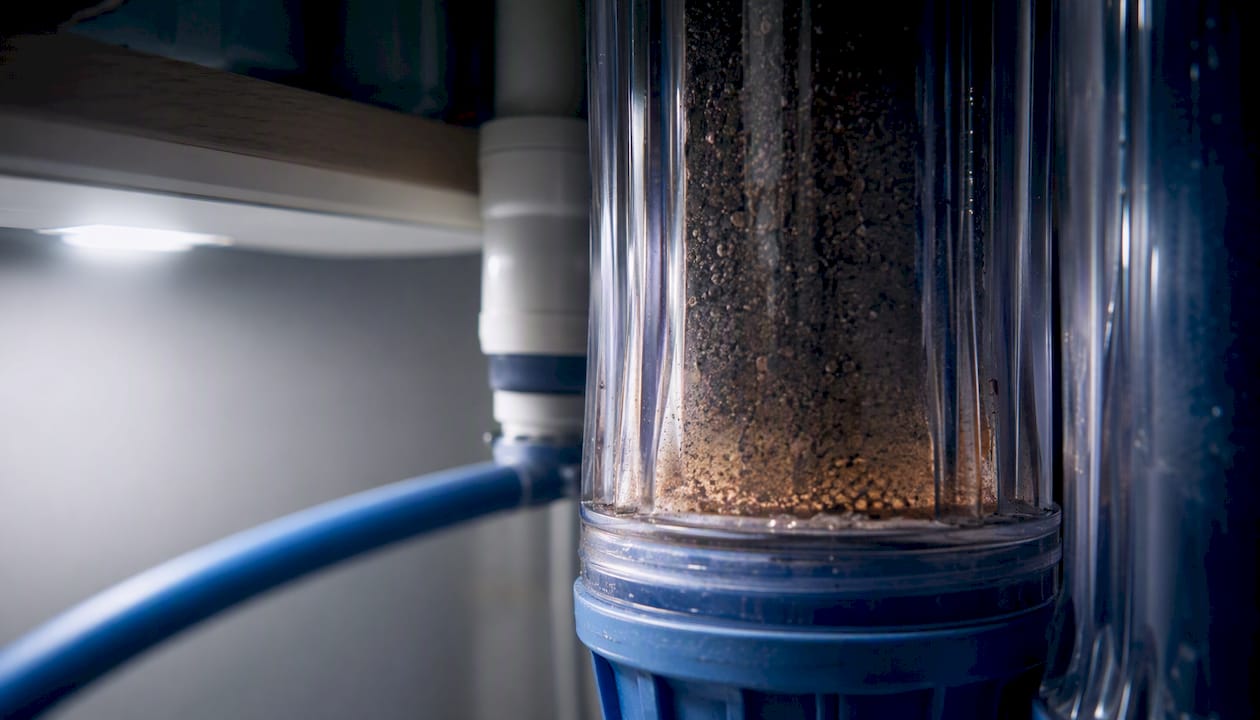
For upkeep: clean aerators every three to six months, and flush a standard tank water heater once a year. Cartridge filters run cheap to replace every few months; a whole-house sediment or softener system costs more upfront but needs far less attention once installed.
Verifying Your Water Quality Beyond the Glass Test
The glass test tells you about clarity, not contamination. Those are different questions, and only one of them shows up in an EPA monitoring report.
- Search your city, ZIP code, or water supplier on TapWaterIndex to see official EPA-based results for PFAS, lead, and other regulated contaminants.
- An exceedance of a Maximum Contaminant Level (MCL) is a chronic-exposure concern, not an emergency, but it’s worth acting on. Cloudiness itself is not proof of an exceedance either way.
- If you have specific health concerns, an independent certified lab test is the only way to confirm what’s actually in your water, and your supplier can usually tell you how to collect and submit a sample.
- When you report an issue, give the utility a timestamped photo and the exact fixtures affected. It speeds up their response.
Homeowners in California and Florida can pull supplier-level lead data this way, and the same search works for any state.
Get the Full Picture on Your Water Quality
A glass test and a flushed line solve the visible problem. They tell you nothing about what’s dissolved and invisible in the water you’re drinking every day. TapWaterIndex pulls directly from official EPA monitoring data to show you PFAS, lead, and other contaminant levels for your specific supplier, not a national average.
Check your state’s tap water ranking to see how your local system compares, or search your city or ZIP code directly to pull up the report tied to your actual water source. It takes less time than the glass test you already ran.
The Real Lesson in a Glass of Cloudy Water
Most people panic at the wrong moment and shrug at the right one. A glass that clears in under a minute gets treated like a crisis, while water that stays permanently hazy or smells faintly off gets ignored because “it’s probably just air.” That’s backwards, and it’s the single biggest gap in how homeowners actually respond to this problem.
The fix isn’t more anxiety. It’s better triage. The glass test plus a 30 second flush answers the physical question in under two minutes. What it can’t answer is whether your supplier has a documented lead or PFAS issue that has nothing to do with what’s in your glass right now. That’s a separate check, it takes about as long, and most people never run it because they assume clear water means safe water. It doesn’t. Clarity and contamination are unrelated metrics, and treating them as one thing is where the conventional advice on this topic quietly fails homeowners.
Run both checks. Neither one takes long enough to justify skipping it.
Frequently Asked Questions
Is cloudy tap water safe to drink? Yes, in almost every case, provided it clears within a few minutes and has no odor or unusual color. That pattern points to trapped air, not contamination.
Why is my tap water cloudy in the morning specifically? Water that sits in pipes overnight cools, then warms slightly as it moves through your plumbing, releasing dissolved air. Running the cold tap for a minute clears it.
How to clear cloudy water fast? Run the affected tap at full flow for 30 to 60 seconds. If it’s genuinely air, that flush alone usually solves it immediately.
What does it mean if my water stays cloudy after flushing? It likely means sediment, rust, or mineral particles rather than air, and it’s worth checking other fixtures and contacting your supplier if it persists.
Can hard water cause permanent cloudiness? Hard water doesn’t cause temporary haze the way air does, but calcium and magnesium particles can leave visible cloudiness and buildup that a softener addresses over time.
When should I get my water professionally tested? Get a certified lab test if cloudiness persists beyond a day, comes with a chemical or rotten-egg smell, or if you want to confirm lead or PFAS levels beyond what a visual check can tell you.
Sources
- Cloudy or Milky Tap Water | City of St. Louis Water Division
- Why is my water ‘cloudy’ or ‘milky’ looking? | RWD