Baltimore Tap Water Meets Federal Limits, but Test Your Tap ($25–$300)
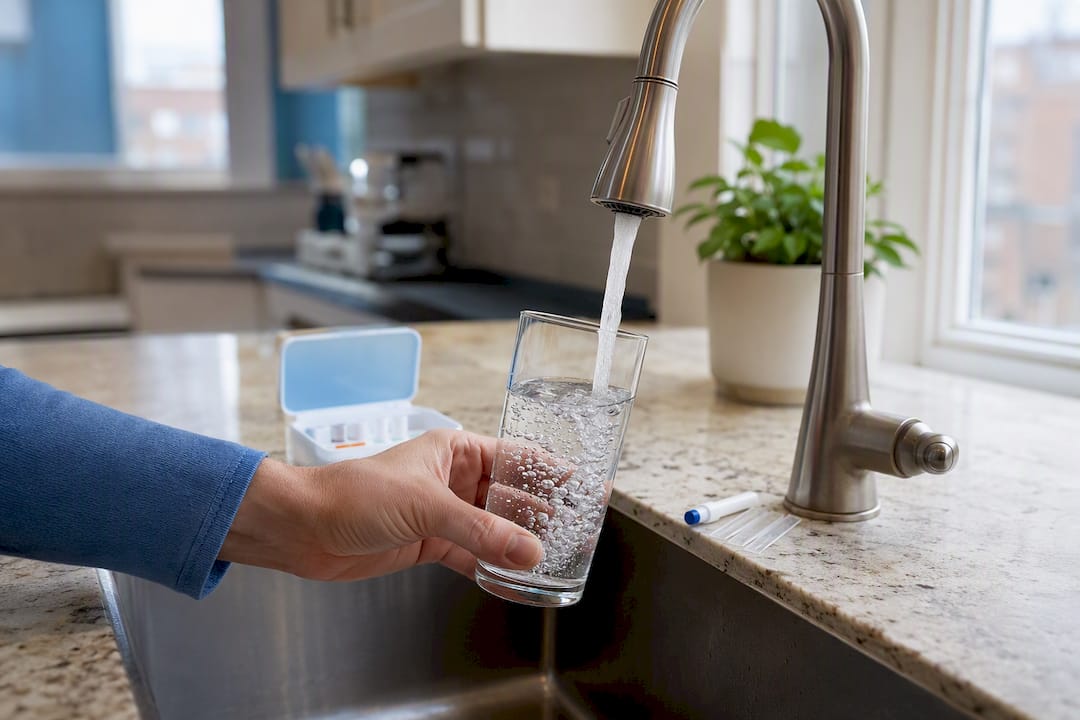
Baltimore’s tap water meets EPA and MDE standards according to Baltimore City DPW’s testing, so most residents can drink it without hesitation. But “meets federal standards” isn’t the same as “zero risk” for every household. Check the current Water Quality Report, and if you have older plumbing or a baby at home, test your own tap before you assume it’s fine.
TL;DR:
- Baltimore’s tap water meets EPA and MDE standards, but older plumbing and vulnerable populations should conduct household testing for contaminants like lead and PFAS.
- Water from reservoirs is treated at two filtration plants, yet lead can leach from service lines inside buildings, and PFAS levels can exceed health advisories even if below legal limits.
- Official testing covers lead, chemicals, bacteria, and disinfection byproducts, but household testing provides specific results for individual faucets, especially for lead.
- Filters certified for lead and PFAS reduction are effective if followed according to manufacturer instructions, and flushing cold water for a minute can reduce some risks.
- If testing shows elevated levels, stop using tap water for infants or cooking, document findings, and contact Baltimore DPW or healthcare providers for advice.
Table of Contents
- What official testing and recent reports say about Baltimore water quality
- Where Baltimore’s water comes from and how it’s treated
- Key contaminants to watch in Baltimore tap water
- How to verify your own tap: testing options, timelines, and costs
- Cutting your exposure at home: filters, flushing, and service lines
- What to do if your test comes back elevated
- Why local, EPA-based data and household testing both matter
- Look up your Baltimore water report before you buy another filter
- Where to verify this yourself
- Sources
What official testing and recent reports say about Baltimore water quality
The Baltimore City Department of Public Works (DPW) released its 2025 Water Quality Report confirming routine compliance with EPA and Maryland Department of the Environment (MDE) requirements. That’s the document to read first if you want the real numbers instead of secondhand summaries. DPW runs two MDE-certified laboratories, at Montebello and Ashburton, that together perform a very large number of water quality analyses each year on the system serving Baltimore City and much of the surrounding county.
Here’s where things get confusing for residents. News coverage sometimes cites Environmental Working Group (EWG) analyses that stack Baltimore’s results against independent health-based guidelines, not the enforceable EPA limits DPW is legally bound to. Those two yardsticks aren’t interchangeable, and a contaminant can be well under the federal limit while still exceeding a stricter advisory benchmark some scientists consider safer.
DPW’s regular testing covers:
- Lead and copper at the tap
- Disinfectants and disinfection byproducts (DBPs)
- Bacteria and turbidity
- Inorganic and organic chemical contaminants tracked under the Safe Drinking Water Act
Where Baltimore’s water comes from and how it’s treated
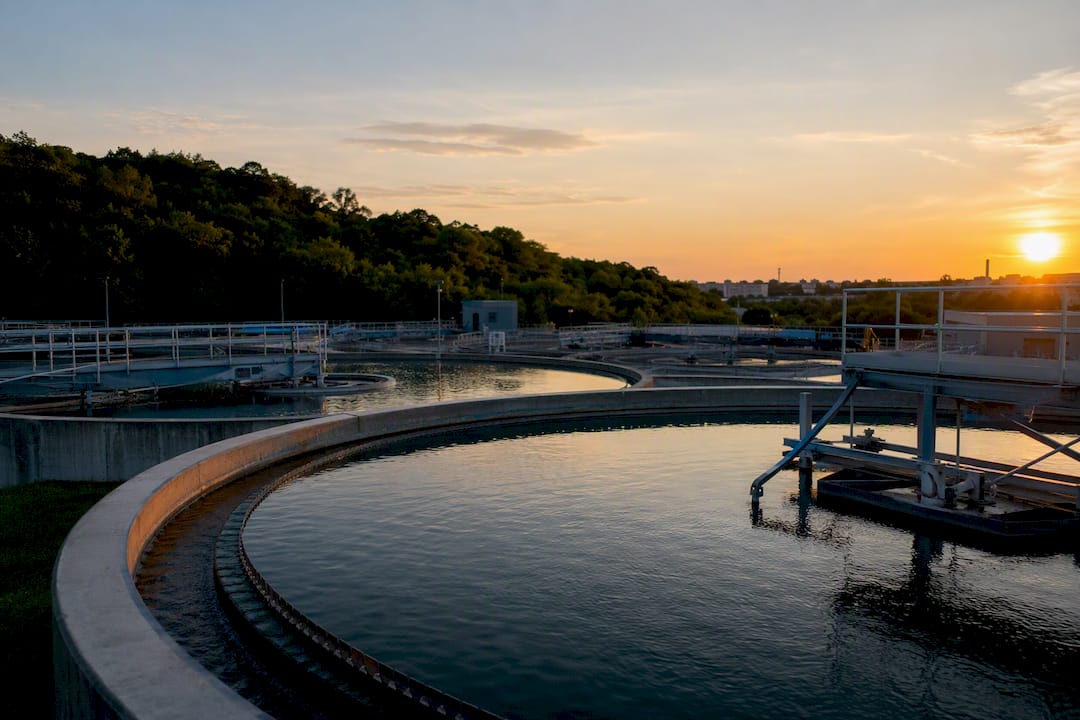
Baltimore draws its water from rainfall and snowmelt collected in three reservoirs, Liberty, Loch Raven, and Prettyboy, which hold a large volume of water combined. During droughts, the system can pull supplemental water from the Susquehanna River.
From there, raw water travels to the Montebello and Ashburton filtration plants, where it’s treated and tested before entering the distribution network. DPW also maintains managed woodlands around the reservoirs that filter pollutants and reduce erosion, a low-tech but genuinely effective layer of protection before the water ever reaches a treatment plant. Upstream land use, farm runoff, development, storm damage, still matters even with modern filtration downstream.
Key contaminants to watch in Baltimore tap water
Four contaminants come up most often when Baltimore residents ask about water safety, and each behaves differently.
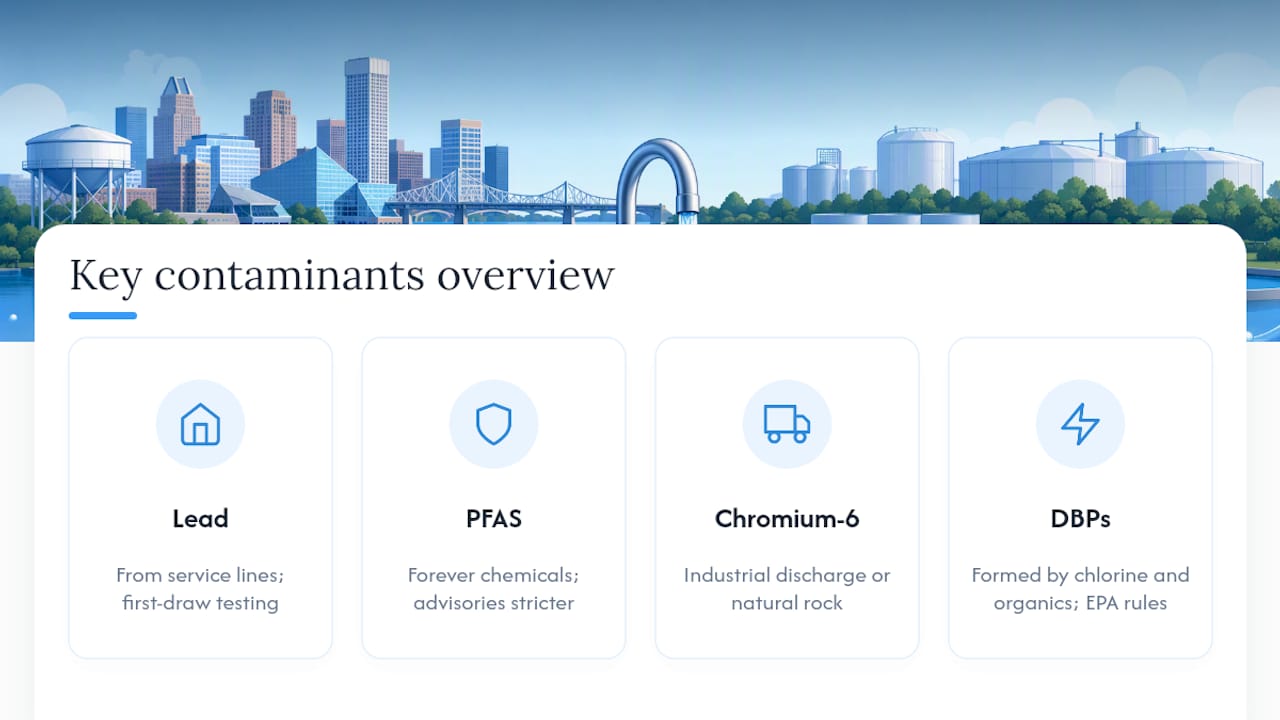
Lead doesn’t come from the reservoirs or treatment plants. It leaches into water from aging service lines, solder, or fixtures inside individual buildings, which is why the EPA’s lead guidance requires first-draw sampling, water that’s sat still for at least six hours, to catch it. Children and pregnant people face the highest health risk from even low-level exposure.
PFAS (“forever chemicals”) draw attention because EPA’s health advisories are often far stricter than the enforceable limits utilities currently test against, and enforceable PFAS rules have been phasing in on a longer timeline than most residents realize. A detection below the legal limit can still exceed a health advisory.
Chromium-6 can enter water through industrial discharge or naturally occurring rock formations; it’s monitored but not yet subject to its own dedicated EPA limit separate from total chromium.
Disinfection byproducts (DBPs) form when chlorine reacts with organic matter in the water. The EPA’s Stage 1 and Stage 2 rules set monitoring requirements and limits utilities must meet.
The takeaway: Passing a federal test doesn’t guarantee a contaminant is at zero; it means it’s below a legal threshold that regulators consider acceptable for the general population, not necessarily the most sensitive one.
How to verify your own tap: testing options, timelines, and costs
Reading the CCR tells you what’s true for the system as a whole. It doesn’t tell you what’s coming out of your specific faucet, especially for lead, which is a plumbing issue as much as a supply issue.
- Start with the official report. Baltimore’s Water Quality Report is free and covers system-wide results; request a printed copy through 311 if you can’t access it online.
- Order a certified lab test if you want your exact tap checked. Ask specifically for lead, and add a PFAS panel if you’re near industrial areas or an airport. Expect $25 to $300 depending on how many contaminants you test for, with results back in one to three weeks.
- Use a DIY test kit for a fast, rough screen. They’re convenient but less reliable than certified lab analysis, fine for a first look, not for a final answer.
Pro Tip: For lead testing, sample cold water first thing in the morning before running the tap, and don’t remove the aerator, that’s the standard first-draw method labs use to catch plumbing-related contamination.
Cutting your exposure at home: filters, flushing, and service lines
If you want to act now rather than wait on lab results, a few moves make a real difference. Look for filters certified to NSF/ANSI 53 for lead reduction, and NSF/ANSI 58 or P473 where PFAS removal is claimed, then follow the cartridge replacement schedule exactly, an expired filter can perform worse than no filter at all.
- Run cold water for a minute before drinking if the tap has sat unused for hours
- Use filtered or bottled water for infant formula
- Skip hot tap water for cooking or drinking; heat concentrates certain contaminants
- Ask DPW about your service line material and pursue replacement if it’s lead or galvanized
Pro Tip: Pregnant residents and households with infants or immunocompromised family members should treat these steps as a baseline, not an optional upgrade.
What to do if your test comes back elevated
Stop using tap water for infant formula or cooking immediately and switch to filtered or bottled water while you sort things out. Document your results, then contact Baltimore City DPW and MDE directly, or file through 311, to report the finding and ask about next steps. If lead shows up and you have young children or someone pregnant in the house, call a pediatrician or healthcare provider for a blood lead test. Keep your paperwork; it’s useful for landlord disputes or applying for service-line replacement.
Why local, EPA-based data and household testing both matter
DPW’s system-wide numbers and EPA’s federal framework tell you what’s true on average, not what’s true at your faucet. That gap is exactly why household testing matters, plumbing varies block by block, even house by house. TapWaterIndex lets you pull EPA-based data for your ZIP code or supplier in seconds, but pairing that lookup with an actual tap test is how you get certainty instead of a probability.
— Sergey
Look up your Baltimore water report before you buy another filter
Tapwaterindex is the faster alternative to digging through PDFs on a city website. It pulls EPA monitoring data into a searchable format so you can check lead, PFAS, and other contaminant levels for Baltimore or any Maryland supplier in one lookup instead of parsing a 40-page compliance report.
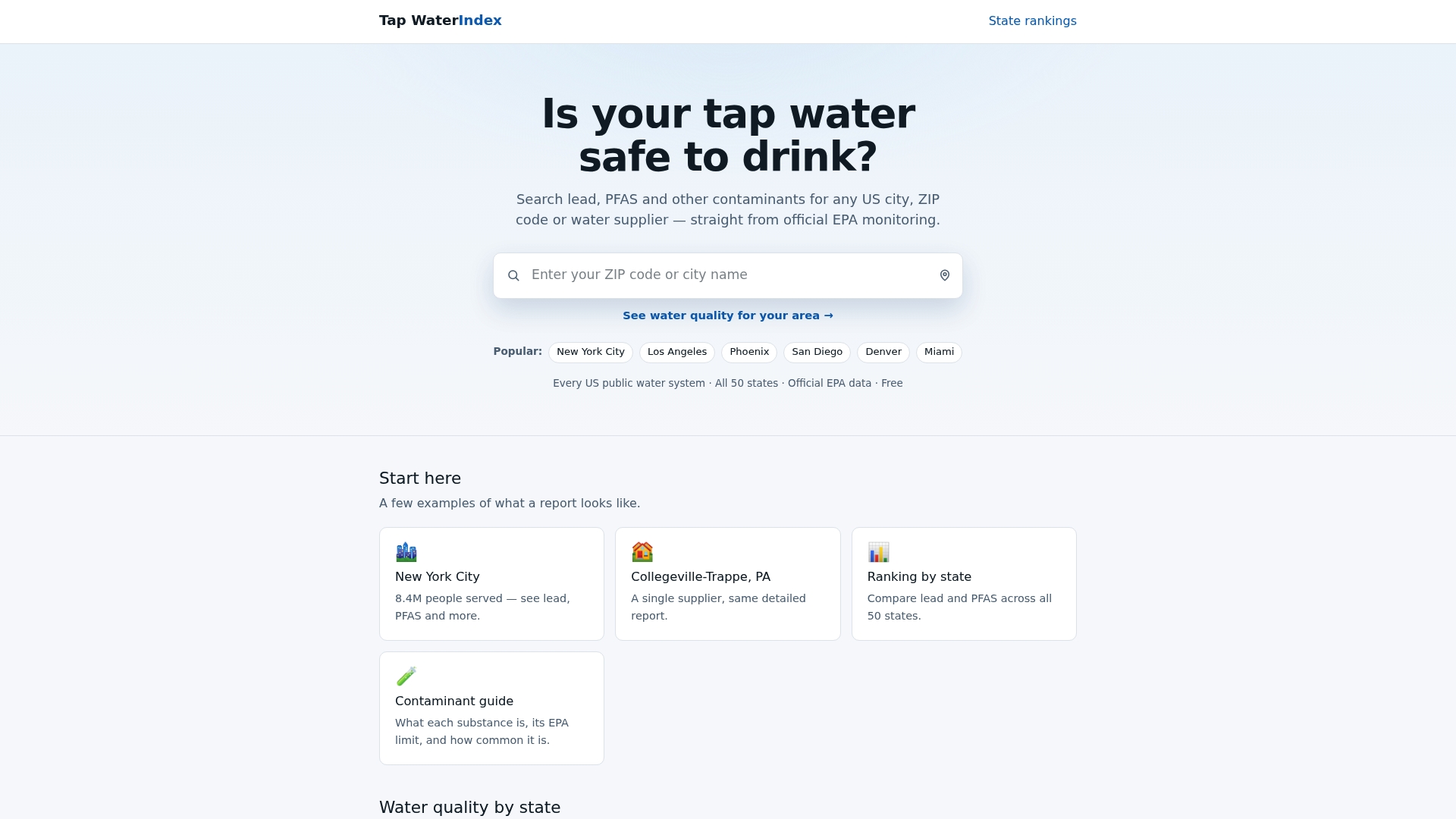
Start with the Maryland lead-by-supplier data to see exactly where Baltimore’s system ranks against other utilities in the state, then check the Maryland rankings page for a broader contaminant comparison. If you want the technical thresholds explained plainly, the contaminants guide breaks down what each EPA limit actually means and how often it gets exceeded nationwide. None of that replaces a certified tap test if you have specific health concerns, but it’s the fastest way to know whether you need one. Search your ZIP code on Tapwaterindex to pull your local report now.
Where to verify this yourself
Check the DPW Water Quality Report for official compliance detail, EPA’s lead page for regulatory context, Blue Water Baltimore for watershed monitoring, and Tapwaterindex for ZIP-level lookups.
This article is general information, not a substitute for advice from a qualified doctor. Consult a qualified healthcare professional about your own circumstances before acting on anything here.
Sources
- Drinking Water | Baltimore City
- 2025 Water Quality Report Card – Blue Water Baltimore
- EPA: Lead in drinking water